

Why You Probably Need an AI Workflow Instead of an Agent
Has your friend already built an AI agent? He probably did, and described it excitedly over coffee:
“My AI agent watches my inbox, tags each email, drafts a reply, sends it!”
Four steps, same order, every single time, nothing about it deciding anything on its own.
The problem is… that is not really an AI agent. It is a workflow wearing a more expensive name.
The word has done real damage this year. Companies are buying autonomy they will never use, skipping the work that would have made it pay, and filing the result under “AI doesn’t work for us.”
In reality, it works fine. They just never figured out which of two very different things they were building.
That difference decides whether the money compounds or evaporates. It is also the easiest thing in AI to get right, the moment someone hands you the question that actually sorts it.
Something worth knowing before we get into it:
The people actually shipping AI systems in 2026 are overwhelmingly from non-technical backgrounds.
Lovable just published a data study on this, and the numbers are worth sitting with for a second:

The barrier between idea and running product has essentially collapsed.
This is the story nobody is telling loudly enough. Software creation used to be a narrow technical discipline. It is becoming something much broader. Operators, founders, marketers, and domain experts are shipping real products by themselves, without a dev team, without a technical co-founder, without months of runway burned on engineers.
The barrier between “I have an idea” and “I have a running product” has essentially collapsed. If you have been sitting on something because you assumed you needed an engineer first, that assumption is no longer accurate.
Exclusive 10% off for readers.
Everyone wants the shiny AI agent. Most teams just need the boring workflow. And now, anyone can build either one themselves.
Table of Contents
The Only Difference That Counts
Why Most of What You Want Is a Workflow
You Can’t Buy Your Way There
The Filter Nobody Bothers to Apply
Where to Actually Point It
The Part You Won’t Want to Hear
1. The Only Difference That Counts
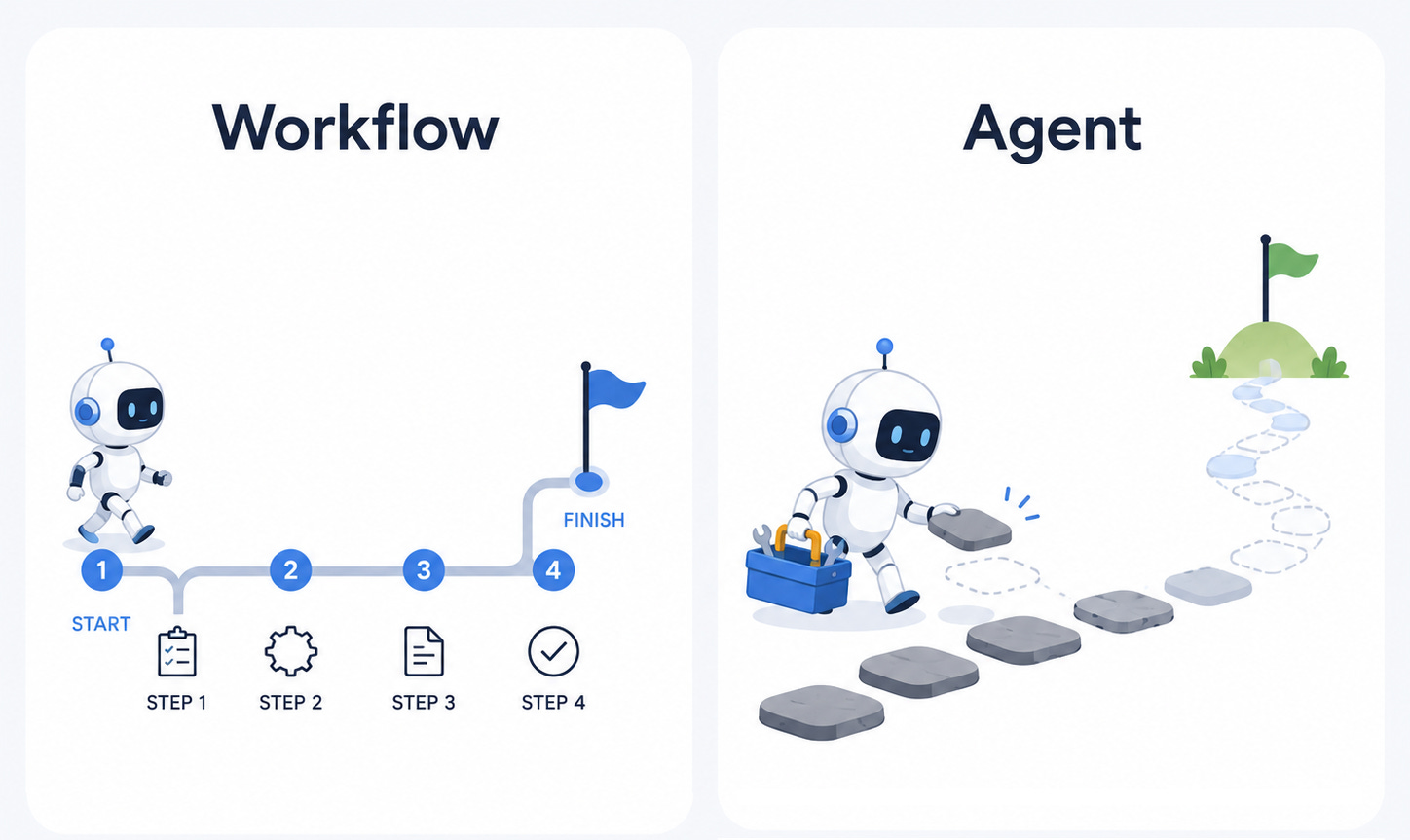
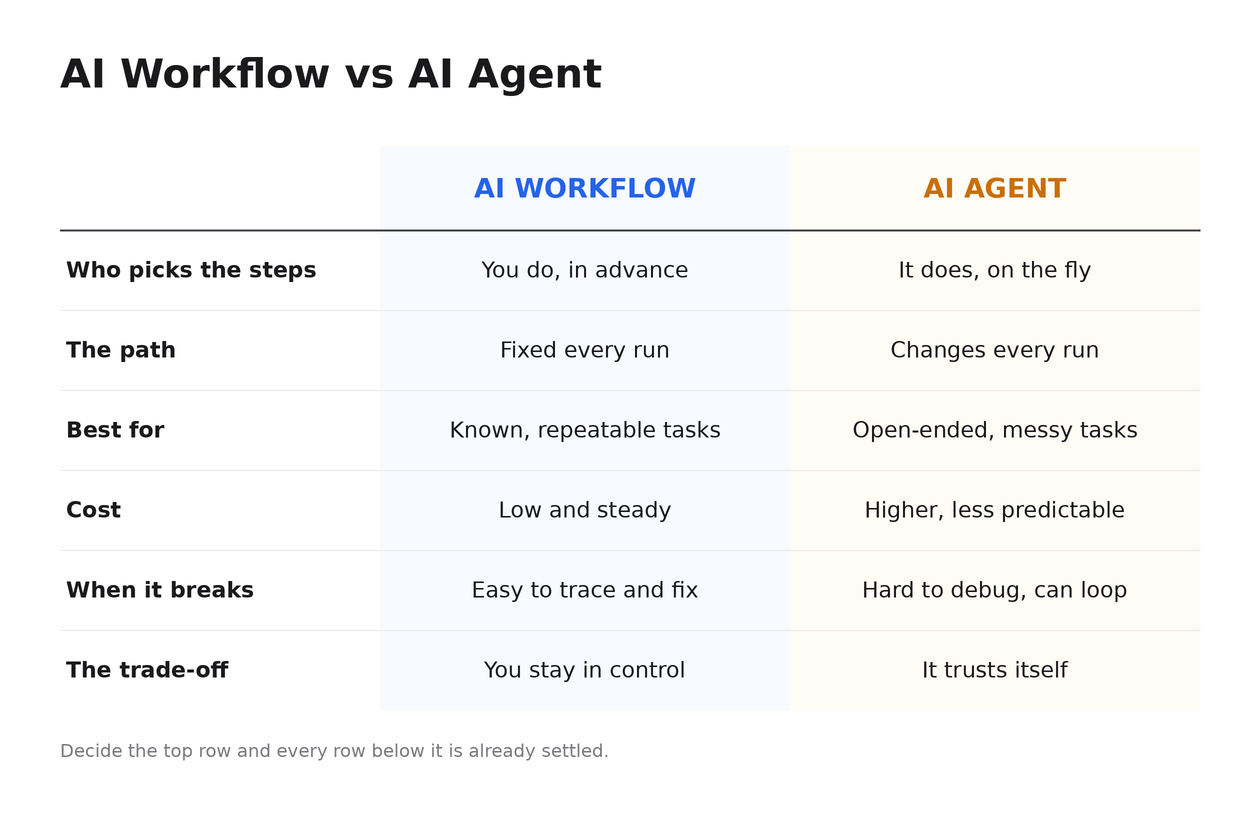
One question splits every AI system into a workflow or an agent. And it all boils down to:
Who decides the steps?
A workflow runs your script
A workflow walks a path someone already drew.
The sequence is locked before a single email arrives, and the model only fills the slots that need a brain.
Back to that inbox. Sort by topic, pull the order, draft from a template, send.
The model does the sorting and the writing, but the road never bends. It cannot read a strange message and decide today calls for a detour.
A recipe is the closest thing to it. The cook is skilled and the knife work is real, but the steps and their order belong to whoever wrote the card.
Underneath, almost every workflow turns out to be one of three plain forms. Chain the steps so each output feeds the next.
Classify the request up front, then send it down its own lane. Or fire several checks at once and gather what comes back.
Dress it up however you like, that is most of business automation.
An agent writes its own
An agent starts from a goal and a toolbox, then builds the road as it walks.
First move, second move, whether to circle back, when to quit. None of that lives in a script.
Same inbox, different animal. The agent reads a complaint, decides on its own to open the order system, spots that the package shipped cracked, checks what the refund policy permits, sends the money back, and writes the customer a note.
Nobody choreographed any of it. The thing reasoned its way through in real time.
That improvisation is the entire appeal and the entire hazard. A workflow keeps your plan. An agent throws the plan away and bets on itself.
Every real argument about cost, risk and control grows straight out of that one fact.
2. Why Most of What You Want Is a Workflow
The instinct runs backward. Founders reach for the harder, smarter-sounding option, certain their problem deserves it, when the plain one fits almost every time.
At the end of the day, the agent is the exception and not the opening move.
Agents feel like the real thing
An agent looks like arrival. Autonomous, reasoning, deciding without anyone holding its hand.
Building one feels like graduating from plumbing to intelligence, and that feeling has sold an enormous amount of software nobody needed.
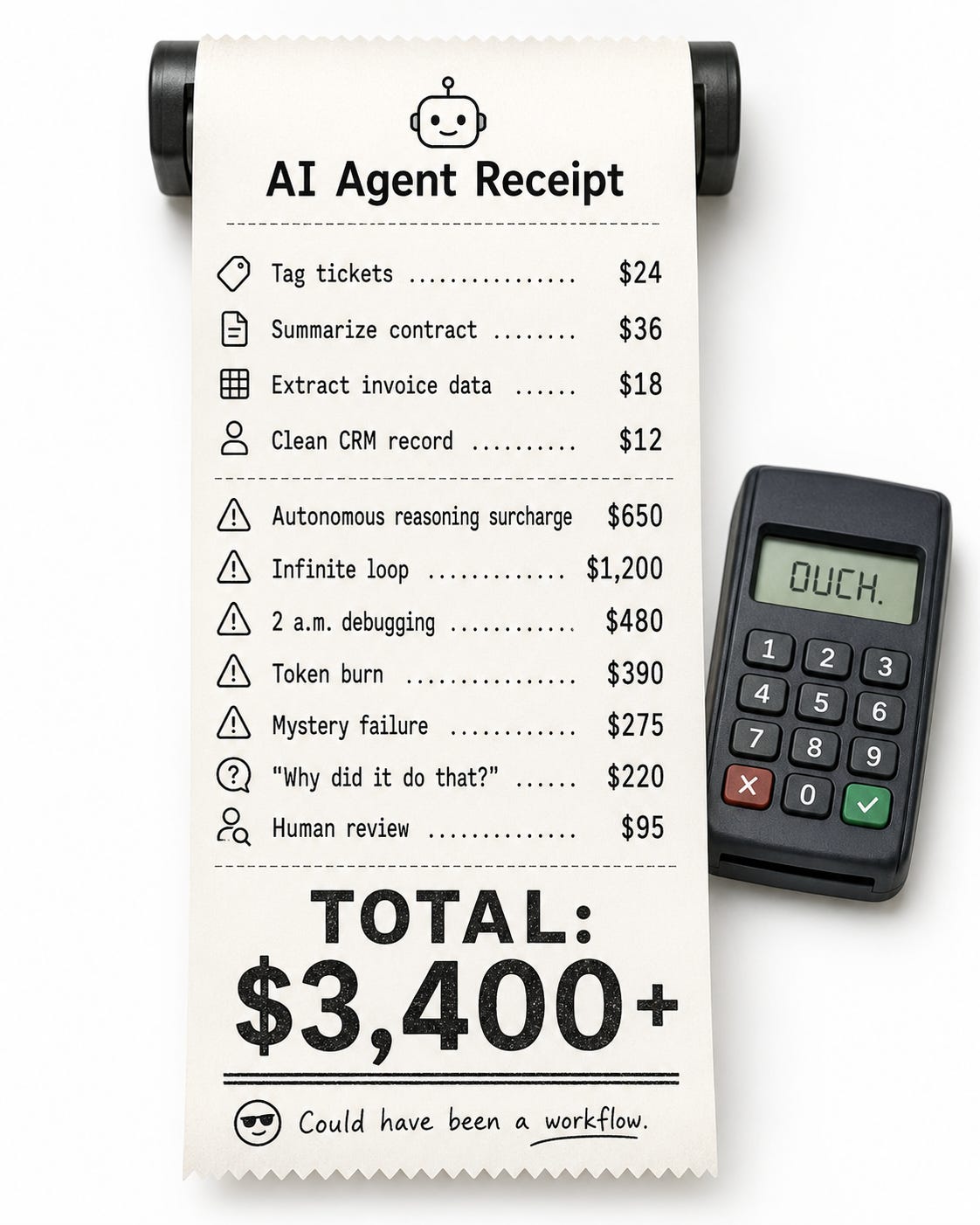
Look at the actual work, though. Tagging tickets. Summarizing a contract. Drafting a first pass. Lifting figures off an invoice. Tidying a CRM record.
Every one of those has a known form, and a workflow handles known forms cheaper, faster, and without a surprise at 2 a.m.
Autonomy is never free. An agent can loop on one step until the credits run out, talk itself into something absurd, or stall in a corner you never thought to test, and because the reasoning happens in the dark, you may never learn why.
The bill for that freedom arrives as cost, as debugging time, and as the runs that simply go wrong.
The honest test
A ten-second test ends most of these debates. This is it:
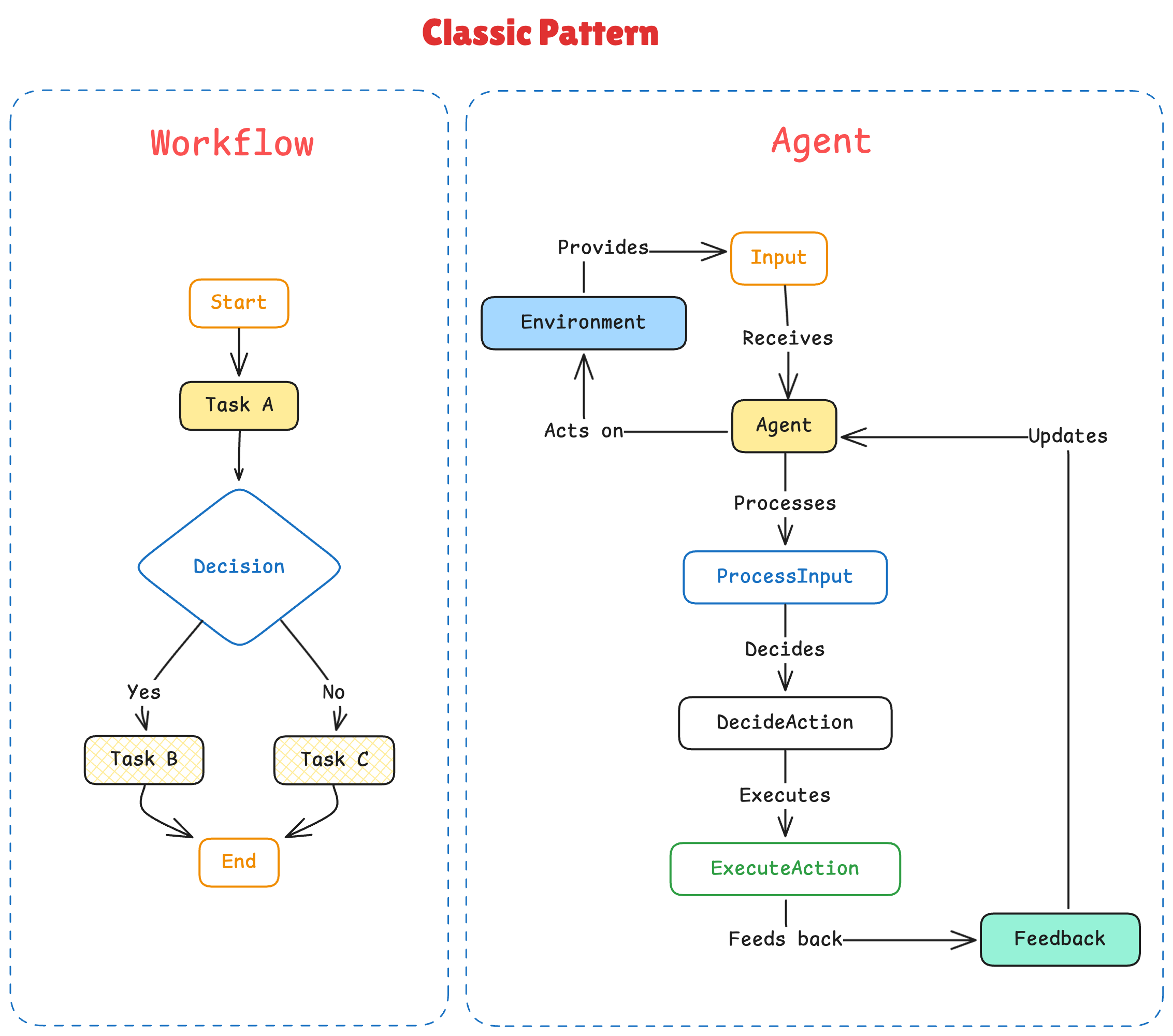
Could you draw the flowchart yourself?
Yes means build the workflow. The path is knowable, so write it down. What comes back is steady, the kind of thing a junior engineer can fix on a Tuesday without paging anyone senior.
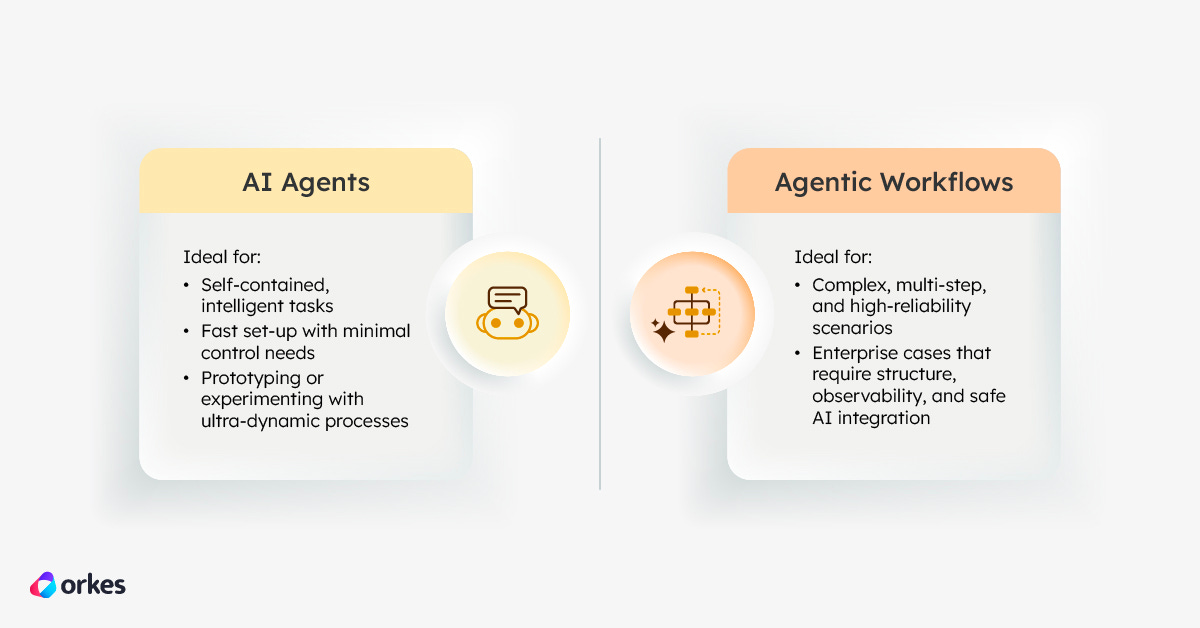
A real no, where the right steps genuinely hinge on what the system uncovers and reshuffle on every run, is the one place an agent earns its keep.
Even there, letting it roam loose is the rookie error. So put structure around the autonomy.
The agent owns the open-ended part, but it runs inside a process with checkpoints, a log of everything it touched, and a human gate at the moments that carry money. The flexibility survives and the blindness dies.
That hybrid has a name, the “agentic workflow”, and for the handful of problems that truly need a mind of their own, it beats a naked agent nearly every time.
3. You Can’t Buy Your Way There
Choosing the right architecture clears half the problem. The other half kills more projects than any model ever has, and it is the quiet belief that value ships in a box you can buy and bolt onto this morning’s process.
The lesson from the last big rewiring
Think of it like this:
Electricity reached the factory floor decades before it paid a dime. Owners ripped out the steam engine, dropped an electric motor in the same spot, and changed nothing else. Output barely moved.
The payoff waited on a smaller idea. Motors could be cheap and tiny, so every machine could carry its own, so the floor no longer had to crowd around a single shaft of power. Arrange the machines in the order the work actually flows, and you have invented the assembly line.
Nobody got rich buying the motor. The money lived in redrawing the whole building around what a cheap motor suddenly made possible.
Redesign beats a shopping spree
AI repeats the pattern beat for beat. A license here, a seat there, the process underneath frozen exactly where it stood.
The tools see a little use, the results land flat, and a meeting goes on the calendar to ask where the magic went.
A system that does not understand how the work truly happens gives back nothing worth keeping. The people who own that work and were never consulted will route around it on instinct, and adoption stays thin no matter how clean the demo looked.
The honest move is to take one process and cut its work into three piles.
Rule-bound steps get scripted.
Judgment steps go to AI inside a workflow.
The heavy calls stay with a human who has to answer for them.
Most of the value hides in the first two piles, not in some oracle that does everything at once.
Going live is not a switch, either. Run it in a sandbox, then in shadow mode beside the people still doing the job by hand, then in supervised production once it has earned a little trust.
Log every action and every correction so the thing keeps sharpening instead of freezing at the accuracy it had on launch day.
4. The Filter Nobody Bothers to Apply
Workflow or agent is the second question. The first one, the one almost everyone walks straight past, is whether the task deserves automating at all.
Skip it and a full month can vanish into something that never held a payoff.
Four things worth checking first
Volume leads. The task should run hundreds or thousands of times a month, or touch enough money that improving it lands on a real line of the books.
Pattern follows. Not carbon-copy identical, but regular enough that rules and old examples still bite.
Scatter belongs on the list too. The more a person bounces between Gmail, Slack, a spreadsheet and the CRM to finish one task, the more an automation has to pull together.
Last, the pain has to sit still long enough to measure. Hours burned, errors logged, deals stalled, a number you can name today and check again later.
No measurement, no way to know you won.
Run a candidate against all four bars and watch most of them trip on at least one, which is the entire point of owning a filter.
Write it down before you wire it up
One step decides the result, and it touches no software at all. Write the process out by hand. Every move, every odd exception, in the words a person would actually use to explain it.
Output quality sits downstream of input clarity, almost completely. Feed the model fog and it hands fog right back. The slop everyone pins on AI is usually slop somebody fed in first.
An afternoon of honest documentation, then handed to the model to draft a plan and pick fights with your logic, is the highest-return hour in the whole build. It happens once per process and never again.
5. Where to Actually Point It
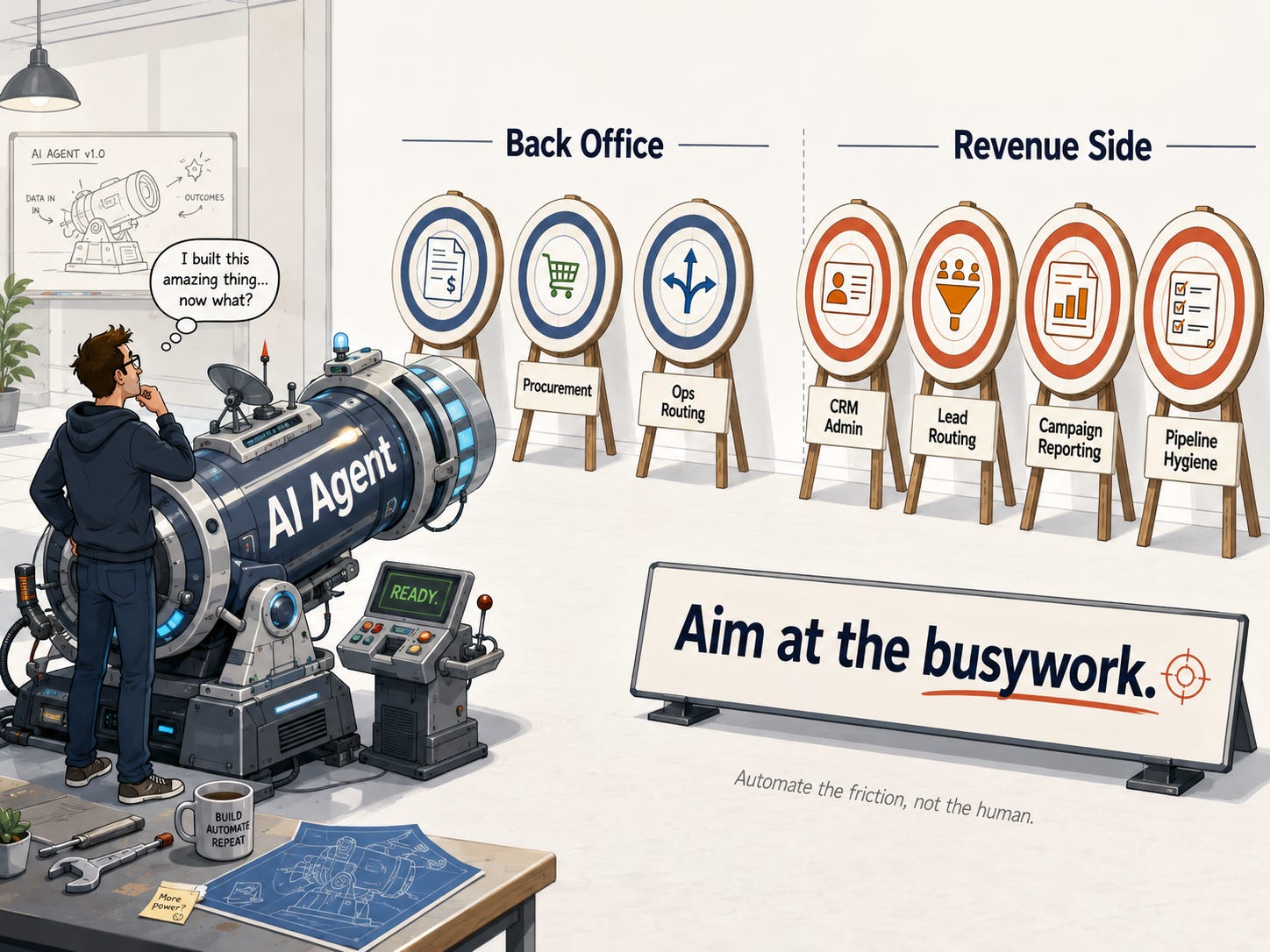
Knowing the difference is dead weight without a place to aim it. A short list of functions keeps surfacing as the right first ground, because the work there runs nonstop, sprawls across systems, and bores everyone unlucky enough to do it by hand.
Start in the back office
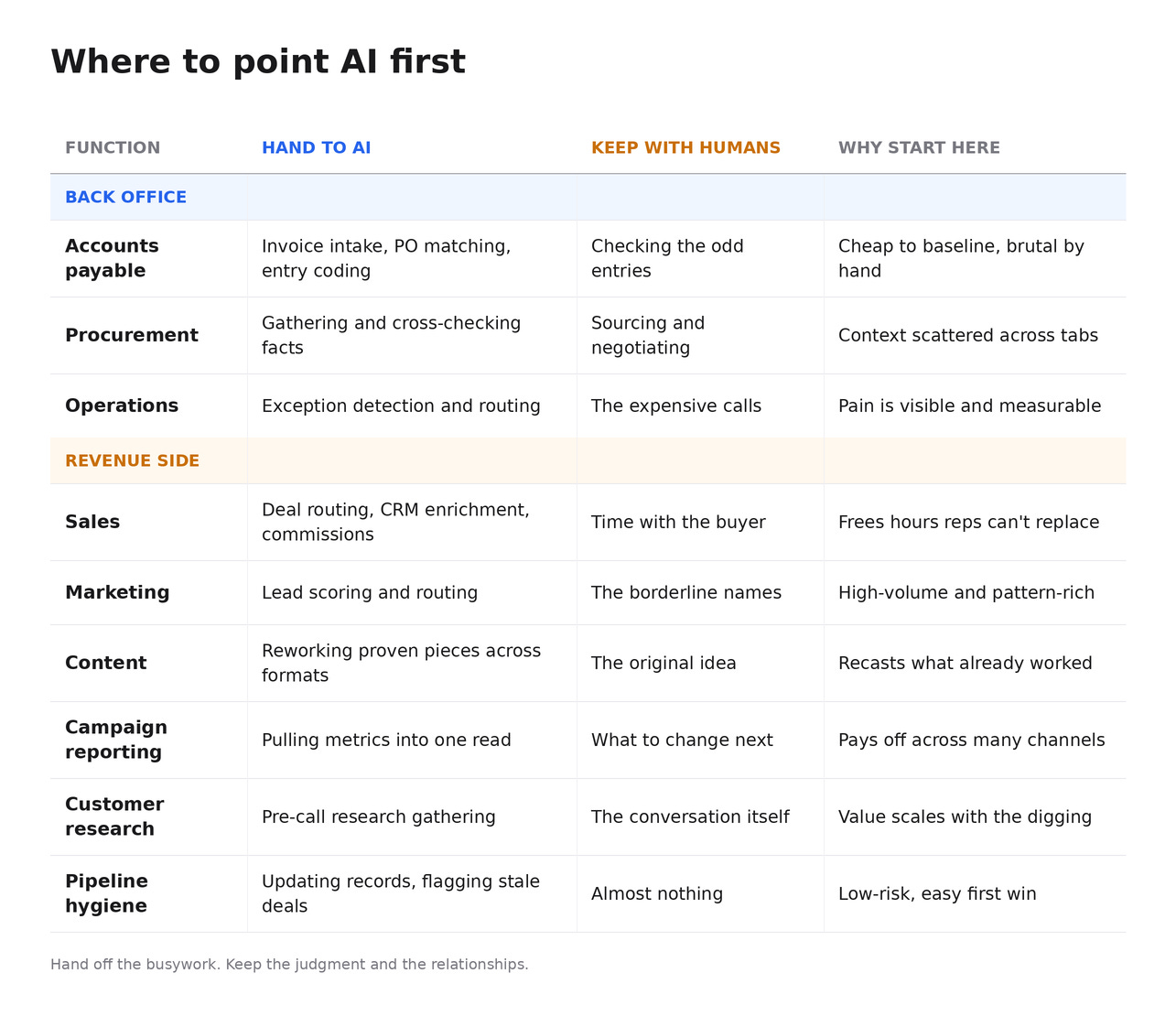
Accounts payable is the cleanest opening move in most companies. Invoice intake and purchase-order matching are rules in a costume, so script them.
Coding entries to the right account asks for a little judgment, so let AI take the first swing and let a person check the odd ones. Cheap to baseline, miserable by hand, easy to love.
Procurement lives on context buried inside contracts, portals and inboxes. Onboarding a vendor or testing compliance means dragging facts out of six open tabs.
Automate the dragging and leave the sourcing and the negotiating to people who can read a room.
Operations is a machine built for exceptions, and routing them is repetitive, patterned, automatable work. Returns and allocation blend hard rules with judgment, so a workflow with a human watching the expensive calls beats setting a loose agent free in the warehouse.
The pain, the delays and the misroutes, sits in plain sight and counts itself.
Then the revenue side
Sales buries fortunes in clerical work. One large deal can cross six teams and eleven handoffs before anyone signs. Routing it, enriching the CRM, running commission math, all of it devours hours a rep should spend across the table from a buyer.
Lift it off their plate and you hand back the only resource they cannot make more of.
Marketing is the most tempting ground to automate and the easiest to wreck. Lead scoring and routing is high-volume and pattern-rich, a strong early bet, as long as a human still studies the borderline names instead of trusting the score blind.
Botch this one and the cost is not wasted minutes, but most likely dead deals.
Content is the piece everyone sprints at and limps away from. Treat it as a button that prints posts and you get exactly what that sounds like. The win is feeding it something that already worked and reworking that across formats, so the model recasts proven ideas instead of conjuring hollow ones from a cold prompt.
Campaign reporting earns its automation the second the volume starts to ache. Hauling numbers out of ad platforms, email tools and analytics into one straight answer is repetitive and scattered, the precise sweet spot.
One channel trips the volume bar. Ten channels pays you back every Monday you stop losing to the rollup.
Customer research rewards you in proportion to how far people have to dig today. A rep assembling the company site, fresh news, old tickets and CRM history before every call is doing exactly the hunt an automation erases. A clean single source of customer truth shrinks the prize, so slide it down the list.
Pipeline hygiene is the dull one worth doing first anyway. Records kept current, stale deals flagged, blank fields chased down. It never stops, reps loathe it, the cost is trivial to measure, and a wrong move costs nothing to undo.
One line ties the function together. Give the busywork to the machine so people pour their hours into judgment and relationships, where revenue is genuinely won and lost. Automate the friction around the human work, never the human work itself.
Outreach mass-produced with nobody in the loop reads as exactly that, and it spends the trust you were trying to earn.
6. The Part You Won’t Want to Hear
Failed AI projects rarely die of bad models. The models are fine.
AI projects die because someone bought autonomy the business would never touch and skipped the unglamorous work that turns any of this into money.
That unglamorous work is the entire game.
Map a process by hand, script the dull stretches, point AI at the judgment, keep the weighty calls human, then measure what actually changed. None of it looks good on a slide. All of it shows up on the P&L.
The companies pulling ahead are not the ones with the flashiest agents. They are the ones who ran that boring loop once, watched it pay, then ran it again on the next process, and the next, until the whole place had rebuilt itself around work that compounds.
The agent can wait. The honest first step is admitting the thing you needed was a workflow, and that chasing the cooler toy is what slowed you down.
Vendor terms are moving faster than agent capability, and terms are the cheaper thing to check. Anthropic's announcement of 1 September 2026 introduces Enterprise Frontier Safeguards, which pairs zero data retention with misuse detection by holding data in cloud infrastructure the customer controls rather than Anthropic's. The same page states that 30-day retention was introduced starting with Fable 5, and that eligible customers keep zero retention on Fable 5 and 5.1 until the new arrangement is ready, rolling out in phases from later this autumn. For a company with no AI team, reading the retention terms costs an afternoon. The page does not define who counts as eligible.
Correct, and vendors know it: ‘agent’ commands a 3x markup over ‘automation’ in the same RFP. Ask what state it persists across turns before you pay agent prices.