

Humans are terrible at consciously identifying AI text. Penn State found people spot it only 53% of the time, barely better than a coin flip.
But unconsciously? Different story. Content perceived as AI-generated tanks purchase intent across every experiment researchers have run. LinkedIn’s algorithm punishes AI posts with 30% less reach and 55% less engagement.
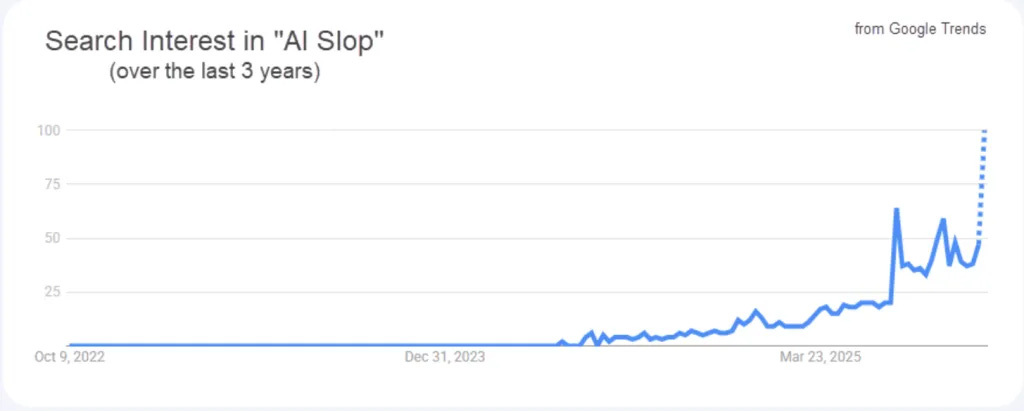
Readers may not know why your writing feels off. They just scroll past it.
2025: The Year AI Content Got Dangerous
In August, Press Gazette uncovered that a fictitious journalist named “Margaux Blanchard” had published AI-generated articles in Wired, Business Insider, SFGate, and three other outlets since April. The articles cited sources that didn’t exist. A Wired feature about couples marrying in Minecraft quoted a “Jessica Hu” who was entirely fabricated.
The scheme collapsed when an editor received a pitch about “Gravemont,” a supposedly decommissioned mining town in Colorado. The town was made up. Business Insider pulled 40 essays.
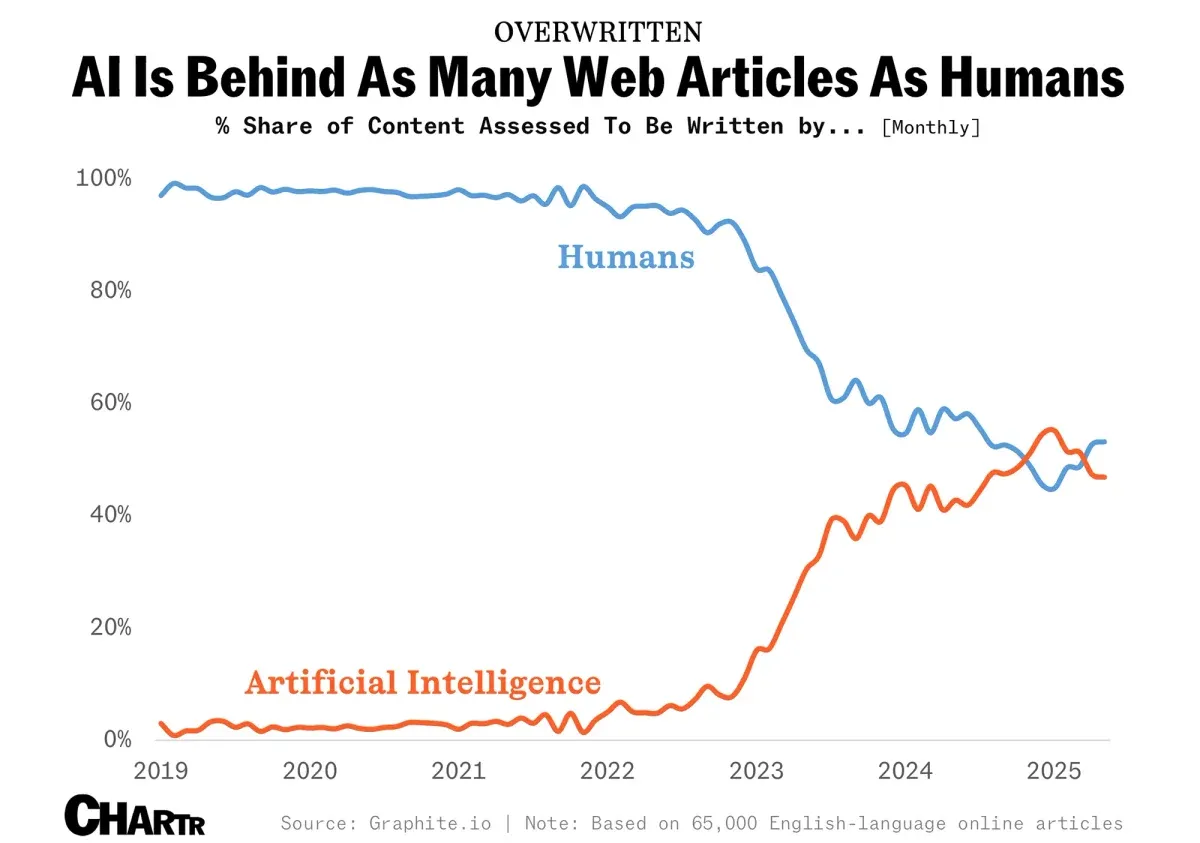
On LinkedIn, 54% of all long-form posts are now likely AI-generated. A 189% increase since ChatGPT launched.
The business cost is measurable. 52% of consumers reduce engagement when they suspect content is AI-generated. Simply mentioning “AI” in product descriptions decreases purchase intent.
If your writing pattern-matches to “robot,” you’re paying a price whether you know it or not.
🔒 Premium content below. What the research says makes AI writing detectable, the techniques top creators use to fix it, and a complete workflow you can implement this week.