

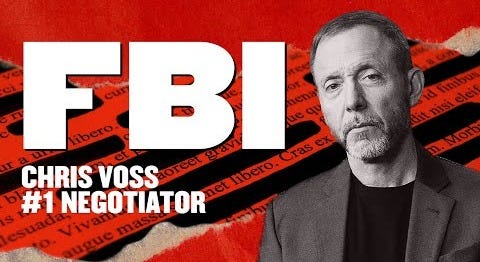
Before becoming a business celebrity, Chris Voss spent more than two decades negotiating kidnappings for the FBI.
These were conversations where emotions were volatile, trust was fragile, and a single sentence could change the outcome. That experience shaped everything that followed.
It also explains why Never Split the Difference resonated far beyond law enforcement.
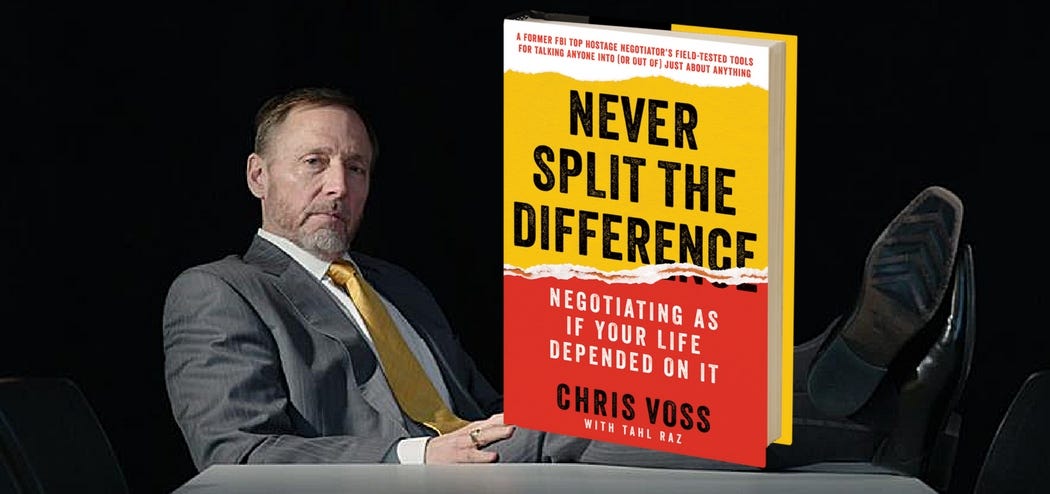
Founders, operators, sales leaders, and executives picked it up because it offered something rare.
A practical system for handling conversations when logic alone stops working.

Why Voss’ work spread so fast
Voss did not frame negotiation as persuasion or clever argumentation. He framed it as preparation.
His approach focused on:
Designing conversations before they happen
Anticipating emotional reactions, not debating positions
Entering high-stakes moments with structure rather than instinct
Once you see it that way, his techniques stop feeling like advice and start feeling like tools.
That makes them surprisingly easy to translate into AI prompts.
The shift that makes this work
Most people use AI around conversations in a reactive way.
Something goes wrong.
Tension rises.
Then they open ChatGPT and ask what they should have said.
Voss worked in the opposite direction.
He planned conversations in advance.
He thought in sequences rather than sentences.
He put emotions first and logic second.
That mindset maps cleanly to AI.
Used properly, AI becomes a preparation layer, helping you walk into conversations with clarity and structure instead of improvising under pressure.
The goal is not to talk for you.
The goal is to help you show up prepared.
The core insight behind Voss’ method
Negotiations rarely fail because people disagree on facts or numbers.
They fail because one side does not feel understood.
Voss called this tactical empathy, the practice of:
Identifying emotions
Naming them explicitly
Slowing the pace of the conversation
Giving the other person a sense of control
When you prompt AI with this mindset, the output changes immediately.
It stops sounding like generic advice and starts looking like a conversation plan, one grounded in how people actually think and react when stakes are high.
That is where this becomes useful.
Before you copy these, one thing
These are not “what should I say” prompts.
They are pre-conversation planning tools.
I use them before difficult conversations. Budget approvals. Salary talks. Client resets. Personal conflicts. Anything where reacting in the moment usually makes things worse.
Once you start preparing this way, it becomes obvious why most people feel negotiation is stressful. They walk in blind.
These prompts remove that.
They force you to slow down, understand the other side, and design the conversation instead of improvising it.
I do not use all of them every time. But I always use at least one.
The six prompts
Turning pressure into their idea
Defusing tension before you make the ask
Getting real buy-in instead of polite agreement
Running an accusation audit
Using “no” to create safety and engagement
Structuring money conversations with the Ackerman Model
Below are the exact prompts you can copy and paste, plus when to use each one.
This is where it stops being theory and becomes practical: