

In 2026, four of the biggest companies in AI launched deployment efforts backed by more than $7.6 billion, all built around engineers who work inside customer organizations.
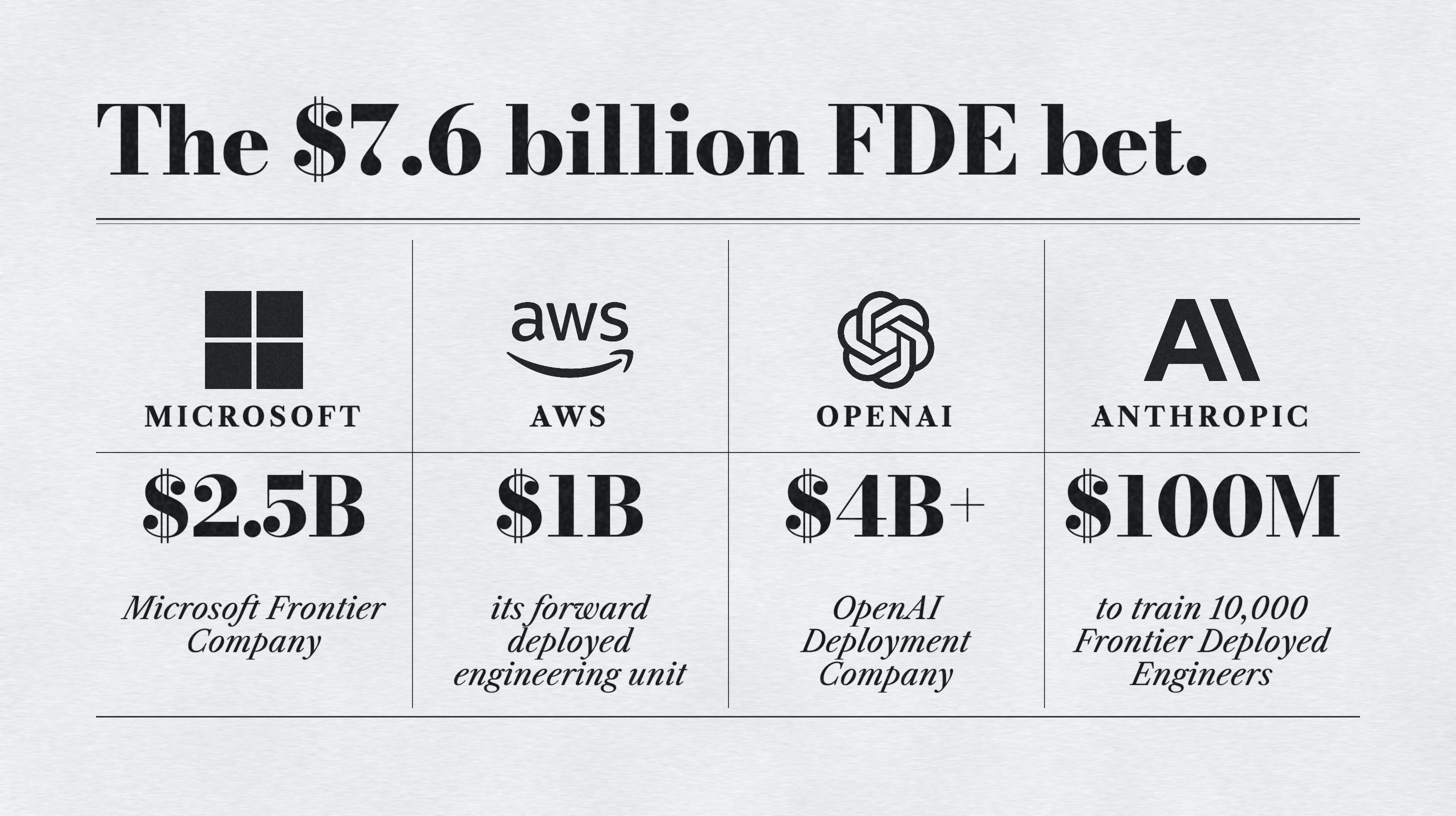
Microsoft put $2.5 billion and 6,000 industry and engineering experts into Microsoft Frontier Company. AWS committed $1 billion to its forward deployed engineering unit. OpenAI launched the OpenAI Deployment Company with more than $4 billion of initial investment and bought Tomoro to staff it with about 150 FDEs. Anthropic put $100 million behind a plan to train 10,000 Frontier Deployed Engineers by the end of 2027, and it launched Ode, an AI services firm, with Blackstone and Hellman & Friedman.
The job market moved with them. U.S. postings for forward deployed engineers went from fewer than 200 in 2023 to about 1,200 in 2025, then passed 7,300 in the first nine months of 2026, according to Lightcast. The median advertised salary reached $195,456.
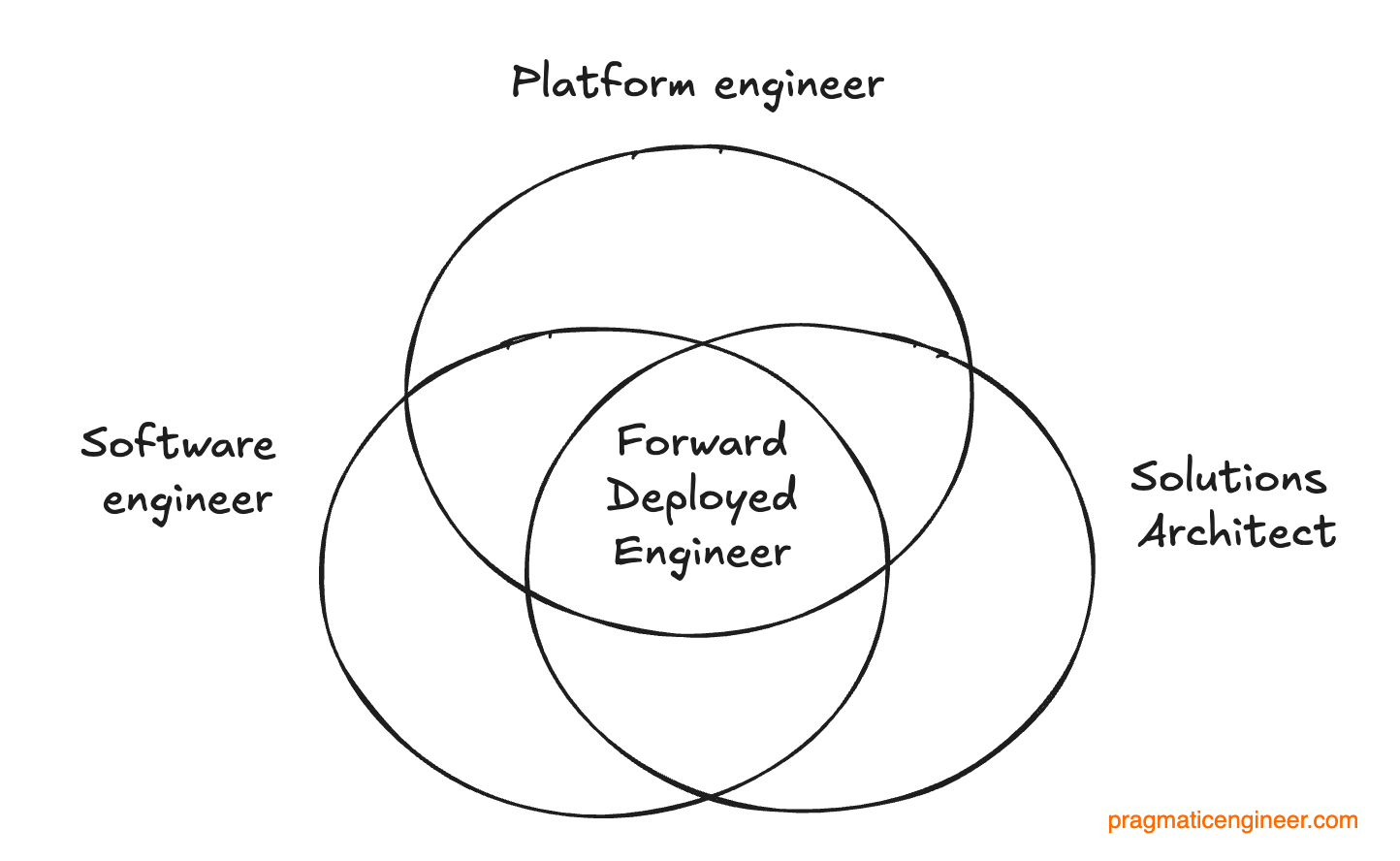
Here is the part founders feel first: the same FDE line item builds a moat at one company and a consulting firm at another. The difference shows up later in your gross margin, when it is expensive to fix.
The free part shows where FDE hours go. The paid part gives you the math and the templates to run the motion as a product engine.
Why enterprise AI needs engineers in the room
Enterprise AI breaks in the last mile, where the model meets old data and long approval chains.
MIT’s NANDA researchers reviewed more than 300 public AI initiatives in 2025 and interviewed 52 organizations. In that sample, customized tools built with outside partners reached deployment about 67% of the time. Internal builds got there about 33% of the time.
That gap is the FDE business case in one number. Buyers want the model. They also need someone who can wire it into their systems and stay until it works.
Palantir is the reference case. Its U.S. commercial revenue hit $984 million in Q3 2026, up 148% year over year, and passed its U.S. government revenue for the first time, Palantir reported. Its AIP Bootcamp pitch is “From 0 to use case in 5 days.” The founder side of that story is in Alex Karp’s 12 lessons from Palantir’s run.
AI startups run the same play at a faster clock speed. Sierra passed $400 million in ARR in October 2026, with a dedicated deployment team on each account and prices tied to outcomes. In its own words, a large U.S. retailer went from first meeting to live agent in 27 days.
Where FDE hours actually go
ICONIQ asked AI builders in 2026 what their FDEs mainly do. The answers split four ways.
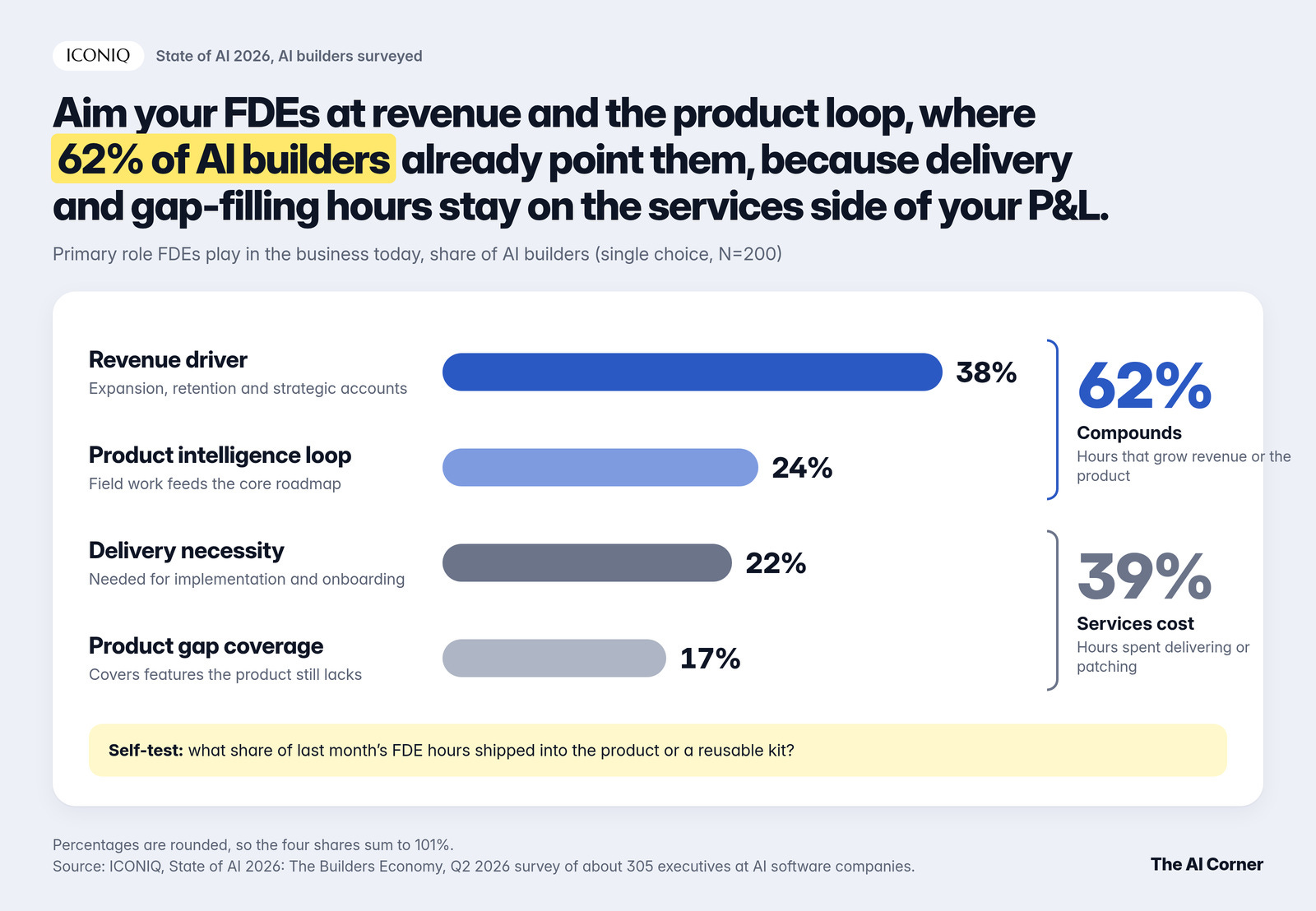
38% run FDEs as a revenue driver, tied to expansion and retention. 24% run them as a product intelligence loop, where field work feeds the core roadmap. 22% need them for implementation and onboarding. 17% use them to cover features the product still lacks.
The first two groups are paying for future product and future revenue. The last two groups, 39% of respondents, are paying for delivery capacity that grows with every new logo.
Answer these four questions to see which group you sit in today:
What share of last month’s FDE hours shipped into the core product or a reusable kit?
How much single-customer code does your team maintain right now, and which way is that number moving?
How many of your FDE accounts have a date when the engineer steps back?
When you charge for FDE time, does the price map to a customer outcome?
Fuzzy answers usually mean the team is drifting toward services. The drift is fixable, and most of the fix is measurement plus pricing.
What the premium section adds
Palantir worked this out in the 2010s with a simple loop. Field engineers built fast for one customer, and a product team turned the repeated parts into tools that made the next deployment faster. The paid section turns that loop into numbers you can track every week.
Inside the premium FDE operating math:
Six FDE models running right now at Palantir, Sierra, ElevenLabs, Ramp, Decagon and the labs, and what each one buys with its engineers’ time
The margin path of implementation-heavy leaders like Workday and Palantir, which gained about 16 to 21 points of gross margin after a services-heavy start, plus the budget rule that follows
A one-page FDE P&L with the payback formula and a worked example you can copy into your own model
The FDE pricing ladder: five real price structures, from a $40K bundle to a $500K impact-gated pilot, and when to use each one
The Build-Back Ledger: four tags and six metrics that show whether FDE hours become product
The hire-now scorecard and a 90-day launch plan to set up your first FDE accounts
A one-page Deployment Charter you can copy into your next enterprise deal
Upgrade to get the full FDE math and the templates below.