


When we invested, one company in our portfolio was making around $100K a year. A year later it was at $7M ARR, and one of the major AI labs acquired it before it ever raised a Series A.
That company is one of the 53 we’ve backed with our own angel checks and through GR Angel, and 42 of them come from Y Combinator. In each of those rounds, the founder decided to let us in.
People often ask how two writers get allocations in YC rounds that fill in a few days. Below is our answer, and then how GR Angel will work in 2027.
Disclosure: we’re investors in every startup named in this article.
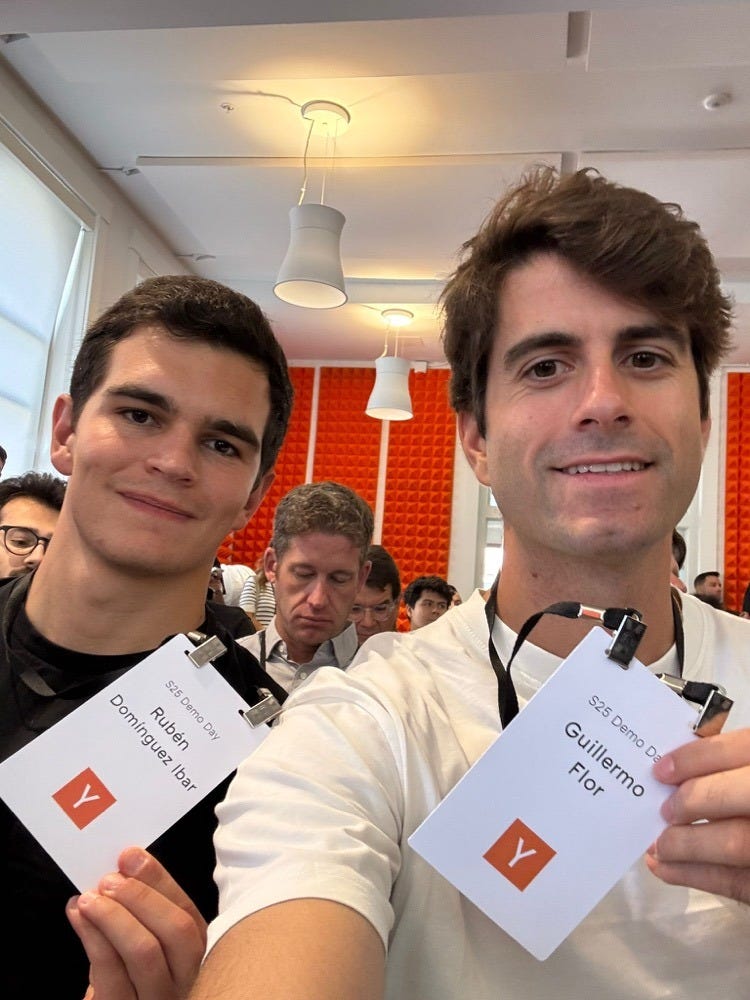
Founders choose who gets in
Every company accepted to Y Combinator gets the same deal: $500K, with $125K for 7% and $375K on an uncapped MFN SAFE (YC). YC does the first round of picking, and every company in a batch starts from the same terms.
Orange Collective puts the historical unicorn rate of an average YC batch at 6.5% (Orange Collective). The best rounds in each batch are oversubscribed, and the founders decide who gets an allocation.
That makes access the hard part of angel investing in YC. The founders we want to back usually have several investors competing for the same small allocation, and every one of them offers money on similar terms. Founders pick the investors who bring the most value beyond the check, and they remember who delivered for the last company they heard about. To get in, you have to show up with something specific, like customers and introductions to the next round’s investors.
Guillermo wrote about this in November 2025, when a16z set up a New Media team to help its founders get attention, and he summed up the market in one line: “Capital is abundant, attention is scarce.”
Why we spend most of our time on YC
Here is YC’s track record:
More than 400 YC companies are valued above $100M, and more than 100 above $1B (YC).
Over a dozen YC companies are public, and the combined valuation of YC alumni is over $800B (YC).
Airbnb went public in 2020 at a valuation of over $100B, Coinbase in 2021 at $86B and DoorDash in 2020 at $39B, while Stripe is now valued at $107B (YC).
The average YC Demo Day valuation is $40M post-money, so a company needs a 25x step-up to reach $1B (Orange Collective).
Y Combinator has funded more than 5,000 companies since 2005, and every three months more than 10,000 companies apply for a batch that typically accepts about 1% of them (YC).
Support continues long after Demo Day. YC says B2B and consumer companies often get their first 40 to 50 paying customers from the YC community (YC), and founders can book office hours with partners year round.
Our edge is attention
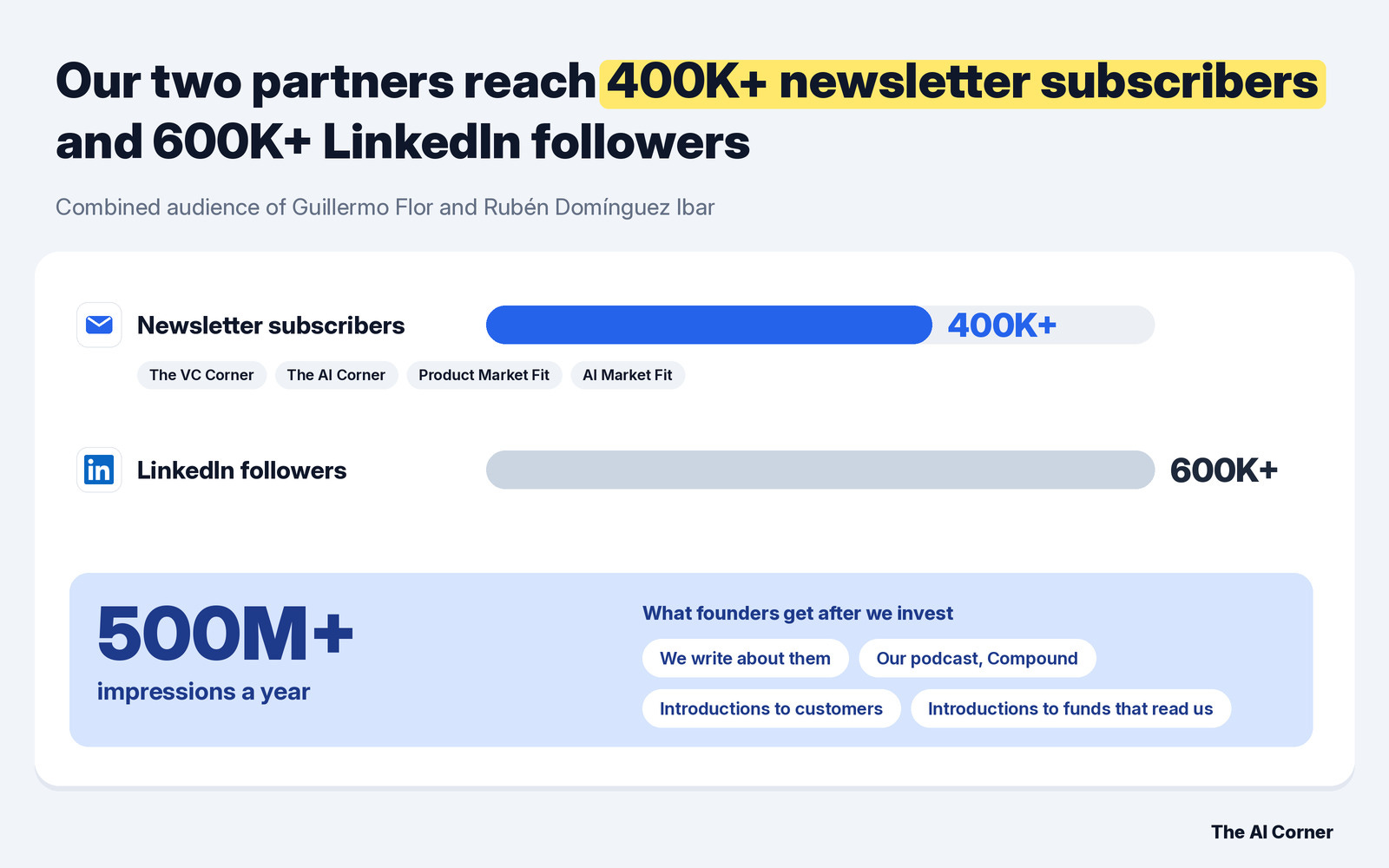
Between us we have 600K followers on LinkedIn and 400K newsletter subscribers, with 500M+ impressions a year. I write The VC Corner and The AI Corner, and Guillermo writes Product Market Fit and AI Market Fit.
When we back a company, we write about it and introduce the founders to the customers and funds that read us. Two results from that work are public. One newsletter feature led to a $1M investment offer for a founder, and one of my posts helped another startup double its ARR.
We also open doors. Our podcast, Compound, has hosted Mark Cuban, Substack co-founder Chris Best and Creandum founding partner Staffan Helgesson, and I’m an official scout for a16z speedrun.
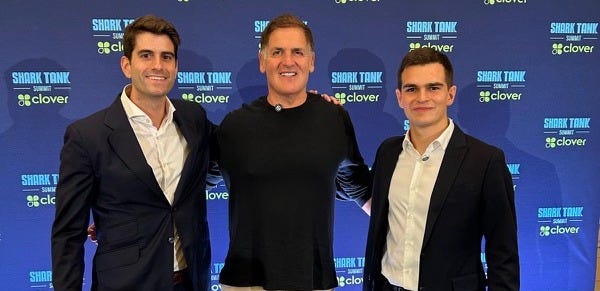
Founders noticed. They started making room for us in oversubscribed rounds because they wanted that support.
Guillermo has a shorter version: “Money is a commodity, you can’t differentiate one dollar from another. Distribution is the moat.”
In 2025 we made 25+ investments with our own money, and in 2026 we said yes to a small group of outside investors for the first time. They asked to put more money in for the following year, and as of October 2026, $2M is already committed for 2027.
Some of the companies we’ve backed
We often join rounds led by tier-1 funds. Across the portfolio, our co-investors include a16z, Sequoia, Founders Fund, Coatue, General Catalyst, Peak XV, Lightspeed, Khosla Ventures, CRV and Kfund. Every figure below comes from the company or the press.
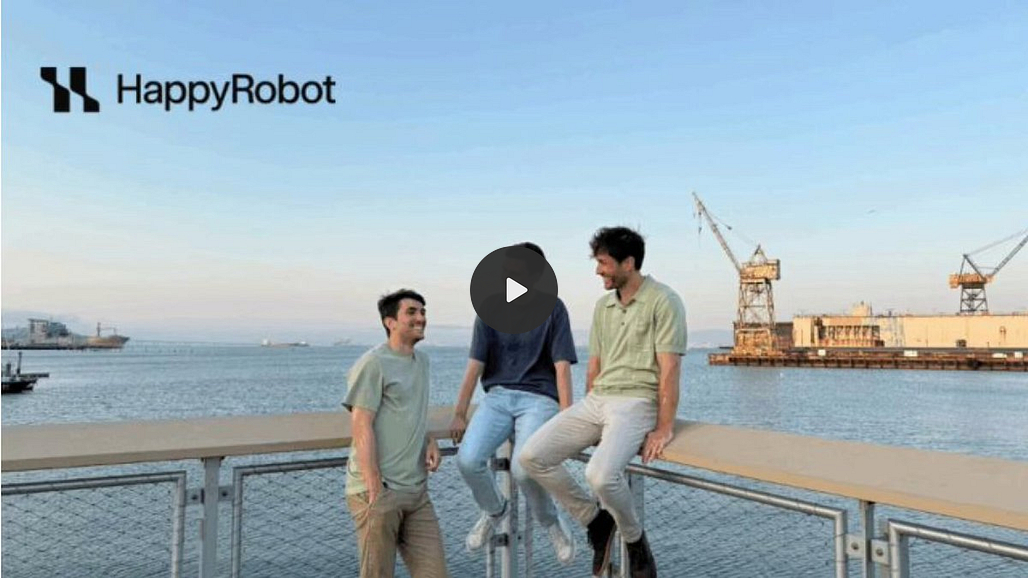
HappyRobot. Pablo Palafox and his co-founders build AI agents for logistics. a16z led the company’s Series A in December 2024, and in August 2026 HappyRobot was valued at $1.2B (Fortune). We interviewed them:

Replit. Amjad Masad and Haya Odeh’s company raised a $400M Series D at a $9B valuation in March 2026, led by Georgian with a16z, Coatue and Y Combinator participating (TechCrunch).
QFEX. Two Cambridge math graduates are building a 24/7 exchange for traditional markets. They raised a $9.5M seed at a $95M valuation, led by General Catalyst with Paul Graham in the round (FinTech Global, March 5, 2026).
Apollo Atomics. This MIT spinout is building nuclear reactors in a factory and closed a $31M seed led by FCVC, with Y Combinator in the round and Paul Graham among the individual investors (Pulse 2.0).
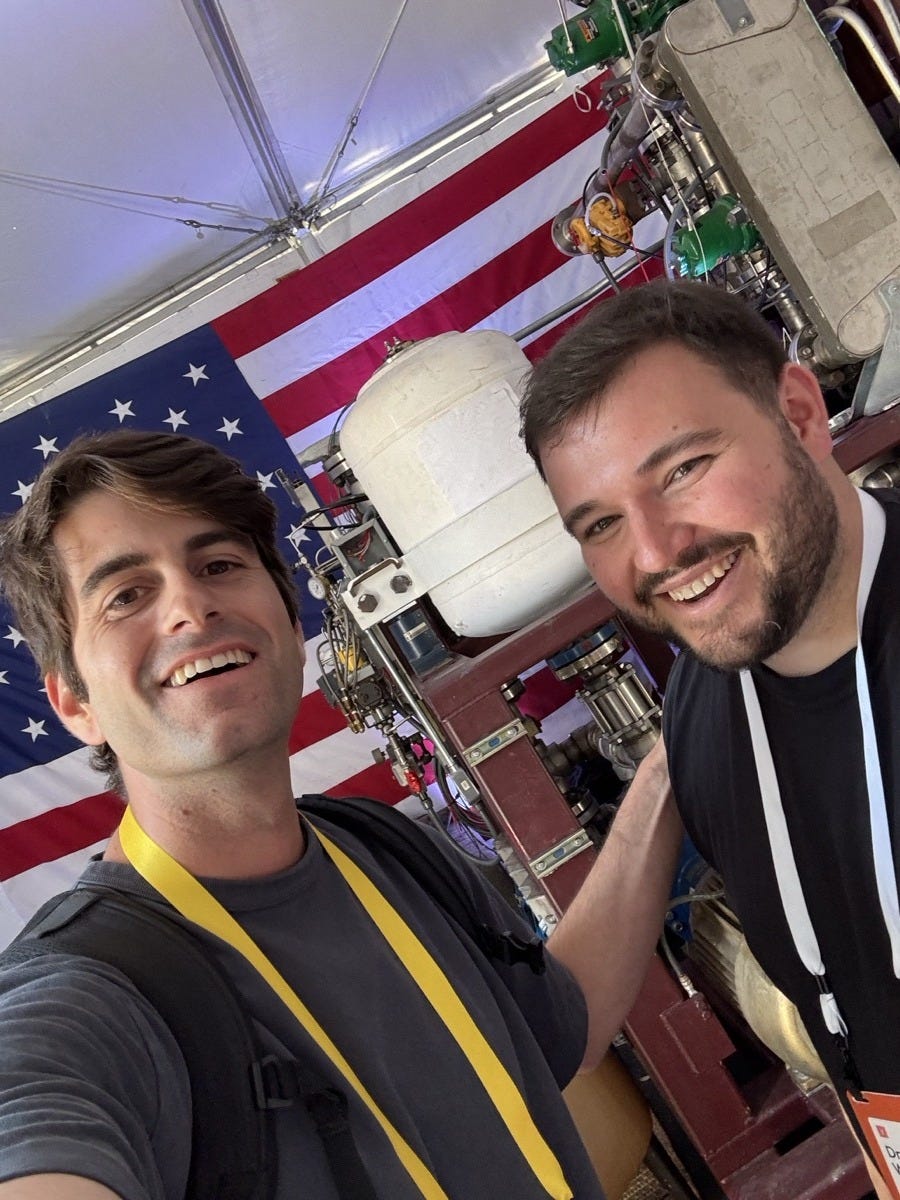
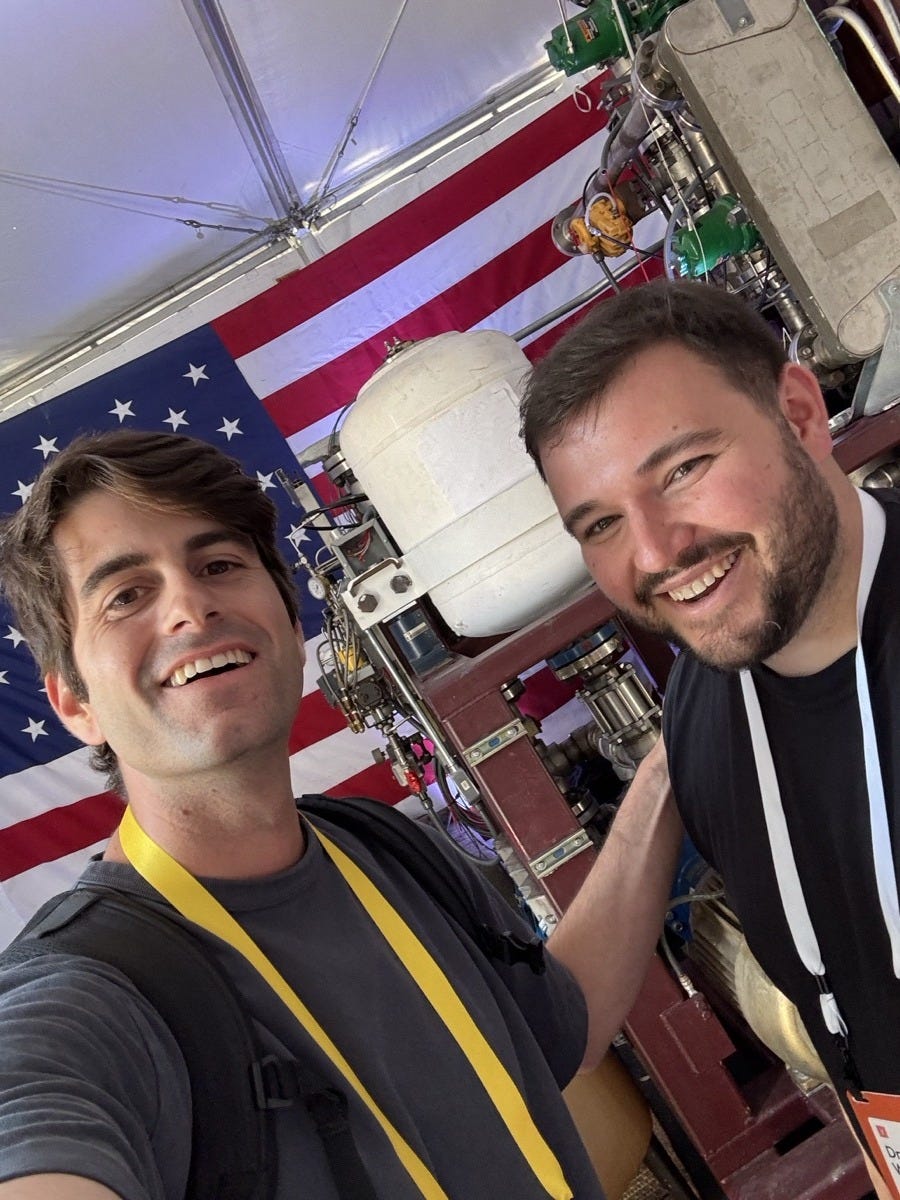
Guillermo with the Apollo Atomics team and their compact steam generator.
More of our 2026 YC investments and who else backs them:
Arga Labs, a $10M seed, alongside investors including General Catalyst, BoxGroup, Emergence and SV Angel (TechCrunch).
LightSprint, a $6.1M seed, alongside investors including 645 Ventures, January Capital, Rebel Fund and Kaz Nejatian of Opendoor (LightSprint).
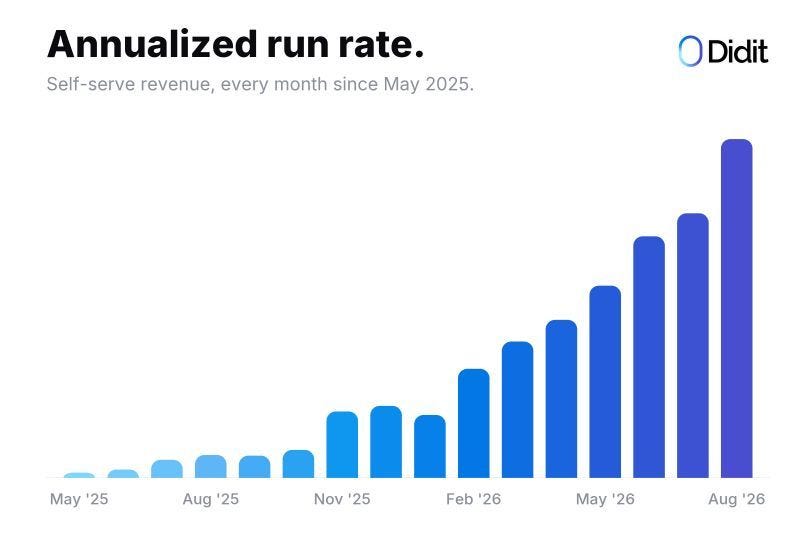
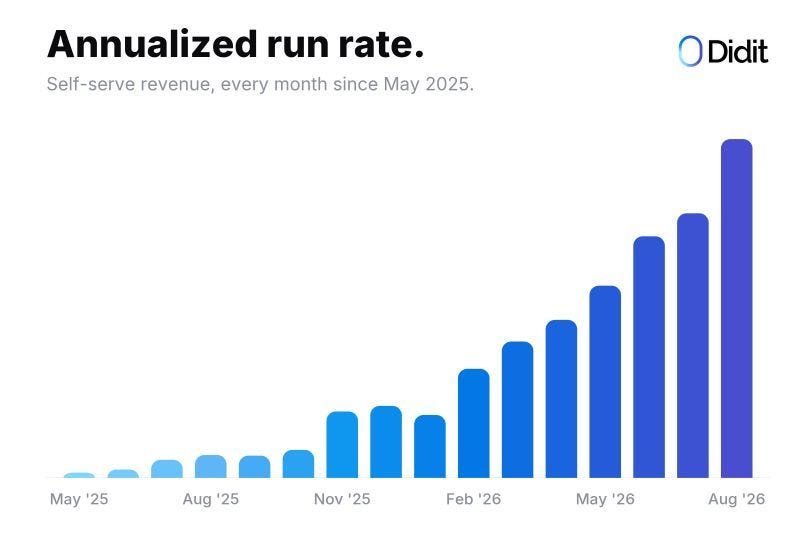
Didit, a $7.5M seed, alongside investors including Pioneer Fund, Robinhood Ventures, Orange Collective and Tomer London of Gusto (Didit).
Prodigy Research, alongside investors including Paul Graham, Coinbase Ventures, DoorDash co-founders Andy Fang and Stanley Tang, and Rick Rubin (007 Venture Partners).
Exosat, alongside investors including Paul Graham, Orange Collective, Robinhood Ventures and early investors in SpaceX and Anduril (007 Venture Partners).
DeepReach, alongside investors including Robinhood Ventures and World Solver Syndicate (World Solver Syndicate).
Karumi. Toni and Pablo build an AI agent that runs live, personalized product demos, and Rebel Fund is among its backers.
If you know someone who wonders how small checks get into big rounds, send them this.
folk: from 2K to almost 500K users in four months
One of the fastest-growing companies we’ve backed is folk, the personal AI that Nozomio builds. It lives in your texts, on iMessage, WhatsApp and Telegram, in the same personal-agent category as Instinct and Muse.
Here is how its user count grew, based on numbers the company shared with us:
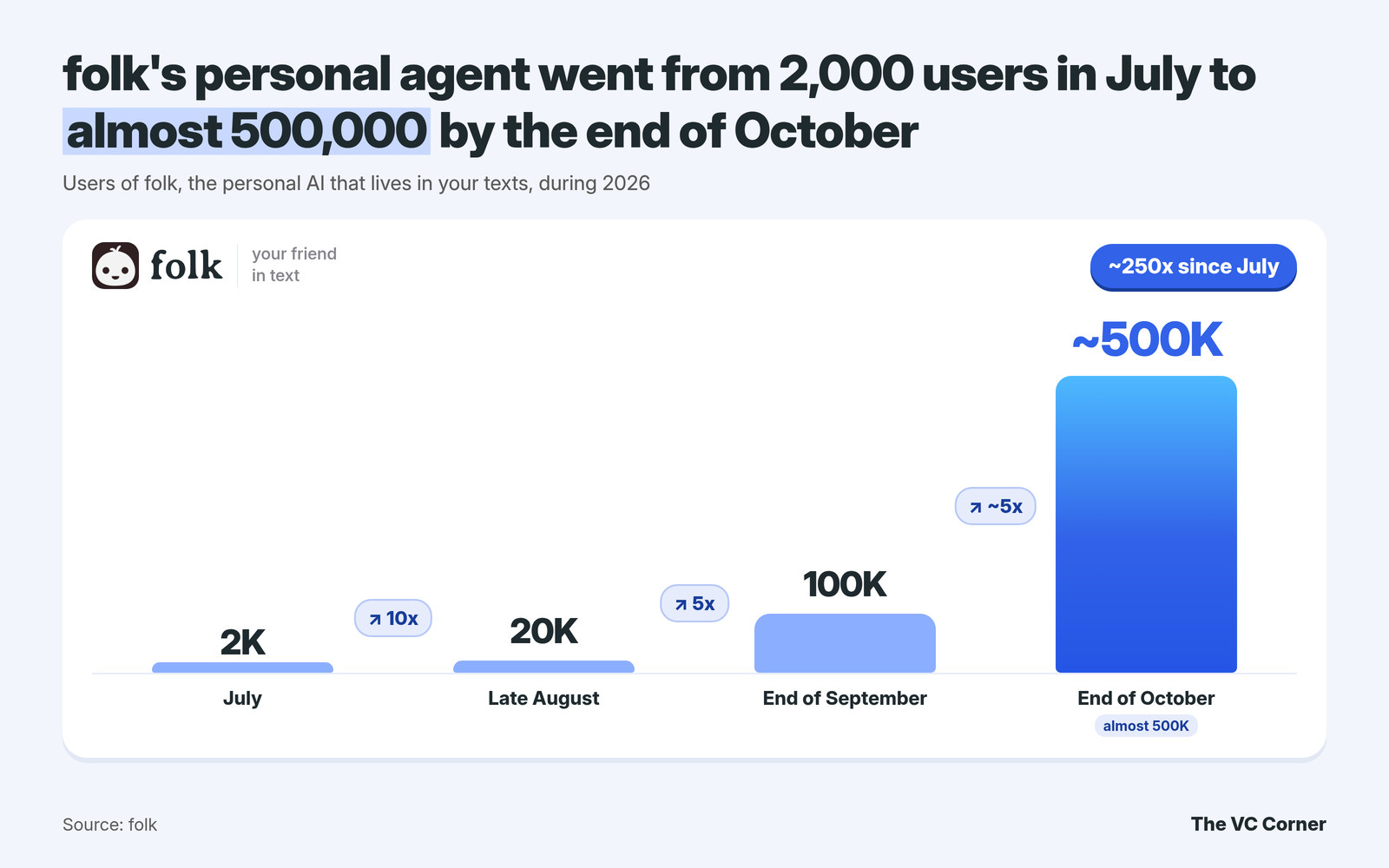
That’s roughly 250x in about four months. Nozomio is backed by LocalGlobe, BoxGroup, Y Combinator and 20VC, with angels including Paul Graham, Spotify’s Gustav Söderström and del.icio.us founder Joshua Schachter (Nozomio).
The relationship starts years before Demo Day
Karumi shows how early we meet founders, and the story starts with Guillermo.
About three years before Karumi’s YC batch, he judged an AI hackathon in Valencia and voted for a developer named Toni. A year later Guillermo was in San Francisco, sleeping on a friend’s sofa, when he found out Toni was working at a YC startup in the city. They met again in New York, where Toni and his best friend Pablo were thinking about starting a company. Guillermo spent months deciding whether to join them, and in his words, “I almost quit GoHub to do it.”
A few months later Toni and Pablo got into YC with Karumi. By the time they raised, Guillermo already knew them well, and we invested.
Our first exit came before a Series A
We’re keeping the names of the company and the acquirer private, and the figures at the top of this article are all we can share about the deal.
What founders can take from this
The question we hear most is why we see deals early. Our answer comes in 4 parts, and each one gives founders a test to run on any investor who wants into their round:
Founders know us before the round. With Karumi, the relationship started at a hackathon about three years before the batch. For founders: the investors you get to know before you raise are the ones who can move fastest once you do.
Our coverage moves numbers founders care about. A $1M investment offer and a doubled ARR each came from a single piece of content. For founders: ask every angel what they do after the wire, and for one company they helped with it.
Two people decide. Guillermo and I make every decision, which takes us from a first call to a wired check in under 24 hours. For founders: ask how many people sign off on a check and how long the last one took.
Most of our time goes to YC. Our best investments in 2025 came from YC, so we put most of our effort there. For founders: an investor who spends most of their week on companies like yours will understand your round faster.
How GR Angel invests in 2027
GR Angel is a private investment company. We invest directly or through private SPVs, and since 2026 a small group of private investors has invested alongside us.
How it works:
Our investors commit their capital before the year starts, so the money for 2027 is in place before the first batch.
Each company gets its own SPV, with its own documents.
We all go into every deal together: the two of us and every investor in that year’s group.
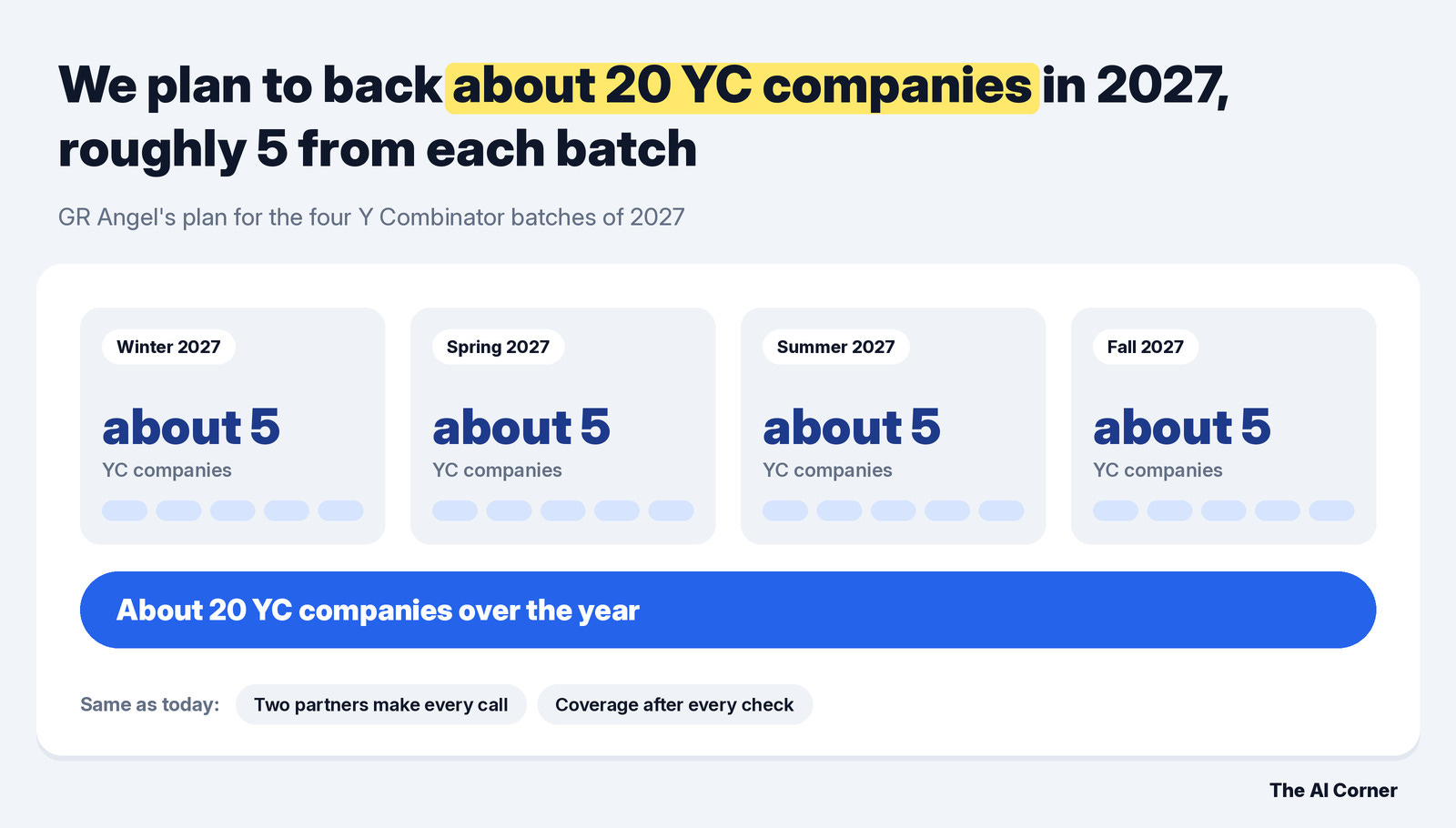
We back about 5 companies from each YC batch, roughly 20 in 2027, and we compete for the strongest companies in every batch.
The same two partners decide, so founders get an answer within a day.
After every check, the company gets coverage across our newsletters and introductions to customers and funds.
Get in touch
Accredited investors interested in co-investing alongside us can reach out at ruben@thevccorner.com. Details are shared privately, only with qualified investors, through the proper documents.
Founders in a YC batch, or applying to one: tell us in the comments what you’re building and which batch you’re in. We read every comment.
FAQ
What is GR Angel?
GR Angel is our private investment company. We are Guillermo Flor and Rubén Domínguez Ibar, and we invest in AI companies from every Y Combinator batch through direct investments and private SPVs.
How many companies has GR Angel backed?
Across our personal angel investments and GR Angel, we have backed 53 companies, 42 of them from Y Combinator, including HappyRobot, valued at $1.2B in August 2026 (Fortune).
Why does GR Angel focus on Y Combinator?
We focus on Y Combinator because our best investments in 2025 came from YC. Every YC company starts on the same $500K standard deal, and more than 100 YC companies are valued above $1B (YC).
How does GR Angel win allocations in oversubscribed rounds?
Founders let us in for our distribution, which reaches 600K LinkedIn followers and 400K newsletter subscribers, and for the introductions we make after we invest.
What is GR Angel’s plan for 2027?
We plan to back about 20 YC companies in 2027, roughly 5 per batch, through SPVs whose investors commit before the year starts. We all go into every deal together.
How can investors get in touch?
Accredited investors interested in co-investing alongside us can email Rubén at ruben@thevccorner.com. Details are shared privately, only with qualified investors, through the proper documents.
Keep reading
Our GR Angel launch post on The VC Corner
How Tech’s Quietest Super-Angel Built a Multi-Billion One-Person Venture Platform on The VC Corner
The startup ideas YC wants built in 2026 on The AI Corner
What YC’s New Startup Wishlist Says About the Future of AI on The AI Corner
Rubén and Guillermo
Portfolio figures combine our personal angel investments and investments through GR Angel. GR Angel is a private investment company. We are not a fund and we don’t publicly offer securities. This article is for information only and is not investment advice, an offer to sell or a solicitation of an offer to buy any security. Any investment is offered only to qualified investors through private documents. Startup investments are illiquid and high risk, and past performance does not guarantee future results.
Sources: YC Standard Deal · YC for Investors · YC Press · Y Combinator homepage · What Happens at YC · Orange Collective, The Unicorn Ratio · Fortune on HappyRobot · TechCrunch on Replit · FinTech Global on QFEX · Nozomio seed announcement · Pulse 2.0 on Apollo Atomics · TechCrunch on Arga Labs · LightSprint seed announcement · Didit seed announcement · 007 Venture Partners on Prodigy Research · 007 Venture Partners on Exosat · World Solver Syndicate on DeepReach