

TLDR for busy people
Here is the quick version of the entire interview in under 60 seconds.
▫️ The age of scaling is ending.
Sutskever says bigger GPTs will still improve, but the next breakthroughs now depend on new learning methods, not more GPUs.
▫️ Generalization is the real frontier.
Today’s AI aces benchmarks but fails at simple tasks. Humans learn from far fewer examples. Closing this gap is the key to true intelligence.
▫️ AGI will start as a superintelligent learner, not an all-knowing oracle.
A system that can learn every job extremely fast becomes superintelligent through deployment.
▫️ Safe Superintelligence Inc. is a single mission company.
One goal. One product. Build a safe superintelligent AI with continual learning at its core.
▫️ Timelines are short.
Sutskever expects human-level learning systems in five to twenty years.
For founders, investors, and researchers, this interview marks a turning point. The story is shifting from giant models to smarter models. The next decade of AI will be shaped by breakthroughs in learning, alignment, and continual adaptation.

Why this conversation matters
Ilya Sutskever (OpenAI co-founder) rarely speaks publicly. When he does, the industry listens.
He helped drive the deep learning revolution with AlexNet, sequence models, and GPT-3.
He shaped OpenAI’s strategy during the rise of modern LLMs.
And now he is the CEO of Safe Superintelligence Inc., a U.S. based company backed by a powerful coalition of Silicon Valley investors.
Dwarkesh Patel is the interviewer who can actually extract new ideas from people like Sutskever. This discussion is the clearest window we have into what one of the defining minds of modern AI believes comes next.
1. The age of scaling is ending
For the last five years, the strongest force in AI has been simple.
More compute. More data. More parameters. More performance.
Sutskever calls this period the age of scaling.
He now believes this era is reaching its limit.
According to him:
Pretraining has consumed nearly all high quality internet text
Companies are pouring more compute into RL and getting little return
Model sizes are so large that additional scale no longer reshapes capabilities
We have hit diminishing returns from doing the same recipe bigger
His line that caught everyone’s attention:
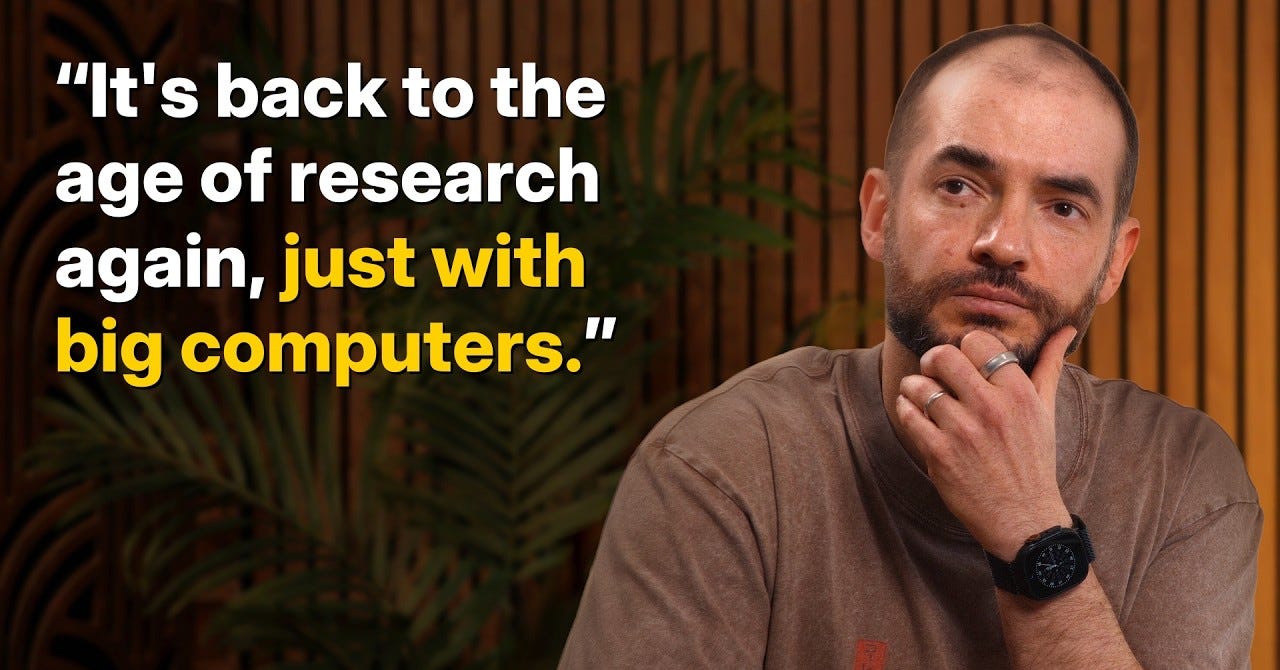
“It is back to the age of research again, just with big computers.”
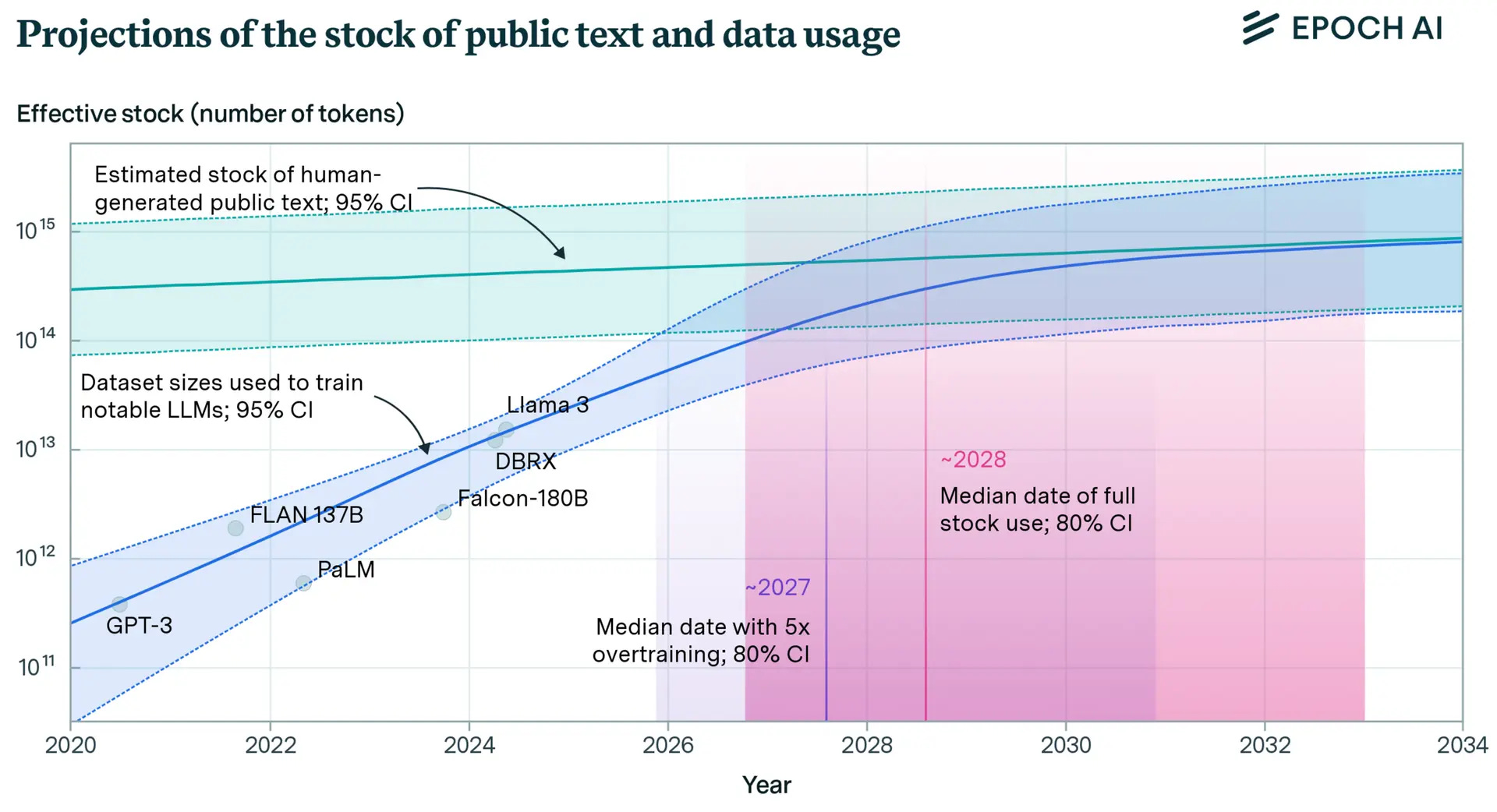
The next breakthroughs will not come from 10 trillion parameter models. They will come from new training methods, new algorithms, and new ways to make models learn efficiently.
The United States is in a strong position for this shift. The country holds the largest concentration of AI talent, compute, and early stage capital. The next wave will be driven by American research labs that figure out what scaling alone cannot.
🤖 Quick break
If you ever wish you had an extra teammate handling the small but endless tasks, Sintra’s AI Helpers are actually great.

They manage your social posts, reply to emails, update your site, and basically work nonstop without needing you to supervise them.
Worth checking out if you want to save hours every week 👀
(code VCCORNER gets you 70 % off)
2. The generalization gap is the crux
This was the most important technical insight in the interview.
Sutskever says today’s models are extremely capable but generalize dramatically worse than humans.

You can see this everywhere:
They solve olympiad level math and fail on simple logic
They write long code and miss an obvious bug
They pass high level exams and then hallucinate on basic tasks
They correct a mistake and then repeat it in a different context
Humans do not behave like this.
We learn a concept once and apply it everywhere.
We operate with powerful internal models of the world.
We understand value and relevance through emotions and evolutionary signals.
Two ideas from Sutskever explain why humans beat machines at generalization.
Humans come with powerful priors
We arrive preloaded with structure for vision, movement, physics, social interactions, and spatial reasoning. Evolution gave us a compressed package of extremely useful information.
Models start from random initialization.
Humans have an internal value system
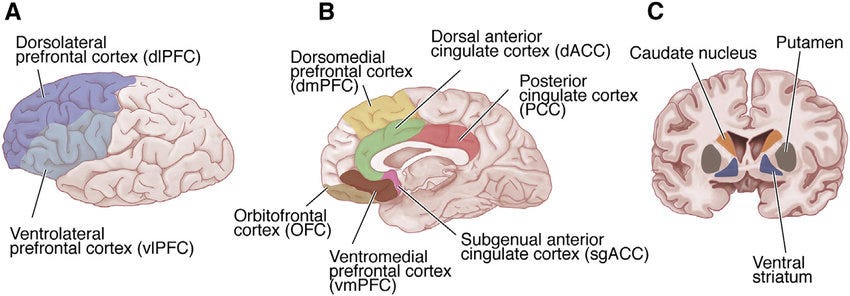
Sutskever shares the story of a man who lost emotional processing after brain damage.
He looked normal.
He could not function.
He could not choose socks.
He made irrational decisions.
He lost his inner reward system.
Emotions act as dense, continuous reward signals that guide learning.
Models do not have this.
They receive sparse signals from RL training or feedback pipelines.
Until we solve this, modern AI will continue to stumble outside its comfort zone.
Closing the generalization gap is the path to real intelligence.
3. What AGI actually looks like
Sutskever gives one of the clearest descriptions of AGI I have ever heard.
Instead of imagining an all-knowing entity, think of AGI as:
A superintelligent fifteen year old that can learn any job extremely fast.
Not omniscient.
Not preloaded with every skill.
A learner that becomes smarter and more capable with experience.
This is a fundamental shift from the original OpenAI definition of AGI.
Dwarkesh captures it perfectly:
A mind that can learn to do every job is already superintelligent, even if it does not know every job at deployment.
Sutskever agrees.

In this world:
Different AI instances learn different skills
They share their knowledge instantly
They amplify each other’s improvements
Deployment becomes part of training
This is where the acceleration happens. A million learning agents in the real world, each mastering a different domain, and merging their insights continuously.
This is the future most people are not yet imagining.
4. Inside Safe Superintelligence Inc.
SSI is structured around a single goal.
Build a safe superintelligent AI.
No side products.
No API platform.
No productivity tools.
No distractions.
A few things stand out:
Their strategy is research heavy
Sutskever’s belief is that we are entering an era where ideas beat scale.
SSI’s compute budget is focused on research, not serving large public models.
Their deployment philosophy is gradual
Even if they aimed directly at superintelligence, the releases would be phased.
Learning during deployment is a feature, not a risk.
Humans learn gradually.
So should AIs.
Their technical approach is different
Sutskever does not reveal details.
He hints that their approach to generalization and learning is not the same as existing labs.
This is the bet.
A new paradigm instead of a bigger transformer.
The United States has become the epicenter of AGI development, and SSI represents a new wave of labs born from American founders, American capital, and American technical culture.
5. Alignment, values, and the question that matters
The alignment part of the interview is quietly one of the most important.
Sutskever believes that alignment is largely a generalization problem.
If a model truly learns human values in a robust way, it will not break them unpredictably.
He proposes one potential alignment objective:
Make superintelligent systems care about sentient life.
Not only humans.
Not only themselves.
Sentient life in general.
Dwarkesh points out the obvious tension.
If most future sentient beings are digital, humans become a minority.
This raises deep questions.
Sutskever agrees and treats it as one of several serious options, not the final answer.
He also suggests limiting the raw power of the strongest systems.
A form of capability capping.
He admits the mechanism is unknown, but believes it is a useful direction.
The most interesting idea is that multiple AIs will coexist, specialize, and balance each other.
Competition and diversity could become natural safety features.
6. The timeline that surprised everyone
When asked directly, Sutskever gives a simple answer.
Five to twenty years.
That is his estimate for AI that learns like a human and then scales beyond us.
This is not science fiction.
This is within a planning horizon.
This is within the lifetime of every founder, researcher, and policymaker reading this.
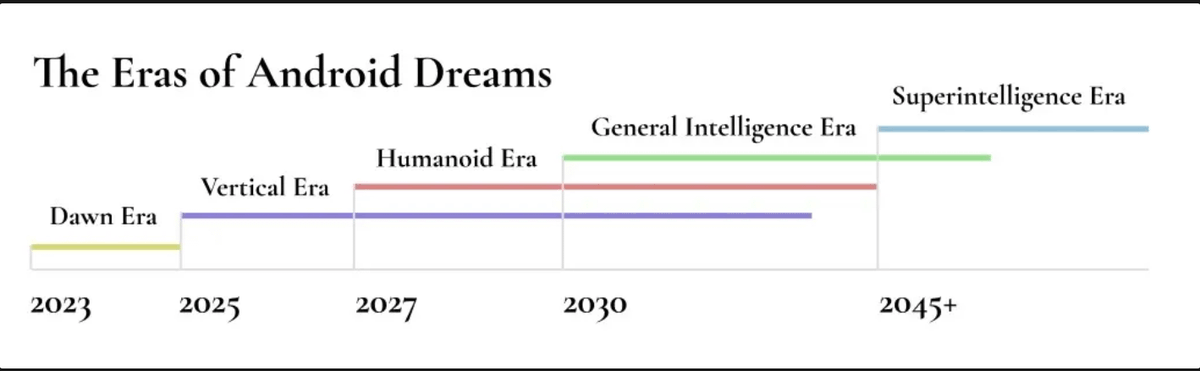
Even more interesting is what he describes as the path:
Current approaches will plateau
New research forks will emerge
Someone will find the right learning paradigm
Others will replicate it
Deployment will accelerate progress
The economy will change rapidly
His view is optimistic but realistic.
Nobody knows exactly when.
But he believes the direction is clear.
7. How Ilya chooses the ideas that change the world
The interview ends with a personal lesson from Sutskever.
He says the way he picks research bets is through an aesthetic.
He looks for:
Beauty
Simplicity
Elegance
Correct inspiration from the brain
He avoids ideas that feel forced or patched together.
He chases the ones that feel like they belong at the core of intelligence.
This gives him conviction when experiments fail.
Most big breakthroughs start ugly.
Taste tells you which ones deserve persistence.
It is a mindset founders can use too.
Taste matters more than trends.
Elegance is a signal.
Beautiful ideas scale into beautiful systems.
Final thoughts
This interview feels like a turning point.
The story of AI is moving away from bigger LLMs and towards smarter learning systems.
The frontier is shifting from scale to generalization.
From static models to continual learners.
From narrow assistants to real intelligence.
For the United States, the stakes could not be higher.
American labs, American founders, and American capital are leading the charge.
But the challenge ahead is no longer just about compute.
It is about ideas.
It is about alignment.
It is about learning how to build systems that learn the way we do.
If Sutskever is right, the next decade will define the next century.
And the choices we make now will shape the world we hand to these future minds.
Thought-provoking summary. What stayed with me is that better generalization won’t come from scale alone. Human learning is guided by emotion, value, and relevance — not just raw capacity. Without attention to that orienting layer, there’s a real risk of cultural flattening, where systems become efficient while human distinctiveness quietly thins out.
very interesting, thanks! (fyi: video 2 and 3 are the same)