

Peter Steinberger built the first version of OpenClaw in an hour, because he was hungry and his coding agent had stopped working.
8 months later, 4.7 million people downloaded it in a single week.
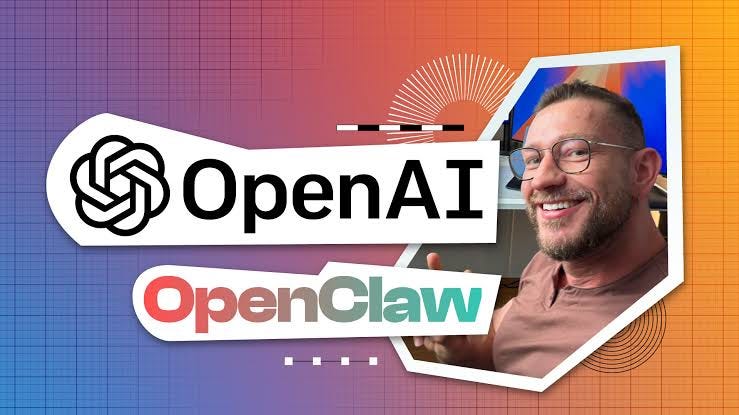
That same week, he came close to deleting the entire project.
“I get questions like this almost every day, and usually I ignore it.”
He told a live audience exactly that, then answered 5 of them anyway. 40 minutes on what happened between a rainy November night and a download chart nobody predicted, including him.
I watched the full talk so you can skip it. Here are the 10 moments that matter, timestamped for each clip.
this article is sponsored by Oracle:
4.7 million people just downloaded an agent. Almost none of those agents will remember them tomorrow.
That is where demos die: the user comes back, references yesterday, gets a blank stare. Persistent, scoped, reliable memory is a data problem, and the builders who solve it first ship the agents people keep.
Oracle’s new developer guide maps the 4 memory types:

Then go deeper: the full Oracle Developers Blog covers agents in production databases, custom memory extraction, and hybrid search.
1. A Rainy Night, a Hungry Founder, and an Hour of Cooking
OpenClaw began as Steinberger fixing his own kitchen-break annoyance, years before it looked anything like a company: he came back from raiding the fridge and found his agent had stopped mid-task, with no way to check on it from his phone.
“On a rainy day in November, I was running some agents, but I was also hungry. I raided the kitchen, and there was still no good way to send a prompt from my phone to my computer so an agent could check on how things were going.
It built me a WhatsApp relay, and an hour later I could send messages from my Mac to WhatsApp and back.”
He rambled the idea into a terminal and let the model build it. What came out wasn’t complicated: a bridge between his phone and his Mac. But it behaved like something new. Short answers. Unprompted check-ins. He’d nudged the weights slightly outside the default distribution, deliberately, to make it feel less like a terminal and more like a friend.
He used it constantly for weeks. Nobody else felt what he felt yet, and that gap between his own excitement and everyone else’s shrug is where the story starts.
The best products still come from a founder scratching a five-minute itch in their own life, not from a roadmap slide about a market gap.
2. His Friends Got Angry. That’s When He Knew.
For weeks, Steinberger tried explaining the magic on Twitter. It didn’t land, no matter how he phrased it. So he stopped explaining and started showing people directly, one group chat at a time.
“There were quite a few people that really wanted it. And like especially to my non-technical friends I told them no this is not yet for you. And they got mad. So if that's not an indicator to have product market fit. I don't know what is…”
Every demo produced a reaction, amazement or genuine unease. Neither told him as much as the anger did. Praise from someone testing a demo is polite and costs nothing. Anger from a friend you’ve just told “not yet” means they already want the thing badly enough to resent waiting for it.
He’d been chasing a signal for a month and it showed up disguised as an argument.
3. He Pressed Control-C. It Went Viral Anyway.
By early January the project had a Discord server and one hard rule buried in its config: no dangerous tool calls unless the prompt came from Peter. He stayed up all night watching people hack at it live, ready to pull the plug at the first sign of trouble.
“And then at 7 a.m. I finally I was done. I said good night. I pressed control C and I went to bed. But of course I could build the software to be resilient. So it was a launch daemon... So while I was walking into the bedroom my agent happily started answering God in the world...”
He slept 10 hours and woke up to roughly 800 messages waiting for him.
“I read through everything and nothing actually happened. But this was the moment, where it went viral.”
The daemon that kept the bot alive after Ctrl-C was a decision he’d made weeks earlier, for uptime, with zero connection to growth. It happened to be the exact reason the project kept taking traffic while he slept through the night that made it famous.
together with Oracle:
Steinberger’s agent survived Ctrl-C because it was built to persist. Most agents don’t get that far: they persist as a process and forget as a user.

Oracle’s guide covers what to store, what to drop, and how to scope memory so agents stay useful across sessions.
4. 111,000 Pull Requests Later, He Became a Meme
The scale of what followed still hasn’t sunk in for him, by his own account.
“In 8 months, more than 18,000 different people opened an issue or a pull request. Over 111,000 in total. Almost 3,000 people have commits in the repo. Some people call me I-Jesus. For some, I became the Antichrist.”
▫️ 18,000+ people opened an issue or pull request
▫️ 111,000+ total issues and pull requests
▫️ Almost 3,000 people with commits in the repo
The backlash arrived with the contributors. People accused him of stealing the idea and sent him links to projects he’d never seen. A running collection of hostile memes about him gains a new entry every few weeks, the most recent one dropped the day before this talk. A community that size doesn’t arrive pre-filtered for goodwill. It arrives as a slice of the internet, and the internet includes people who will build a meme account around hating you for free.
5. Close to Deleting It All
Virality cost him privacy and sleep before it cost him anything else, and he doesn’t dress that part up.
“It almost broke me. Like I was that close of just deleting the whole thing. I stopped answering my friends. I didn't even want to look at my phone anymore because it was just a stream. And of course somebody leaked my phone number and also a lot of private details because I'm an enemy of humanity.”
Reporters called through the night often enough that Do Not Disturb read the repeated calls as an emergency and let them through anyway. His inbox, in his own words, felt more like a waterfall. Anthropic emailed demanding a name change, and somewhere in that stretch the Mac mini he’d been recommending sold out.
A founder’s demo reel skips all of this. The download chart everyone screenshots never shows the week that almost ended the project.
6. Everything Can Be Forked. Your Name Cannot.
Before he ever spoke to a VC, Steinberger had already lived through one exit: a B2B software company he bootstrapped to nearly 80 people, sold his shares out of, and burned out from badly.
“Everything you can build can be forked or cloned. But your name cannot. So your personal brand is way more important than any single product that you ever will start working on that before you need it.”
By the time OpenClaw took off he was on the phone with major AI labs, a conversation he compared to imposter syndrome playing out as it happened. He calls the decision to work with OpenAI “the equivalent of selling my soul.md,” and made it anyway.
A forkable codebase isn’t a moat. A name a stranger recognizes is.
The founders who wait until they need a name to start building one are always six months late. Start here:
▫️ The Story Behind Every Great Startup Is the Most Overlooked Skill
▫️ Your voice is the only AI moat that compounds
▫️ The one-person company stopped being a meme. This is the operating system that runs it
7. The Press Said 20% Malicious. He Says the Number Is 0.3%.
Security researchers hit OpenClaw hard after launch, and Steinberger says most of those reports were legitimate. The press coverage was a different story.
“The press said 20% of our skills are malicious. We put a paper up on this. We scanned all 67,000 skills, and the number is more like 0.3%. But a correction never travels as far as a scare.”
He hardened the codebase in response: sandboxing, allow lists, and shelling out to Python for file operations TypeScript couldn’t handle safely, all to stop an agent from following a symlink out of its workspace. Users didn’t reward any of it. Sandboxing broke workflows they depended on and slowed down updates they wanted fast.
The steal: a 66x gap between a headline number and the audited one isn’t a rounding error, and by his own admission the correction reaches a fraction of the audience the scare did.
If your team ships agent code and hasn’t had this conversation yet, it’s worth having before a researcher forces it:
▫️ AI Made Bug Bounties a Six-Figure Skill Overnight
▫️ The AI code review checklist that prevents the next $1M production incident
▫️ Anthropic Just Shipped the Code Reviewer That Catches What Humans Miss
8. 9,500 Configuration Options, Because Every Feature Needed One
Every new feature shipped with a way to turn it off, because the team didn’t want to break anyone’s setup.
“At our highest, I had to count that, we ended up with around 9,500 configuration options. If you count all the permutations. You can write all the tests you want. It is impossible to cover all of these. And not break things from time to time.”
Meanwhile, better-funded competitors moved on a simpler story: an aggressive marketing push and one clean migration path, a company that, in his phrase, “inserted itself into pretty much any conversation on Twitter.” Software with actual users is harder to evolve than software without them. Every config flag is a promise to someone that you won’t be the one to break their setup next.
9. 24 Hours’ Notice, Then a Comeback 5x the Old Peak
OpenClaw had been tuned hard around Anthropic’s Opus models. Then Anthropic gave him roughly a day’s notice that it was disabling subscription access for OpenClaw users.
“The main thing that really hurt the project was that I optimized too much around one model. When they told us, with around 24 hours’ notice, that they were going to disable the subscription for everyone, there wasn’t really enough time to change course. Maybe write this one down: your dependency’s business model is your business model.”
The download chart makes the point without any help from him.
“We bottomed out at around 835,000 weekly downloads in May, and then, after being declared dead in June, we peaked at 4.7 million. The highest ever.”
Both numbers are true weeks apart. A platform dependency doesn’t just risk your uptime, it can reset your entire growth curve on somebody else’s 24-hour clock.
If you’re building anything on top of a single model provider, this is worth reading before your own 24-hour notice arrives, not after:
▫️ The AI Upgrade Trap: Why Switching to a Better Model Breaks Everything You Built
▫️ The US government switched off Anthropic’s most powerful model 3 days after launch
▫️ You are overpaying for intelligence. Grok 4.5 just proved it
10. Fun Is Velocity, and He Nearly Forgot It
Somewhere around February, building OpenClaw stopped being fun for the person who built it. He had 2 jobs where he’d wanted zero, and he’d stopped using his own product.
“It's hard to compete with someone who's just there having fun. Fun is velocity. The weeks I enjoyed building, the product got visibly better. The weeks I didn't, we shipped config options.”
NVIDIA sent people to take over security work after simply asking what he needed. A nonprofit got set up. By his own May birthday, the joy of building had started to come back, even as the press kept coining a new “OpenClaw killer” every few weeks. He counted 20, including one literally named that.
“If you only remember three things, number one, don’t stop having fun. Fun is the ultimate driver so you can get the best ideas. Number two, listen to your gut. And also, fix the things that annoy you. It might just become the next big thing. And number three, stay focused. You know, another podcast is not what will make you win. Live in the future, build what’s missing.”
The OpenClaw Playbook
What carried this project from a WhatsApp relay to 4.7 million weekly downloads wasn’t a growth tactic. A founder who kept using his own product, kept fixing what annoyed him, and survived a security scare and a platform dependency that could have ended things, did the carrying.
▫️ Founders: know exactly what happens to your product the day a platform partner changes theirs, and build the workaround before you need it, not after.
▫️ Operators: a 66x gap between a headline number and the audited one shows up often enough to check before you repeat it.
▫️ Everyone else: the anger of a friend you’re telling “not yet” is a stronger signal than the praise of a stranger testing a demo.
The 3 Principles to Steal
Your name outlasts your code. Anything you build can be forked. Nobody can fork your reputation, so build it before the moment you need it.
A scary number travels faster than the correction. Steinberger’s team published a paper putting the malicious-skills rate at 0.3%, not the 20% the press ran with. Most of the audience never saw the correction.
Fun is a velocity metric, not a mood. The weeks he enjoyed the work, the product improved. The weeks he didn’t, the team shipped configuration options instead.
If this saved you an hour of scrolling, send it to one founder or investor who needs it.
FULL PODCAST:
More on OpenClaw and Peter Steinberger
▫️ OpenAI Just Acquired the Developer Who Built 180K GitHub Stars in 3 Months Alone
▫️ Clawdbot: The 24/7 AI Employee You Actually Own
▫️ The AI agent that thinks like Jensen Huang, Elon Musk, and Dario Amodei
On Model Dependency and Moats
▫️ Nobody Cares About the Model Now. It’s About the Type of Moat
▫️ Marc Andreessen: The AI moat is not the model
▫️ Anthropic Just Passed OpenAI in Revenue. Spending 4x Less
On Building With Agents at Scale
▫️ Stop Blaming the Model. Fix the Architecture
▫️ Set a metric. Walk away. Let the agent optimize overnight..
What lands here is the Peter Steinberger Almost Deleted angle. It turns the idea into a usable lens instead of another abstract take.