

The Old Sins Behind the New Budget Crisis
Every finance leader watching an AI invoice this year agrees that costs are becoming unpredictable.
But giants like Uber are just burning through their entire 2026 budgets on agentic coding. One enterprise client spent $500 million on AI services in a single month because nobody had switched on a usage limit for its Claude licenses.
Neither company ran short on model options. Neither had a shortage of cheaper alternatives sitting one API call away.
A 2026 survey of 500 finance leaders across the US and UK found that 79% of enterprises had experienced AI cost overruns in the past year.
Gartner puts global AI spending on pace for $2.59 trillion in 2026, an almost 50% jump over last year.
together with Plaid:
Who's afraid of AI in finance? Not consumers. They already moved:
▫️ 55% have used AI for money tasks this year
▫️ 86% say it helps them understand their finances
▫️ 50% think managing money without it will soon feel outdated

Plaid and The Harris Poll mapped exactly where people want AI in their money, and what makes them trust it.
The roadmap for anyone building in fintech:
But none of that is a pricing problem because pricing problems get solved by pricing.
This is something older, and it was diagnosed roughly 700 years before the first token ever got billed.
This is about companies committing deadly sins. And you need to know about them.

Table of Contents
1. Lust: Falling in Love With the Architecture Before the Problem
2. Gluttony: Buying Intelligence Nobody Asked You to Buy
3. Pride: The Refusal to Reuse What Already Works
4. Envy and Greed: Comparison and Hoarding, the Twin Engines of Waste
5. Sloth: The Agents Nobody Ever Goes Back to Check On
6. Wrath: The Panic That Costs More Than the Problem Did
7. The Takeaway
1. Lust: Falling in Love With the Architecture Before the Problem
Lust is wanting a thing because it excites you, not because the moment calls for it. In enterprise AI, the object of desire is almost never the outcome. It’s the architecture.
The Swarm Built for a Job a Script Would Do
AI reviews now are shaped around the same template:
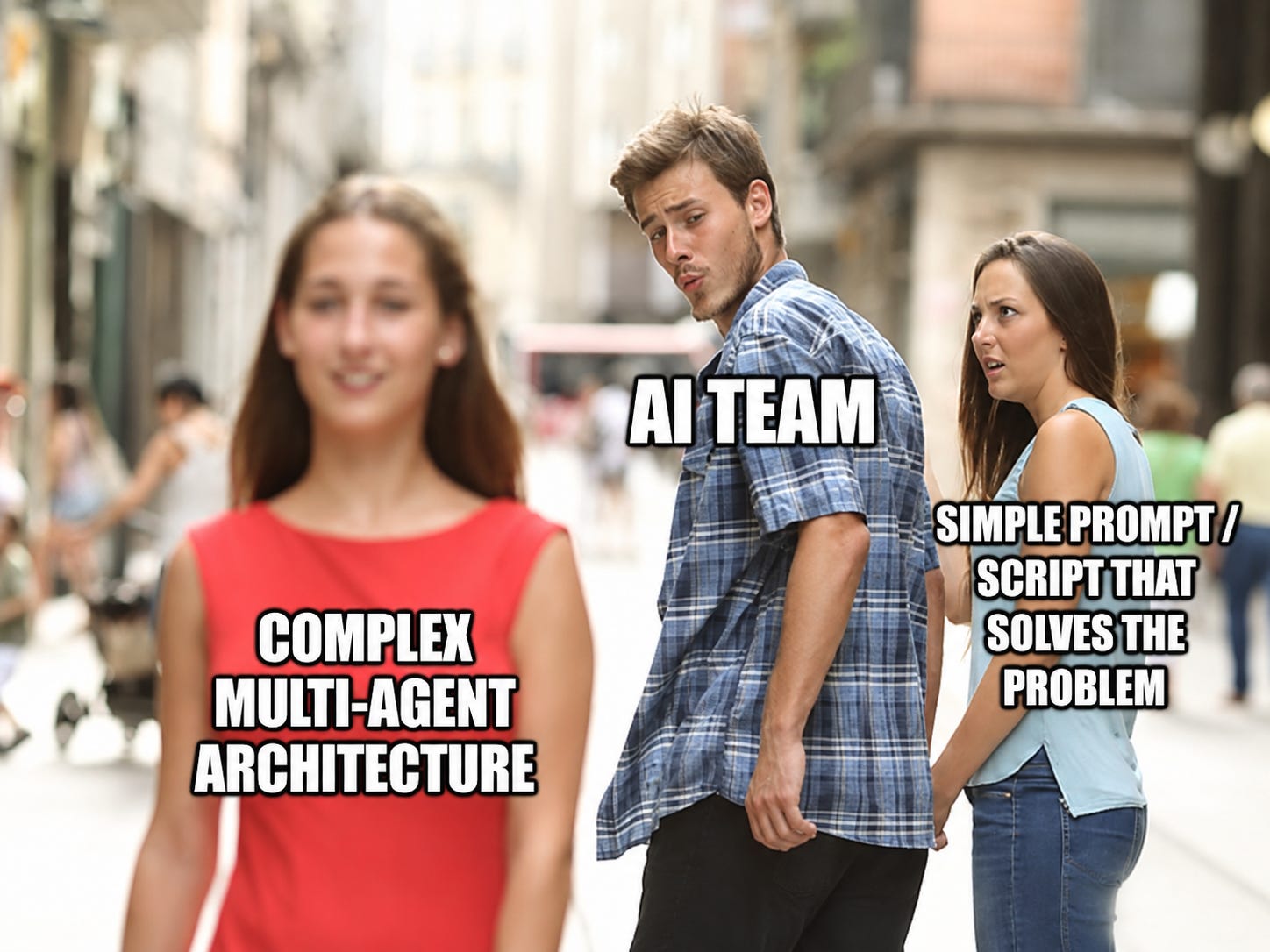
A multi-agent system and several specialized models negotiating with each other, built to answer a question a single well-scoped prompt would have settled in seconds.
It isn’t stupidity. Orchestration frameworks and recursive planners are genuinely some of the most satisfying things an engineer can build right now.
MIT’s Project NANDA studied 300 public AI deployments for a report called “The GenAI Divide” and found that 95% of generative AI pilots failed to produce measurable financial return.
The reporting that followed was blunt about why. The failures traced back to poor integration and mismatched priorities, not weak models.
The model was rarely the problem. The shape built around it usually was.
If you ask why smart teams keep doing this, the honest answer isn’t ignorance. It’s that building the elaborate version is simply more fun than scoping the boring one, and fun is a much stronger incentive than a line item three budget cycles away.

Every Extra Hop Is a Place to Leak
Complexity compounds the same way interest does. Each additional agent in a pipeline is another place tokens leak, another hop of latency, another silent failure mode hiding behind a green checkmark.
None of that shows up on an invoice labeled lust. It shows up as a model bill, and the model is almost never the part anyone questions first.
2. Gluttony: Buying Intelligence Nobody Asked You to Buy
Gluttony is the sin everyone already half-recognizes. It’s reaching for the smartest, most expensive model as the default, not because the task demands it, but because reaching for anything less feels like a risk someone will notice.
The Default Nobody Gets Blamed For
Frontier models like Fable 5 right now are the safe political choice inside an organization. Nobody gets paged for choosing the most capable model available. People get paged when the cheaper one fails on an edge case six weeks later.
So the incentive quietly points one direction: overspec everything, and let the invoice absorb the blame instead of you.

The Open-Weight Paradox
The strange part is that the cheaper alternative has never been better positioned to win this argument. Open-weight models have closed most of the capability gap and collapsed in price.
And enterprises are using them less. Menlo Ventures’ 2025 State of Generative AI in the Enterprise found that open-source models’ share of enterprise LLM usage actually fell to 11%, down from 19% the year before.
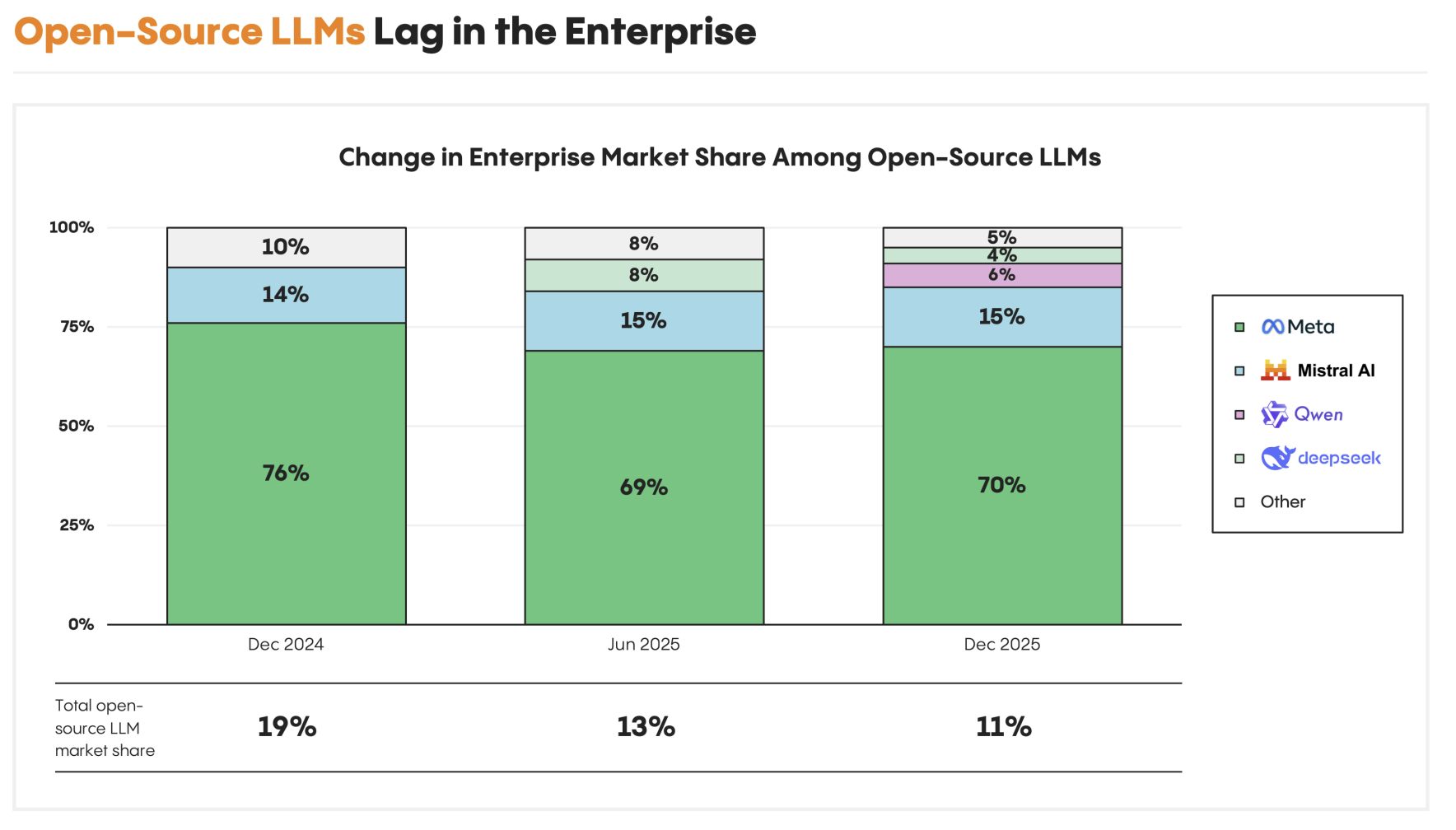
The cheaper option didn’t lose that argument on the merits. It mostly never got invited into the room.
Which raises the obvious question: if the alternative is right there, why does almost nobody reach for it?

3. Pride: The Refusal to Reuse What Already Works
Pride is the quietest sin on this list, because it never feels like arrogance from the inside. It feels like “our use case is different.”
Our Use Case Is Different
It’s the team that builds its own orchestration framework instead of adopting a maintained one. It’s the engineer who won’t let a response get cached because their output has to feel freshly generated every time, even when the input hasn’t changed.
Pride is expensive in a very specific way as it duplicates cost that’s already been paid down somewhere else in the industry, then charges you full price for the privilege of re-learning it.
But none of this is new. Engineering organizations have had a name for it since long before anyone billed a token and that is:
“Not Invented Here.”
AI just gave the old habit a much larger bill to run up.

The System Nobody Else Is Allowed to Audit
Custom-built systems resist the very instrumentation that would reveal what they cost. You can’t easily audit spend on infrastructure nobody outside the team that built it fully understands.
That’s both a cultural and a structural problem. The same February 2026 survey found that accountability for AI spend is split almost evenly between Technology, at 55%, and Finance, at 53%. Add those two numbers and you clear 100%, which is another way of saying nobody actually owns it.
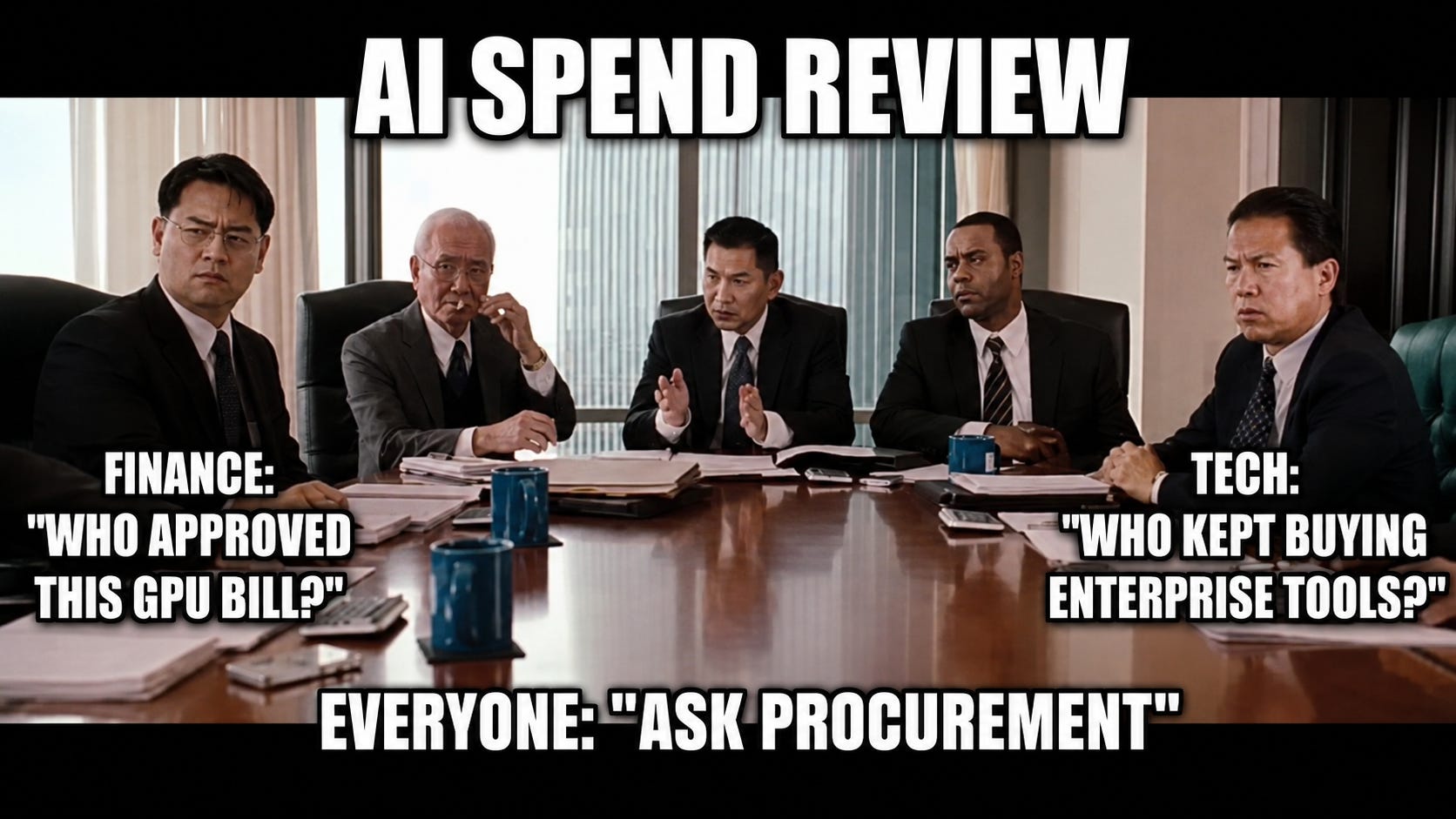
A system two functions each assume the other is watching is a system nobody is watching. Once nobody’s watching, comparison and hoarding move in next.
4. Envy and Greed: Comparison and Hoarding, the Twin Engines of Waste
These two travel together so often they’re worth taking as a pair.
Envy is looking sideways at what everyone else has.
Greed is grabbing more than the moment requires. Both dress themselves up as strategy.
Chasing the Model of the Month
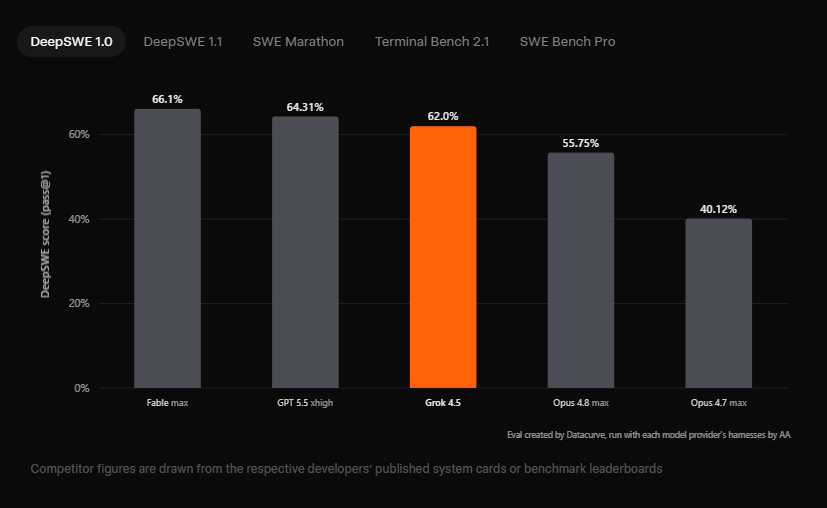
Envy shows up as model FOMO by migrating an entire production stack because a competitor announced a new release, or a thread called it a “killer,” without running a single eval against your own workload first.
Every migration carries a real cost. Whether that’s re-prompting, re-testing, re-hardening guardrails against the edge cases the old model had already been tuned to catch.
Standing is equally costly. But reactive migration driven by headlines instead of benchmarks is how a team ends up rebuilding the same system four times a year and calling it progress.
The Cap Nobody Set
Greed rarely looks like wanting more. Usually it looks like never getting around to saying enough.
Uber found out what that costs. The company maxed out its entire 2026 budget for agentic coding tools in four months and had to cap employee usage.
One enterprise client found out at a larger scale. Axios reported the company spent $500 million on AI services in a single month, because nobody had turned on a usage limit for its Claude licenses.
Unlimited access looks like flexibility right up until the invoice arrives. Then it reads as the thing nobody was willing to be the one to cap.

Once that money is gone, the next question is whether anyone goes back to fix whatever spent it. The record on that is not encouraging.
5. Sloth: The Agents Nobody Ever Goes Back to Check On
Sloth isn’t fear of touching a working system. That’s actually a different failure entirely.
Sloth is simpler. It’s never asking whether the system could be better, long after anyone would have noticed if it wasn’t.
The Orphaned Agent
The AI cost-management firm Larridin has a name for the purest form of this. They call this an orphaned agent, an autonomous system still running and still consuming resources with no current owner attached to it, usually left over from a pilot that ended without anyone turning the lights off.
Larridin’s scan data across enterprise clients found that an average of 18% of enterprise AI spend can’t be traced to any specific team, tool, or outcome. Nearly 1 dollar in 5 is running with nobody home.
A Human Employee Who Never Improved Would Be a Performance Problem
Most production agents today are running the exact configuration they launched with. Same model, same prompt, same retry logic, and long after cheaper or better options existed.
Hold a person to that standard for a year and it’s a performance review. Hold an agent to it and it’s just Tuesday, because nobody assigned anyone to look.
The fix isn’t complicated, which is part of why it’s so rarely done. A system that periodically reviews its own recent runs and proposes a cheaper or better configuration costs almost nothing next to what it saves, provided a human still signs off before anything changes.

Eventually, someone in finance does look. And the reaction rarely matches the size of what they find.
6. Wrath: The Panic That Costs More Than the Problem Did
Finally, wrath is the overcorrection. It’s the blanket freeze on all AI spend after one shocking invoice.
It’s the hard cap that throttles the best builders in the building right alongside the worst offenders. It’s the mandate that kills three profitable use cases to make an example out of one wasteful one.
It’s happening at the industry level right now. Forrester found that enterprises are postponing 25% of planned AI spend into 2027 as financial scrutiny intensifies.
This is a retreat that punishes the programs that were already working just as hard as the ones that weren’t.
Wrath happens because visibility failed first. If you can’t see spend broken down by team, agent, and purpose, every overage looks like an emergency instead of a data point you could have caught weeks earlier.

7. The Takeaway
The February 2026 survey identified the single most fixable barrier to AI ROI, and it wasn’t a technology gap at all.
In fact, it was the gap between how Finance and Engineering define success, cited by 37% of respondents overall, and 43% of the C-suite.
That is a problem two functions solve by agreeing, in a room, before the dashboard gets built.
Look back across all six sins and the same structure sits underneath every one of them: a cost that felt free in the moment, because nobody had priced it, attributed it, or reviewed it before it became a crisis.
The seven deadly sins were never really about food, money, or rage. They were a catalog of what happens when a reward feels immediate and nobody’s checking. That description fits a company running loose with API keys better than it fits almost anything else in a modern budget.
Ultimately, your AI bill is a character problem that learned to speak fluent token pricing, and it was fully diagnosed long before anyone thought to bill a single one.