

The median gap between seed and Series A just hit 616 days.
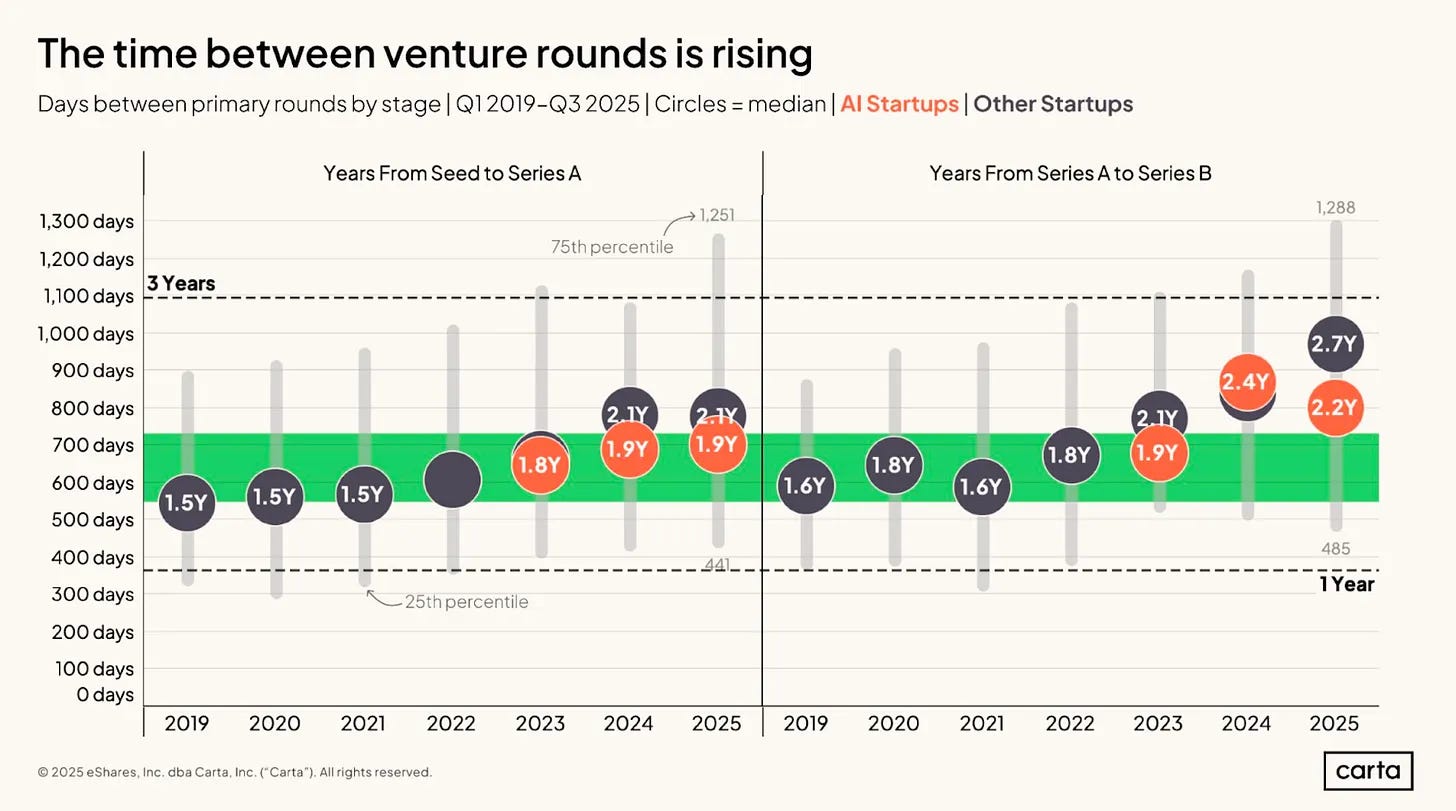
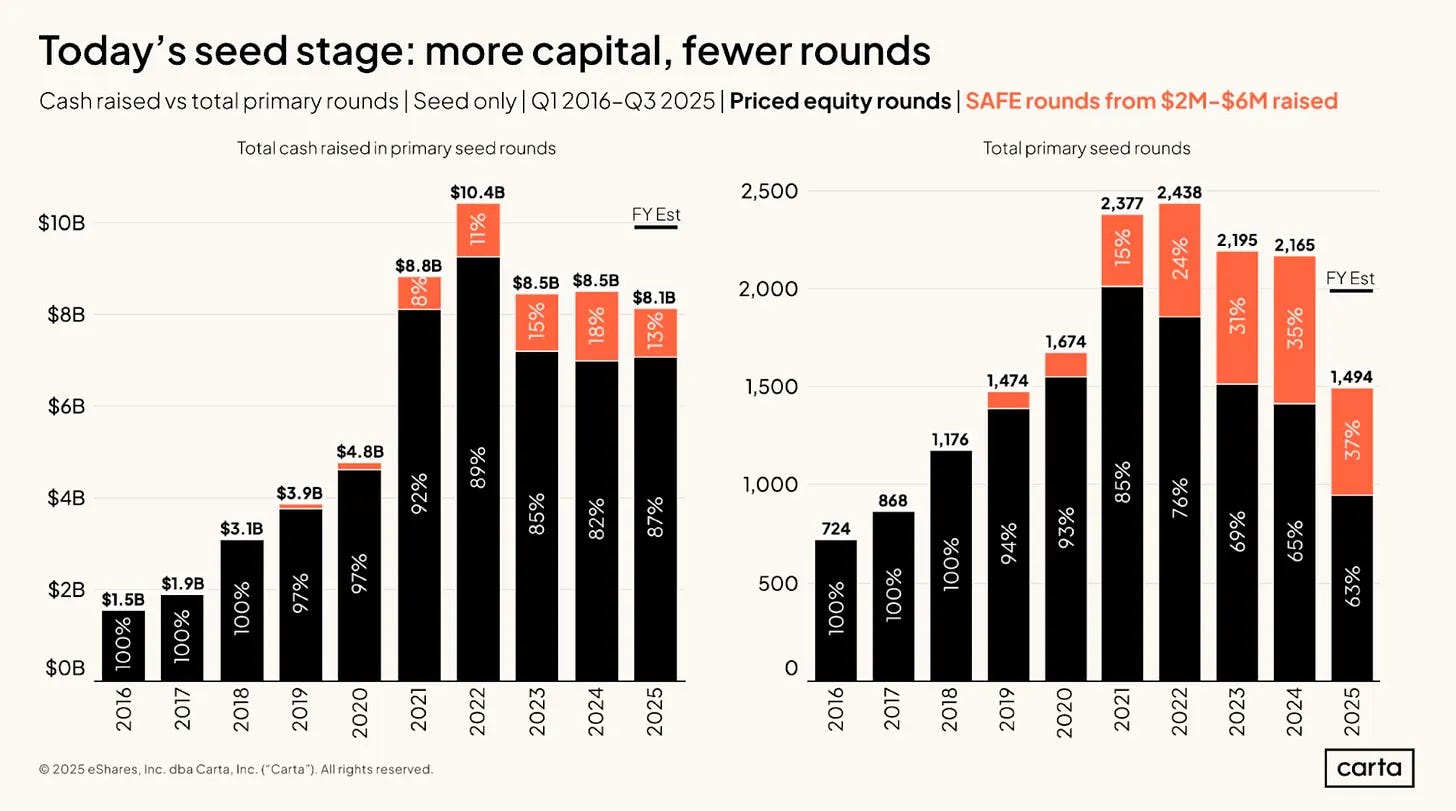
That is 20 months of runway math, per Carta. Series A deal count fell 18% last year. Dollars fell 23%. And half of all seed money now lands in just 9% of deals.
Fewer checks. Bigger checks. Written to founders who show up ready.
Here is what I keep seeing: the founders who close in this market are rarely the ones pitching hardest. They are the ones who walked in already knowing the objections, the partner’s personal thesis, and the holes in their own data room. Preparation used to take 3 months. Claude cuts it to weeks, if you prompt it like an operator instead of typing into it like a search bar.
A vague prompt gets you the same generic output every founder in your space is pasting into their deck right now. A loaded, adversarial prompt gets you a senior partner in the room, one who has read 500 pitches and tells you the truth.
Inside The Fundraise Prompt Stack:

▫️ The context load, the foundation prompt that makes every other prompt 10x sharper
▫️ The narrative stress test, your deck read the way a GP reads it, 11 minutes, zero patience
▫️ The objection war-room, the 8 hardest questions you will face, ranked by kill-probability
▫️ The investor thesis decoder, pitch the person, skip the fund website
▫️ The data-room red team, find the holes before the associate does
▫️ The unit-economics story, the spoken walk-through that makes an investor lean forward
▫️ The cold-email rewrite, 3 versions for 3 investor types, each under 120 words
▫️ The “what stops you” answer, 90 seconds on the incumbent question everyone asks now
▫️ The term-sheet gut check and the return-math narrative, negotiate prepared, and plant the exit thesis before they price it for you
One subscription unlocks every system
Your subscription opens the full AI Corner archive:
▫️ The AI Tools and Models library, every model, tool, and setup guide
▫️ The Prompting and Context Engineering library, the prompts and context systems that actually ship
▫️ The Claude and Anthropic library, every Claude playbook in one place
▫️ The Business and Investing library, turning AI leverage into revenue
Plus 3 fresh systems every week. One round closed 2 weeks faster pays it back a thousand times over.
💰 The Fundraise Prompt Stack
Start here: the context load
Most founders skip this prompt. It is also the reason their output sounds like everyone else’s.
Claude starts every conversation from zero. Feed it a thin picture and it fills the gaps with assumptions, and those assumptions are the average of every startup on the internet. Your output will sound exactly that average.
Run this once per session. Better: save it as the instructions of a dedicated Claude Project so your entire raise lives in one place.
“I am the founder of [COMPANY]. One sentence on what we do: [X]. Sector and sub-sector: [X]. Raised to date: [AMOUNT] from [INVESTOR TYPES]. Current traction: [ARR / revenue / pilots / pre-revenue, with the actual numbers]. Our moat: [X]. I am raising a [STAGE] round of [TARGET] in [TIMEFRAME]. My ideal lead writes [CHECK SIZE] checks into [STAGE] companies in [SECTOR].
For every prompt that follows, operate as a senior partner who has reviewed 500+ pitches in my space and has zero patience for vague language. Be direct. Lead with what is weak. Skip the compliments.”
The last paragraph is the entire trick, and it is pure context engineering. Claude defaults to encouragement. Encouragement loses rounds. You want the partner who marks your deck up in red, because that is the standard your deck meets the moment it leaves your outbox.
Get the full stack below 👇