

Two facts about robotics are both true right now, and they seem to contradict each other.
The first is that the money has arrived. Robotics startups raised $27.6 billion in 2025, more than twice the year before. Figure is worth $39 billion. Skild tripled to $14 billion in 7 months. When Agility went public this summer, the suppliers moved before the company did: Ouster is up 150% this year, Vishay Precision up 269%.
The second is that no humanoid robot has been deployed above the low hundreds of units in real, commercially priced production. Not one, anywhere.
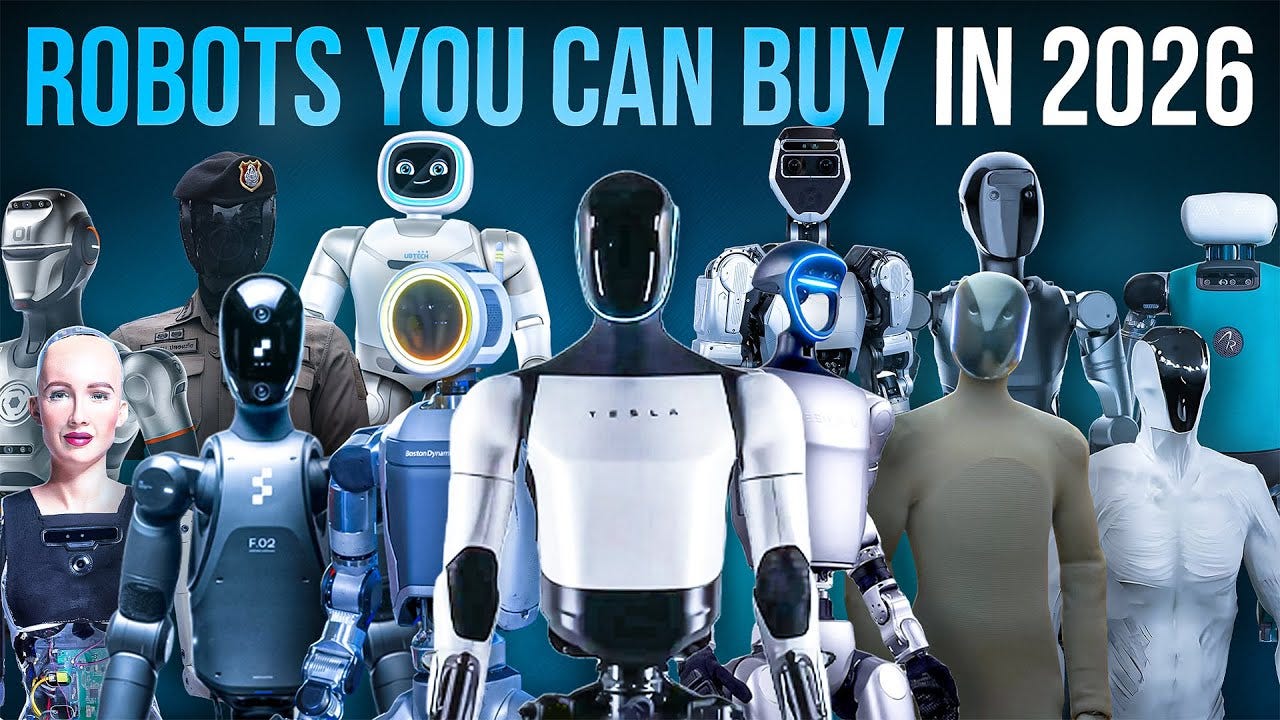
I spent 2 weeks trying to understand how both could be true, and I think the answer is simple. People analyze this sector the way they’d analyze a phone: by what it looks like. But a robot is much more like a factory than a phone. What matters is what’s inside it, and specifically which part is holding the rest back.
So I built a framework for thinking about it that way. It breaks any robotics company into 4 tiers and 12 layers, working backward from the job the robot does to the chip that runs it. It tells you which layer sets the ceiling, who competes there, and, the part I find most useful, who gets paid when that layer is the constraint.
I’ve been running it on every robotics name I look at, public and private, for a month. It’s the only thing I’ve found that puts a $39 billion humanoid and a warehouse robot with $22.7 billion of backlog on the same page.
Inside this playbook:
▫️ Why you work backward from the job, and what goes wrong when you start from the chip
▫️ All 12 layers in 4 tiers, with the public and private companies competing in each
▫️ The bottleneck scorecard, a 1-page way to find the ceiling in any system
▫️ The scorecard run on Symbotic and Figure, so you see what it catches
▫️ The bottleneck-to-ticker map, when layer X is the constraint, these companies get paid
▫️ 60 diligence questions, by layer
▫️ The public-market playbook and the startup playbook, written for the 2 different questions they ask
▫️ 5 things that kill most robotics theses
One subscription unlocks every system
Your subscription opens the full AI Corner archive:
▫️ The AI Tools and Models library, every model, tool, and setup guide
▫️ The AI Agents library, the full agent-building stack, start to finish
▫️ The Prompting and Context Engineering library, the prompts and context systems that actually ship
▫️ The Claude and Anthropic library, every Claude playbook in one place
▫️ The Business and Investing library, turning AI leverage into revenue
Plus 3 fresh systems every week. One robotics thesis you get right, or one you avoid, pays this back for a decade.
🤖 The Physical AI Investment OS
Get the 12 layers, the scorecard, the rotation map, and the 60 questions below 👇