

The Magnificent Story of Magnific

Javi López and Emilio Nicolás founded Magnific in November 2023 in Murcia, Spain. Two people. No CEO in the traditional sense. Both founders handled everything themselves.
The product went viral within hours of launch, attracting over 30,000 sign-ups on its first day and growing to more than 725,000 registered users in five months. No paid advertising. No investors. Just a tool people wanted badly enough to tell each other about.
In May 2024, Freepik acquired Magnific. Freepik was a 14-year-old Spanish stock asset platform. One of the most visited design sites in the world. A company with hundreds of employees and tens of millions of users. And they bought a two-person startup from Murcia that had existed for less than a year.
Then something stranger happened.
On April 28, 2026, Freepik rebranded entirely as Magnific. Not the other way around. The acquirer took the name of the thing it acquired. The company is now generating $230 million in annual recurring revenue, with video accounting for roughly half.
Javi called it the hero’s journey. Frodo back in Hobbiton.
The framing is exactly right. And the full story behind it is one of the more honest and strange startup stories worth understanding right now.
Before the breakdown, something worth your time:
Magnific went from zero to acquisition without a sales team, a CRM, or a GTM playbook. They grew on product and word of mouth alone.
Most founders cannot do that. And they should not try.
GTM Atlas is what the operators who actually built the GTM stack at companies like Framer, Lovable, and Vercel use. Not theory. The actual frameworks for ICP definition, outbound, retention, and the qualification signals that predict conversion before a single pitch deck gets opened.

▫️ ICP, outbound, and retention frameworks from operators who built them
▫️ The qualification signals that actually predict conversion
▫️ Conversion plays that do not rely on a pitch deck
It is a resource by Attio, the CRM the modern GTM stack runs on.
Table of Contents
First, the numbers
Two guys, a tiny office, and a fan
The perfect storm
Does the product actually hold up?
The acquisition that became a love story
The takeaway message for everyone
1. First, the numbers
Let’s keep this short because the numbers do most of the work.
Javi López and Emilio Nicolás built Magnific AI with zero outside investment, zero employees besides themselves, and zero dollars spent on advertising.
They launched in November 2023 and in their first full year, they made $10.2 million in revenue. The following year they made $34.4 million. Their gross margin after GPU costs was 90%.
Yes, ninety percent.
That’s the headline number. In an industry where companies routinely burn hundreds of millions before finding product-market fit, two people from Murcia were running what might be the most efficient AI business on earth.
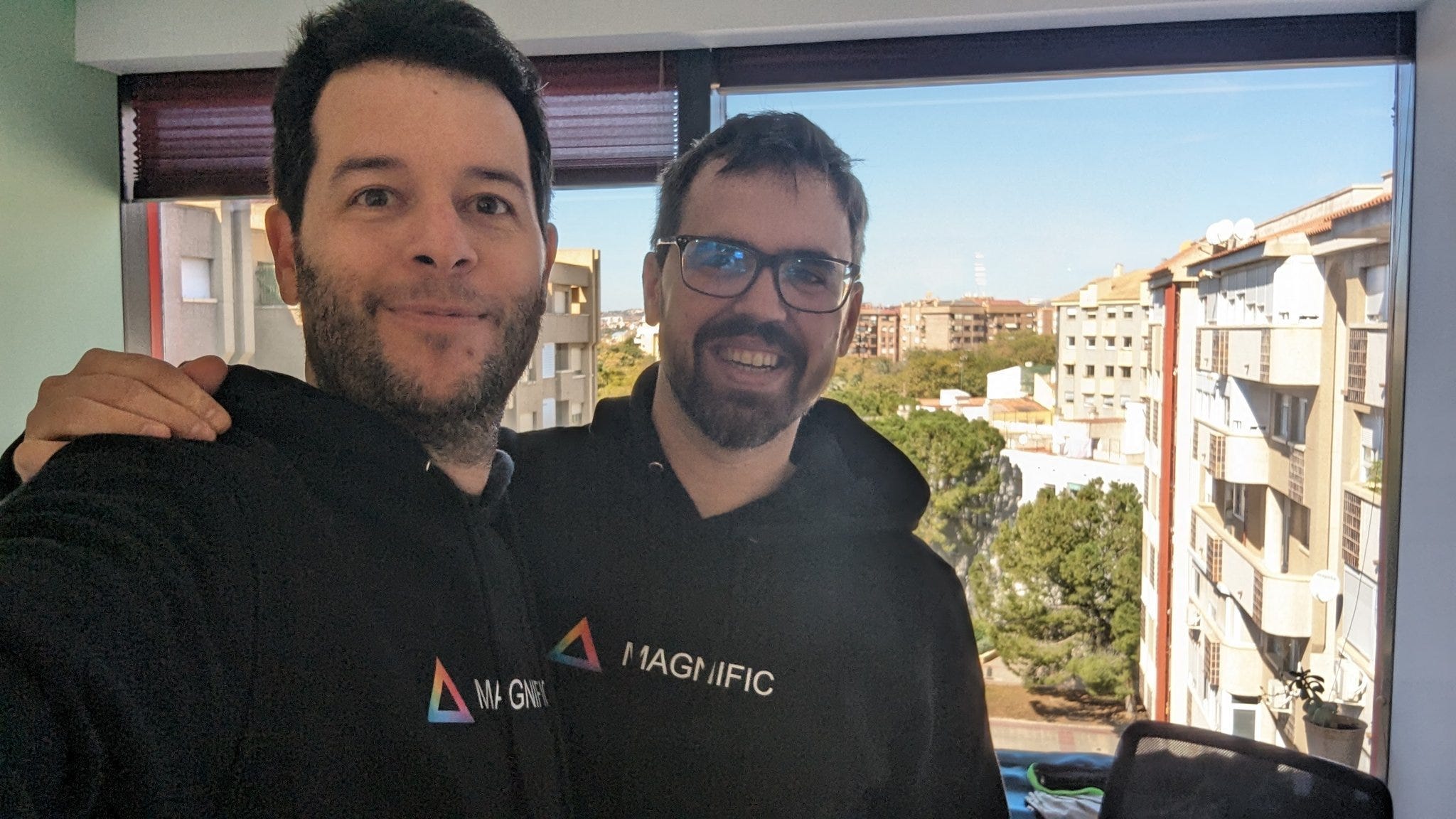
Javi admitted that he still can’t fully wrap his head around how they pulled it off. That kind of honesty from a founder is rarer than the numbers themselves.
Today, as part of the newly rebranded Magnific (formerly Freepik), those figures have scaled to a combined $230 million ARR, 1 million paying subscribers, and 4 million images generated every day.
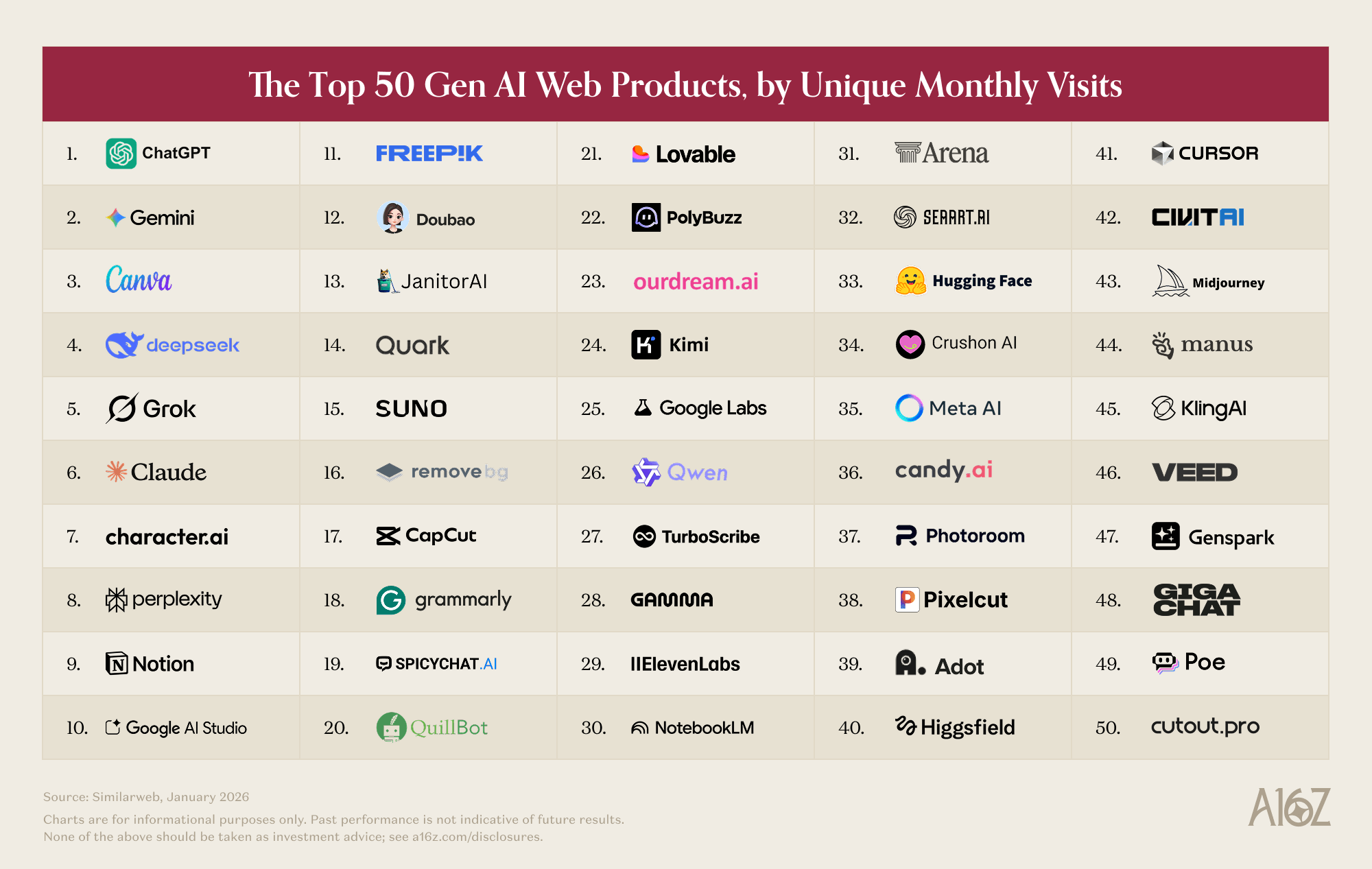
Andreessen Horowitz ranked it the top generative AI web company in Europe by actual platform usage. Not by funding raised. By people using it, every day, for real work.
2. Two guys, a tiny office, and a fan
Javi is refreshingly honest about how this happened. Almost disarmingly so.
He uses the phrase “perfect storm” several times when talking about, and he means it literally.
He does not believe this was the result of genius alone. But the conditions that made the storm possible are worth understanding.
First: The setup
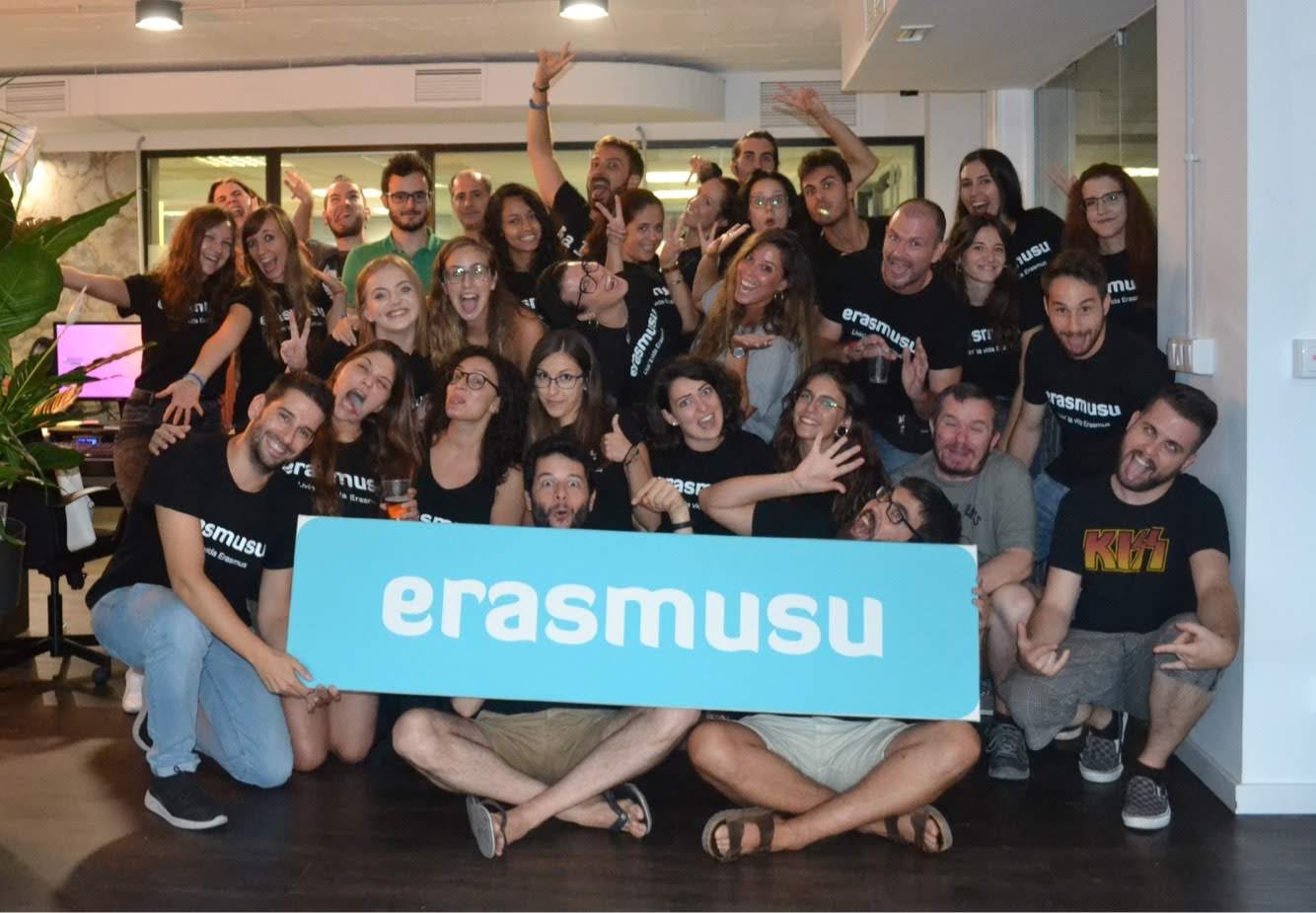
Before Magnific, Javi and Emilio had spent 13 years building and eventually selling a startup called Erasmusu.
Thirteen years is a long time. When they finally closed that chapter, both of them took a proper sabbatical. Two years of not building anything, just living, thinking, playing around.
When DALL-E 2 launched in April 2022, Javi started experimenting with it. He had time, no financial pressure, no board to update, no roadmap to maintain.
So he went down the generative AI rabbit hole the way most people do when they have nothing to lose and everything to learn. He read Reddit threads. He followed open source developers. He shared what he was discovering on X, purely because he found it interesting.
At that point, he wasn’t building a company. He was just paying attention.
Then: The product
Out of roughly 18 months of experimentation, the Magnific workflow emerged. The core idea was simple in retrospect and genuinely new at the time.
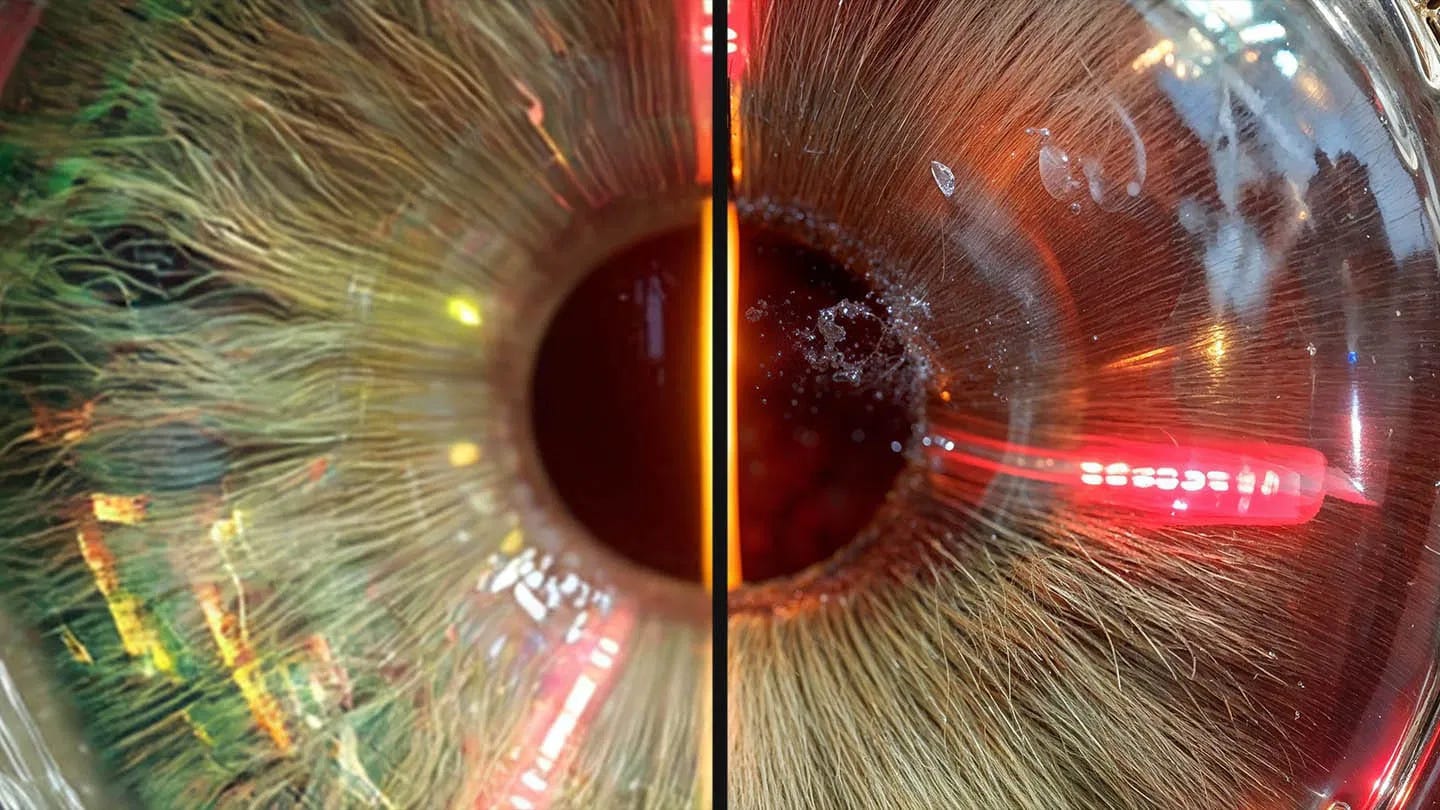
What if you could upscale an AI-generated image not just in resolution, but in creative detail?
What if the upscaler added richness, texture, and depth?
Those are exactly the things that made a Midjourney output look like a photograph rather than a digital render.

They called it a Creative Upscaler. The community initially pushed back hard. Users left notes accusing them of “not being a real upscaler.”
And that is precisely what happens when you create something that doesn’t fit an existing category. People reach for the nearest label and find it doesn’t stick.
Javi describes it with a kind of amused affection, claiming that when you make history, people need a little time to adapt.
They launched with a two-week waitlist in November 2023. Only select creators got early access.
Those creators posted their before-and-afters. The before-and-afters went viral. Users were offering to pay other users per image just to get access before the waitlist cleared. Within five months, Magnific had 725,000 registered users.
No ads. Not a single dollar.
3. The perfect storm
Javi says flat out that he couldn’t replicate this if he tried. And I believe him. But I don’t think that makes it unteachable. There are things here worth sitting with.
Distribution before product
The X account came first. A year before launch, Javi was posting about generative AI purely out of curiosity. Tutorials. Experiments. Things he found surprising or useful.
He built an audience that genuinely cared about this subject, not because he was running a growth strategy, but because he was thinking out loud and other curious people followed along.
By the time the product launched, the distribution channel already existed. He didn’t have to manufacture excitement or run a cold outreach campaign. The people who were going to care were already listening.
Most founders do this backward. They build the product and then figure out who to tell about it.
Javi had the audience and built the product into it.
He is honest that it wasn’t deliberate. But it worked, and the lesson holds whether it was planned or not: an authentic audience that trusts you is worth more than any ad budget.
They invented the category
“Creative Upscaler” is a term Magnific’s community coined in response to what the product actually did. It didn’t exist before November 2023.
Two years later, competing against Google, Adobe, xAI, and OpenAI across overlapping product territory, Magnific is still the reference in that category. That is a genuinely unusual thing to say about a two-person bootstrapped startup.
Creating a category is the rarest move in startups. It requires a product so distinct from existing options that users need a new word for it.
Most products are deliberately positioned within established categories because that’s what makes them legible to buyers and press.
Magnific, probably without fully intending to, made something that forced a new vocabulary. And once a community coins a term for what you’ve built, the brand becomes the category. That is a durable advantage.
Building with AI while selling AI
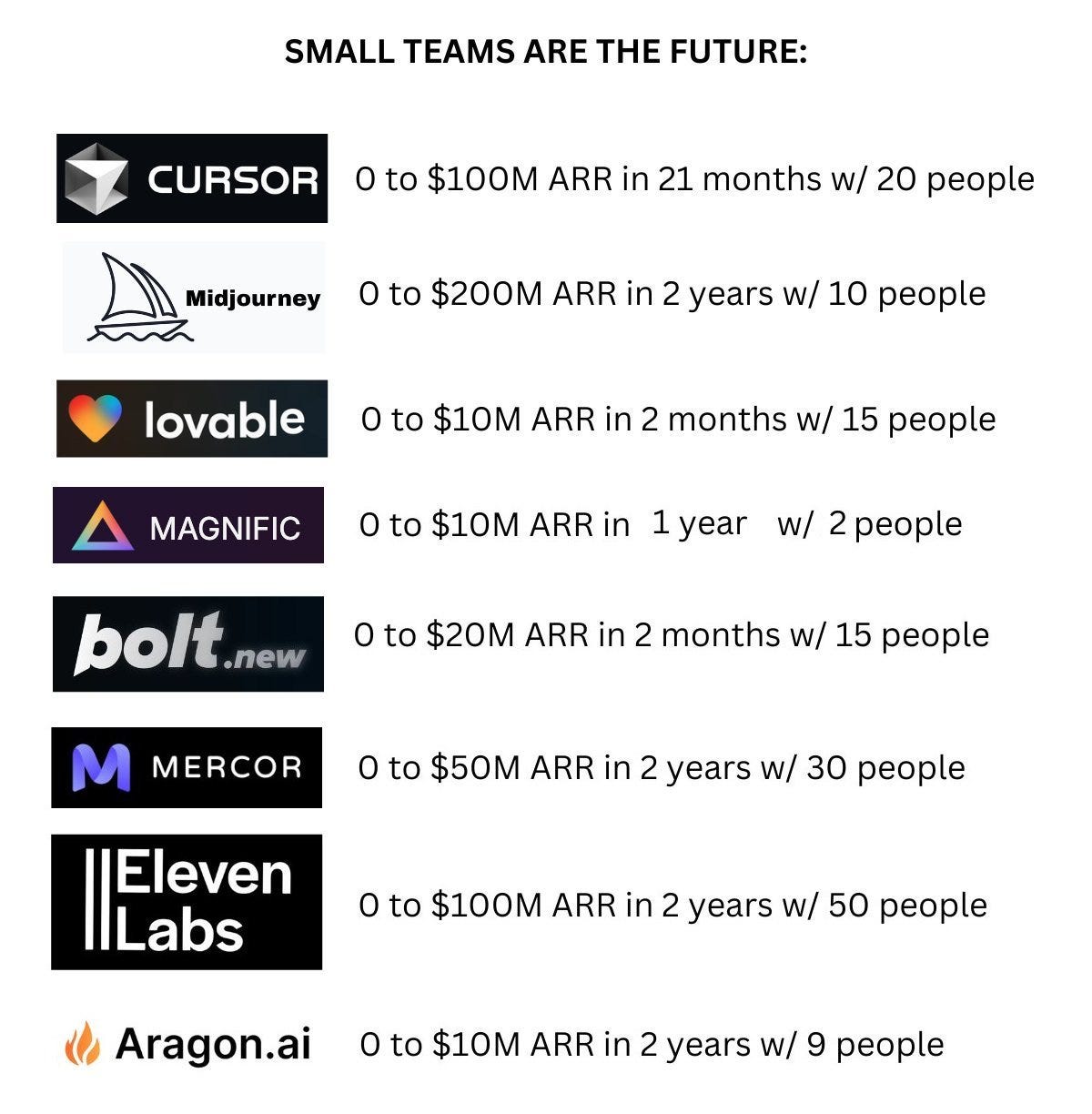
In November 2023, roughly 50% of Magnific’s codebase was written using Cursor and Claude. Javi mentioned this at the time. He says people literally didn’t believe them.
Today that is completely unremarkable. In late 2023 it was a real edge. Two people were able to build and maintain a product at a pace that would have required a team of 8 to 10 engineers just two years earlier.
The leverage was significant, and the 90% gross margin reflects it. They didn’t just sell an AI product. They used AI to stay lean enough that the economics made sense from day one.
4. Does the product actually hold up?
Now if we are being real, celebrating a product without honestly testing it is irritating.
The independent reviews are strong. Across portrait photography, wildlife, landscapes, and old photo restoration, Magnific’s Precision Upscaler consistently outperforms Photoshop’s Firefly and Topaz Gigapixel.
The skin texture detail in particular is something reviewers describe as simply not replicable by competitors.
Hair strands. Jewelry beads. Fabric weave. It handles the fine organic complexity that other upscalers either soften into mush or render as alien artifacts.
[image]
But there are real weaknesses that should be pointed out.
On flat or gradient surfaces, Magnific produces blotchy banding that experienced reviewers found genuinely frustrating.
For product photography, there is an active problem where it subtly alters text engravings, surface textures, and fine mechanical detail in ways that could misrepresent a product to a customer.
For intricate architectural or artistic ornamentation, it invents detail rather than restoring it, turning elegant historical stonework into something unrecognizable.
These are not edge cases. They’re meaningful limits that define exactly what the tool is and isn’t suited for. Magnific is built for organic complexity.
Give it a human face or a mountain range and it is outstanding. Give it a product with precise text or a building with historically specific detail and it starts making things up confidently.
Worth knowing before you build a production workflow around it.
5. The acquisition that became a love story
Freepik was not a scrappy startup. Founded in 2010 in Málaga by Joaquín Cuenca and his brother Alejandro, it spent 14 years building a global stock asset platform used across more than 200 countries.
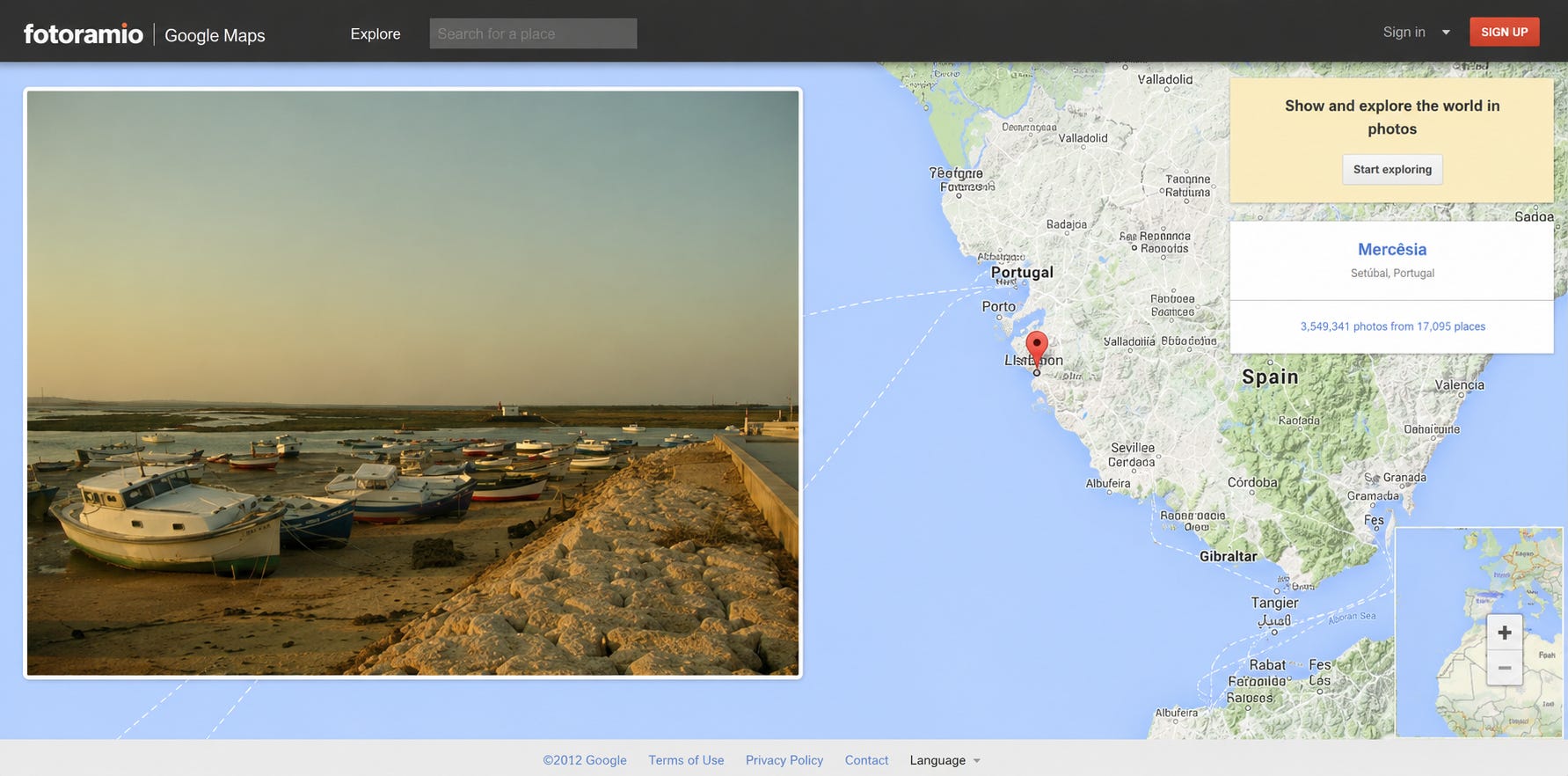
Cuenca had co-founded Panoramio before that, a geotagged photo-sharing platform that Google acquired in 2007. He understood what a sustainable business looked like, and he had built one, entirely without outside capital.
When Freepik acquired Magnific in May 2024, both Javi and Emilio stayed. What followed was not the typical post-acquisition slowdown where the acquired team slowly loses relevance.
The combined company built video upscalers, a real-time collaborative workspace, a model-agnostic generation layer that lets enterprise teams pick from Google’s Veo or ByteDance’s Seeddance depending on the task rather than being locked to a single provider.
In enterprise AI, the ability to swap models without rebuilding your workflow is a genuine competitive advantage.
Javi is candid that some of these products were barely 0.1% his work. The Freepik team built them.
Most founders acquired by larger companies spend the following years positioning themselves as the creative genius behind everything that follows. Javi doesn’t do that. He says they found the right company to acquire them, and that joining forces took Magnific somewhere the two of them could never have reached from a tiny office in Murcia.
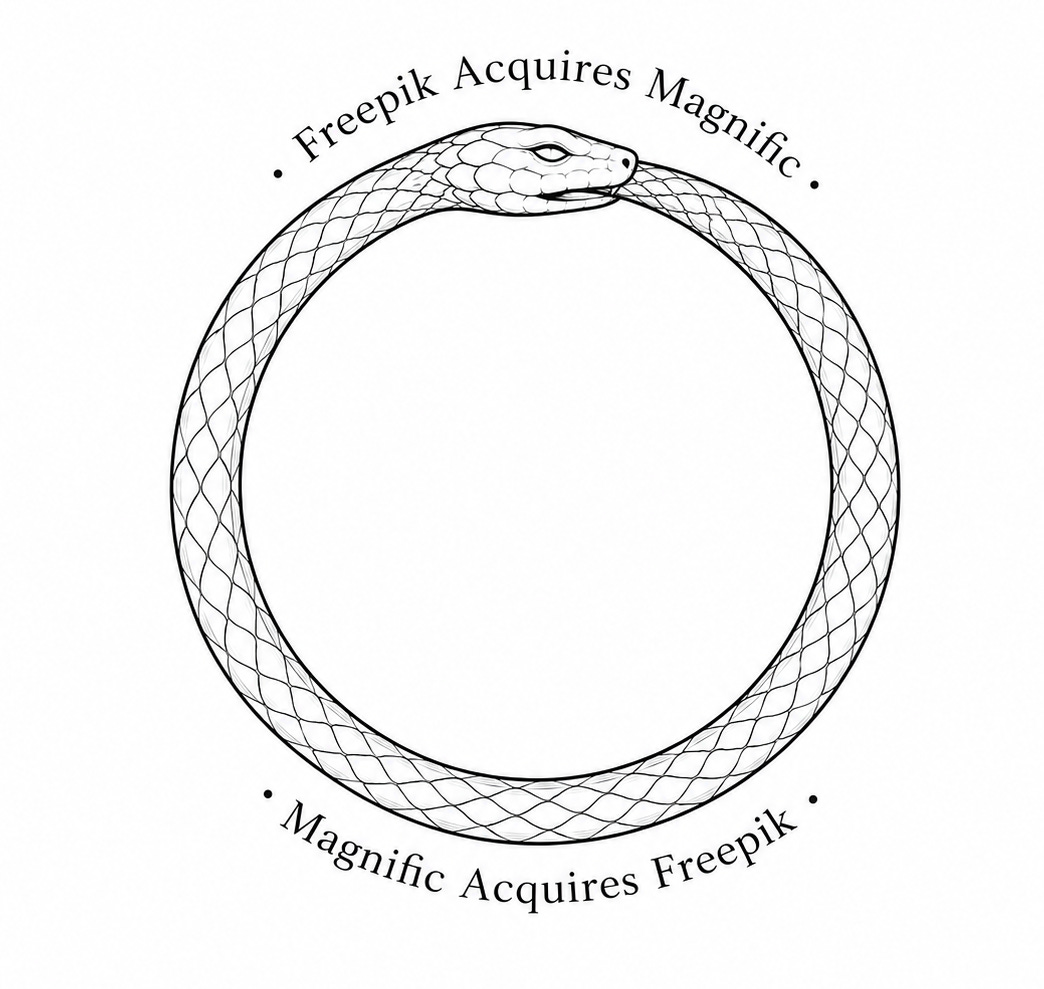
Then on April 28th this year, Freepik announced it was rebranding entirely. New name: Magnific. New domain: magnific.com.
Fourteen years of brand equity, retired, in favor of a two-year-old name from a startup they had bought.
That is not a routine corporate decision. It says something concrete about how deeply the Magnific brand had embedded itself among professional creatives, and how clearly Cuenca understood which direction the company was actually traveling.
6. The takeaway message for everyone
The bottom line is that we have watched companies raise $50 million to build things that two people in Murcia built for $5,000.
But this is not a venture capital problem. Magnific has exposed an assumption the industry makes constantly: that scale requires outside capital.
Sometimes it does. Often it doesn’t. What it always requires is timing, and timing is the variable you cannot manufacture.
Javi knows this better than anyone. He says repeatedly, in his own words, that he couldn’t replicate what he and Emilio built.
Take away the two-year sabbatical and they don’t have the runway to experiment.
Take away the timing and they’re not riding the generative AI wave, they’re paddling against it.
Take away the X account built a year before launch and they have a great product with no one to tell.
The stars aligned and he’s honest about it.
The part that is genuinely replicable is smaller than it looks.
Build something distinct enough that people need a new word for it. Tell people about it before you need them to care. Stay lean long enough for the product to prove itself. And when the right acquirer comes along, know the difference between the right one and the convenient one.
Everything else was Murcia in November 2023, two laptops, a fan, a generational wave nobody quite saw coming, and two guys with enough time and enough nerve to catch it.
Cuenca himself said:
“In the future we will make movies in the same way we write books. One person with a vision and the tools to execute it.”
And they themselves are writing the first chapter of that sentence.
The Freepik acquisition is a good lesson in vendor stability signals. High ARR + strategic acquirer = very different renewal conversation than a VC-backed startup burning cash.
The more interesting lesson is that Magnific had three things most AI startups don’t: a weirdly specific product wedge, distribution before launch, and timing so good it looks fake in hindsight. The X audience mattered because Javi had already earned trust by publicly exploring the space before he had anything to sell. So when the product dropped, it didn’t need “GTM.” It already had a room full of people who understood the pain.