

Here’s a two-minute exercise that usually ruins someone’s weekend.
Open your agent’s logs and count two things: the sentences it wrote for a human, and the decisions it made for itself.
The second number wins every time. Which worker runs next. Whether a source is relevant. Whether the tool call worked, whether the task is finished, whether to retry or stop. Each of those questions has three or four possible answers, and most stacks still send every one of them through the same frontier model that writes the final output, wait for it to answer in prose or JSON, parse it, and occasionally retry because the JSON broke.
Put a price on that and it gets uncomfortable fast.
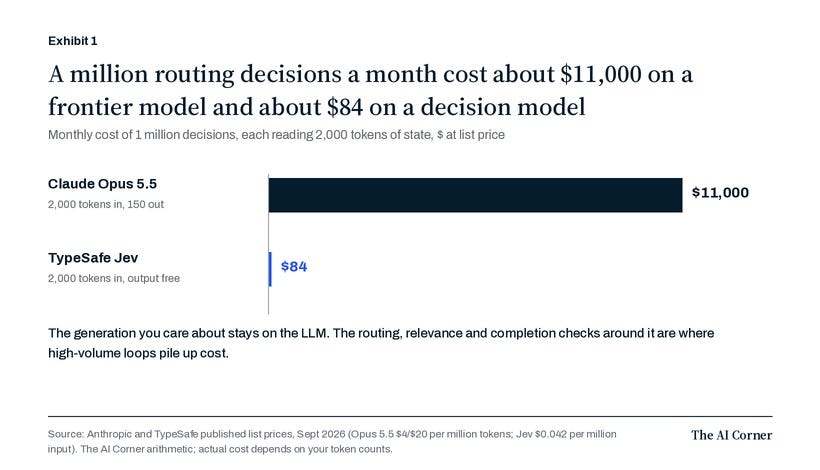
That ratio is why the most interesting launch of September came from a model that can’t write.
The model that only decides
On September 15, Diogo Almeida launched Jev. He co-authored the InstructGPT paper, the research that turned GPT into ChatGPT, and he spent the next two years in stealth building its opposite.

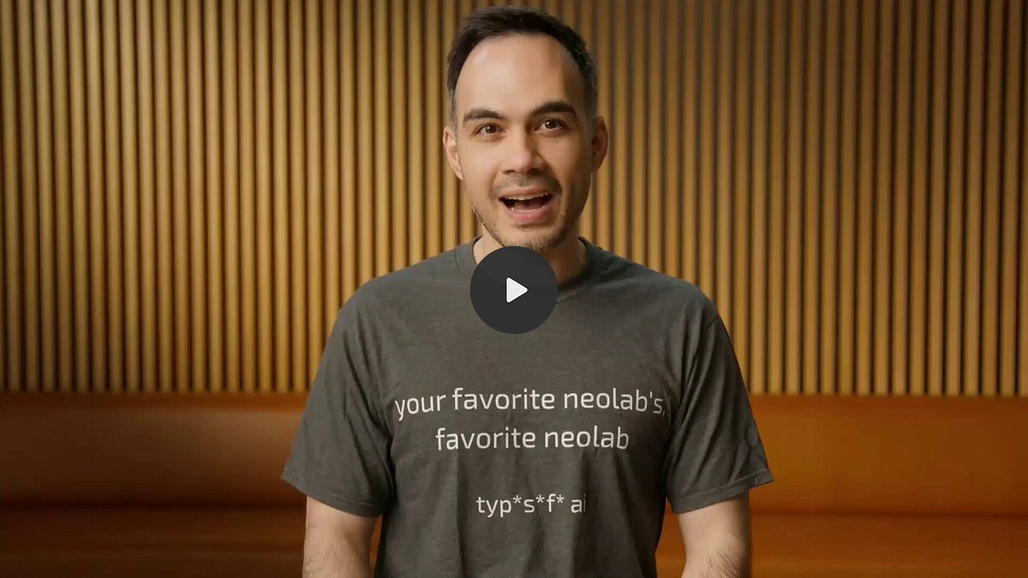
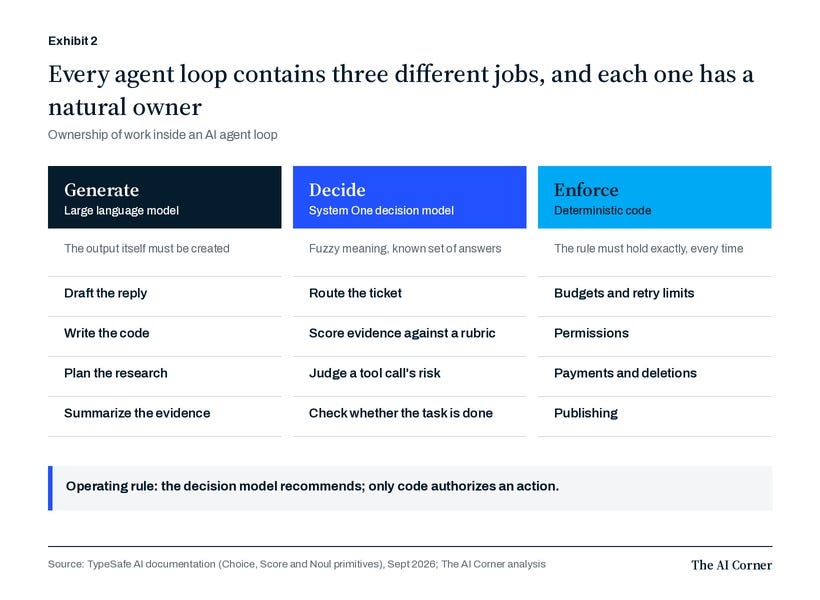
Jev takes the state of your system plus a few typed questions, and returns one of three things:
▫️ Choice: picks one option from a menu you define, with a probability for every option
▫️ Score: places the state on a rubric you wrote
▫️ Noul: gives the probability that a statement is true
Input costs $0.042 per million tokens. Output costs nothing, because there’s no text to meter. The launch video crossed 40 million views, according to Latent Space, which tells you how many engineers had been waiting for someone to say this out loud.
People can’t be the only consumers of intelligence.
Diogo Almeida, TypeSafe AI, via The Register
Every time the price of a capability collapses, people find uses for it that nobody planned. TypeSafe named the model after William Stanley Jevons, the economist who noticed that cheaper coal made Britain burn more of it. Cheap judgment will follow the same curve, and the first place it lands is inside your agent loop.
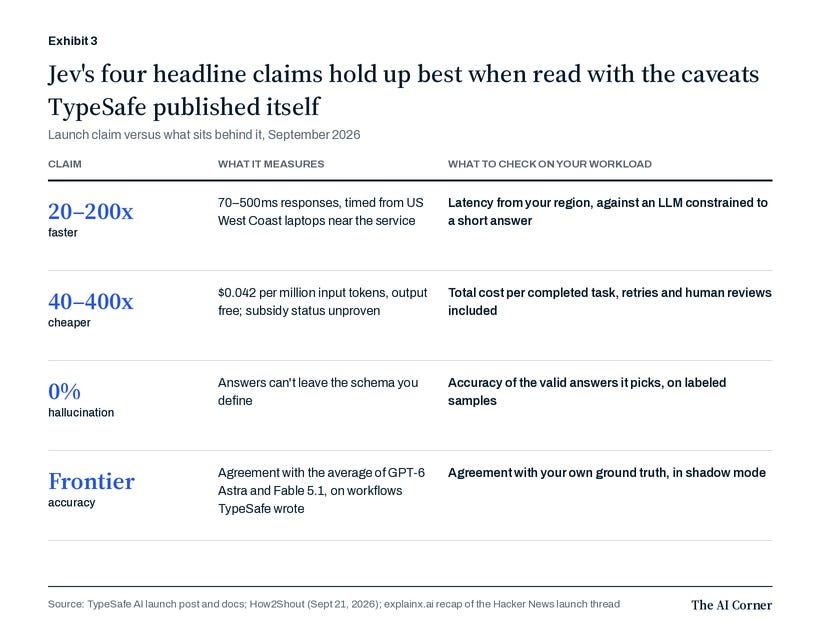
Read the fine print before it lands in a board deck
TypeSafe published an unusual amount of self-criticism with the launch, and it’s the best part of the story:
Then the category moved faster than the company. Within a week, open replications appeared: a DiffusionGemma clone, a browser-based OpenJev, an open CLM-8B, and Supersonic Labs’ Julia 1, a 144M-parameter model that runs on a CPU.
So the smart bet sits one level above any single model. Build the decision layer, own the contracts and the routing, and treat whichever model runs underneath as a lease you can renegotiate.
My view, stated plainly: the decision layer is the most underbuilt part of every agent stack I review. The teams that build it this quarter will run agents at a fraction of their competitors’ cost per completed task.
What premium members get today
You’ll know which of your agent’s decisions are overpaid, and you’ll have working code to move the first one. Below the paywall:
The Decision Layer Kit (download, yours to keep and reuse). A Claude Code audit prompt that finds every hidden decision in your repo, a Python module with contracts, confidence routing, decision receipts, shadow mode and a calibration report, plus three ready contracts. It runs on Jev or on the Claude account you already have.
The five-day rollout plan, one step per day, from audit to your first automated branch
The twelve decisions to migrate first, the checklist I’d hand any engineering team on Monday
The routing grid (Exhibit 4) that decides which answers act alone and which go to a human
Six mistakes that look like model problems, and the one-line fix for each
This one is for founders, engineers and operators running agents in production, or about to. If your team ships agents, the audit alone will pay for the year.
Cancel anytime. First subscribers get 50% off forever. Members also get the full AI Corner library, including the context engineering guide, the agent reliability playbook and the inference engineering playbook.
The Decision Layer Kit
Download it once and keep it. Everything inside ships under an MIT licence, so your team can use it on every agent you build: