

Measuring Your Agent’s ROI

You built an AI agent, and it’s out there every day working through tasks and keeping you happy. Then what?
Most dashboards answer with tokens used and hours saved, and the bigger those numbers get, the better the agent looks. The question that matters is simpler: did you get your money back?
Part of the answer depends on where your agent’s data lives. An agent that works across a dozen scattered tools pays for every lookup, and the bill shows up in your ROI.
together with Attio
Most CRMs grew up around people clicking through records, while agents query constantly and in parallel.
Today Attio launched its answer:
A CRM built for people and agents in equal measure

▫️ SQL engine: query your whole workspace with SQL, right inside Attio
▫️ Data connectors: bring the rest of your stack into one place
▫️ Agent scale: up to 100 million records per object, and what Attio says is 1,000x the agent traffic of a legacy CRM
Activities and interactions are live in beta too.
Once the data sits in one place, the next question is what your agent is worth. A few recent cases give a pretty good answer.
What’s Your AI Agent’s ROI?
Table of Contents
1. The $93 Bug
2. The Current System That Doesn’t Work
3. Ask The Right Questions
4. What Ramp Actually Built
5. Better Numbers Don’t Equal Better Service
6. Prompt Before You Spend
1. The $93 Bug
Ramp, the corporate card and finance software company recently set out to answer this question, exactly because they could see every dollar. But they could not see what every dollar bought.
What an agent is and what you pay for it
In simple terms, an AI agent is software that takes a request and works through the steps on its own.
And the way you pay for an AI agent, is in tokens - the small chunks of text an AI model reads and writes. And the more it reads and writes, the more you actually pay for it.
Ramp's agent is called Inspect, and by August 2026, 75% of the code changes Ramp accepted into its products came from it.
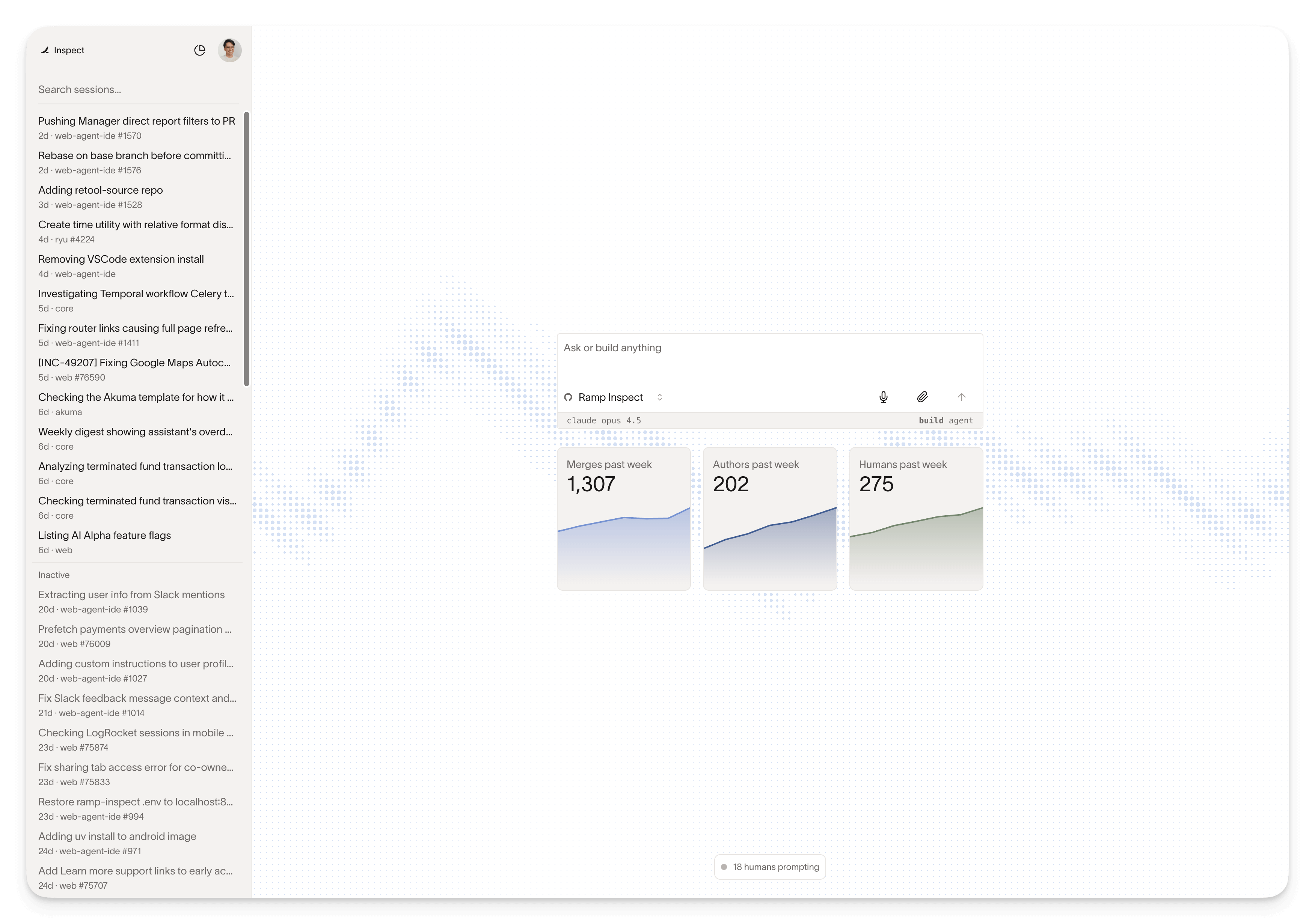
What a bug fix costs
Eventually, one engineer asked it why a cash-planning feature kept running twice instead of once.
To answer, the agent had opened 8 separate working sessions across 3 codebases! It used about 5.6 million tokens, cost $93, and ended with 2 fixes approved and shipped.
The session the engineer started cost only about a fifth of that. Both fixes came from sessions the agent opened on its own. But if you look at one session at a time, you misread both the spending and the result.
Ramp still couldn’t say if $93 was a good deal. $93 compared to what?
If the bug was costing customers money everyday, $93 is cheap. If nobody would have noticed it for months , it’s hard to call a bargain.

2. The Current System That Doesn’t Work
At the end of the day, AI agents use tokens and tokens measure consumption.
But consumption along is not a good metric because it lacks context. For example, 5 million tokens could either be the month’s most valuable work or it could just be an agent running in circles.
Tasks completed is another metric that sounds better, but only until you ask how hard the task was and what was the result was.
A thousand closed support tickets aren’t really worth much if a third of them end up getting reopened.
[agent running in circles drinking tokens]
Time saved is possibly the worst one out of the usual metrics. In a 2025 study by the research group METR, 16 experienced programmers took 19% longer on real tasks when they used AI tools. Afterwards, they believed AI had made them 20% faster.
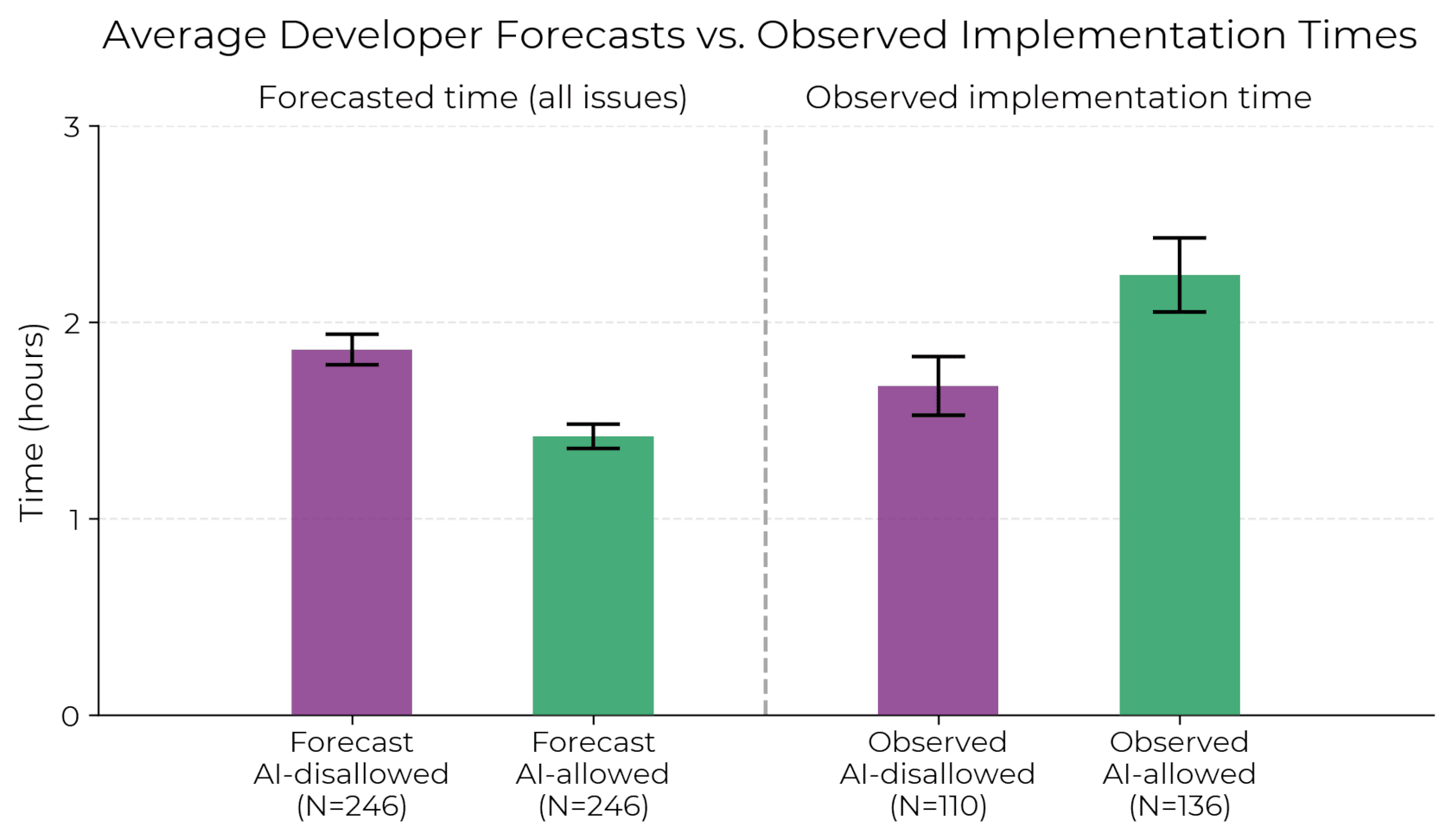
To be fair, this was a small group of testers, so it doesn’t really prove that AI slows everyone down. The actual conclusion is that people are just bad at guessing their own time saved.
Lastly, output, similar to code changes, shows only the production and not the impact. Google's DORA research linked a 25% rise in AI use to a 7.2% drop in delivery stability, meaning more releases that broke something.
Ok, so what should we measure then?

3. Ask The Right Questions
The best thing to do is to pick one workflow, meaning one repeated job the agent does at each time.
1. Objective
What was the agent supposed to solve?If the answer is “fix bugs”, it’s just too vague to check. The answer “fix billing bugs within 48 hours” is better.
2. Method
How was the job done and what did it cost?
This establishes your baseline because without it, you cannot work on a return. All you know now is that you do have a cost.
3. Cost
What does the agent actually cost?
The model bill is what you get to see but once you add setup, upkeep, the people who review its work, the fixes when it gets things wrong and the runs that produce nothing, you start gaining real, complete insights.
4. Evaluation
Did the result meet my original standards? Did someone use it?
A code change that gets undone within a week doesn’t really count.
5. Progress
Has the number moved at all?
That number could be cost per unit, volume handled, uptime or revenue. Pick and track.

4. What Ramp Actually Built
Ramp first gathers every linked session into one “complete run,” so the $93 bug becomes 1 record instead of 8.
From sessions to work items
Then an AI model reads the run and splits it into work items. A work item is one goal with one result. Investigating, editing and testing the same fix count as one item.
The $93 run became three items: find the cause, fix the back end (the servers and data behind the app), and update the front end (what users see) to match. Each item is linked to the product it touched, an owner and its share of the cost.
Over three weeks, Ramp did this for about 200,000 runs.
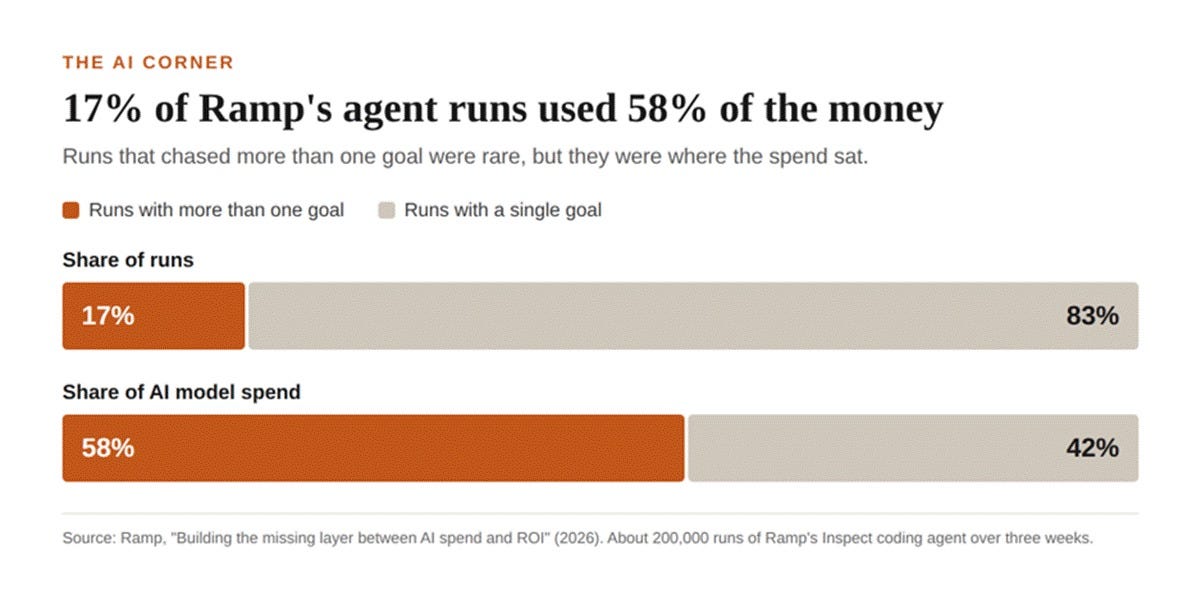
Where the money went
Only 17% of runs pursued more than one goal, but those runs took 58% of the spending.
Those runs weren’t wasteful. But if you measure it per session , you cannot see where the money goes, which is why you have to measure it per goal.
Ramp hasn’t published an ROI number.
What it built is the record you’d need to calculate one.

5. Better Numbers Don’t Equal Better Service
Here’s the thing: The unit you measure has to fit the job.
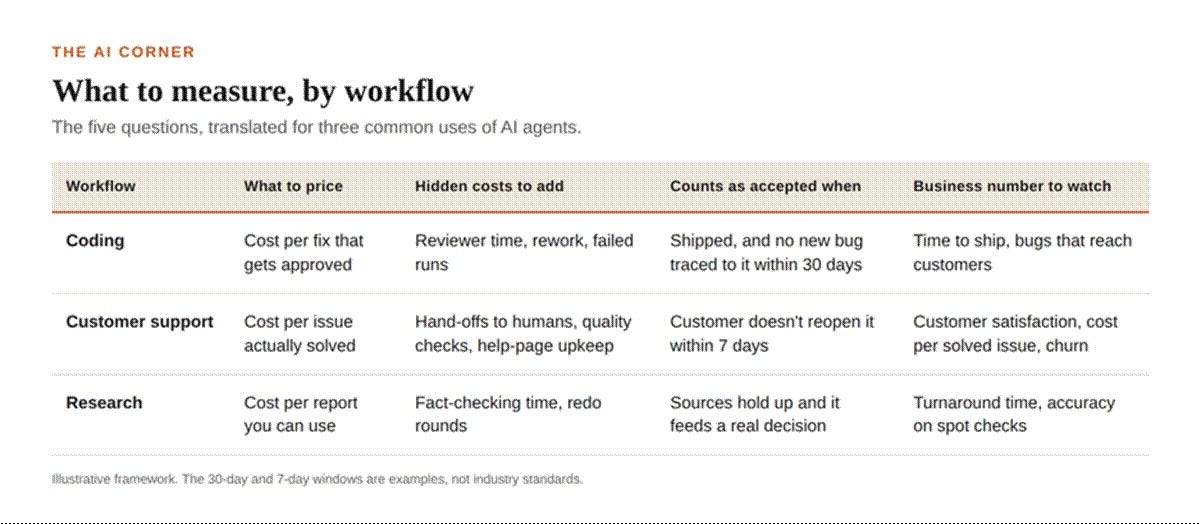
When a cheap ticket gets expensive
Say a support agent costs $1.10 per resolved ticket, now that is an opportunity.
Then the share of tickets customers reopen climbs from 8% to 14%. Each reopen means a second contact, which can be with a human.
What happened at Klarna
Klarna is the public version of this story. The payments company said its AI assistant did the work of 700 full-time staff, and later that number went up to 800. That’s mindblowing.
In 2025, its CEO admitted that focusing too hard on cost had lowered quality. Klarna began piloting a new team of human agents, which they called an “addition”, instead of a reversal.
At launch, Klarna reported answers in under 2 minutes instead of 11, with 25% fewer repeat inquiries. Every number on the dashboard looked good. The CEO still ended up saying quality had suffered because cost drove the decisions.
The human pilot that made the headlines started with two people, while several thousand outsourced agents had been on the job the whole time. Since then the staff figure has passed 850.
6. Prompt Before You Spend
The goal is one sentence you could defend in a board meeting.
“We spent $X in total for Y and accepted results at $Z each, against $W the old way, and [metric] moved by N.”
One sentence for the board
Can’t fill in a blank? Start there. It’s usually the baseline or the full cost, because failed runs and review time never show up on the vendor’s bill.
Most companies can’t fill it in yet
The research firm Gartner expects over 40% of agentic AI projects to be cancelled by the end of 2027, with unclear business value among the reasons. Some will deserve it. Others will just be projects nobody measured properly.
IBM surveyed 2,000 CEOs in 2025, they said only a quarter of their AI projects had delivered the return they expected. In the same survey, 68% said they had clear metrics for measuring it. Both can’t be fully true.
A 2026 survey by the investment firm Battery Ventures found something similar. Just 16% of companies saw a positive return on more than half of their AI projects. Among those without a shared way of measuring return, nearly one in ten had no way to measure it at all.
The agent often isn’t the problem as Ramp’s agent writes three quarters of the code the company accepts, yet Ramp still had to build a record before it could say what any of that work was worth. Most companies haven’t built theirs.
Your CFO will ask whether you got your money back.
So pick one workflow this week and write the sentence. Fill in the blanks you can, then go find the ones you can’t. The token bill only tells you what you spent.
You still have to find out what you bought.