

Most predictions about the next computing platform are guesses dressed as conviction.
This one carries $14 billion behind it.
Hours after launching Meta’s first ground-up AI glasses line, Mark Zuckerberg laid out the whole bet. I watched the full two hours so you can skip them.
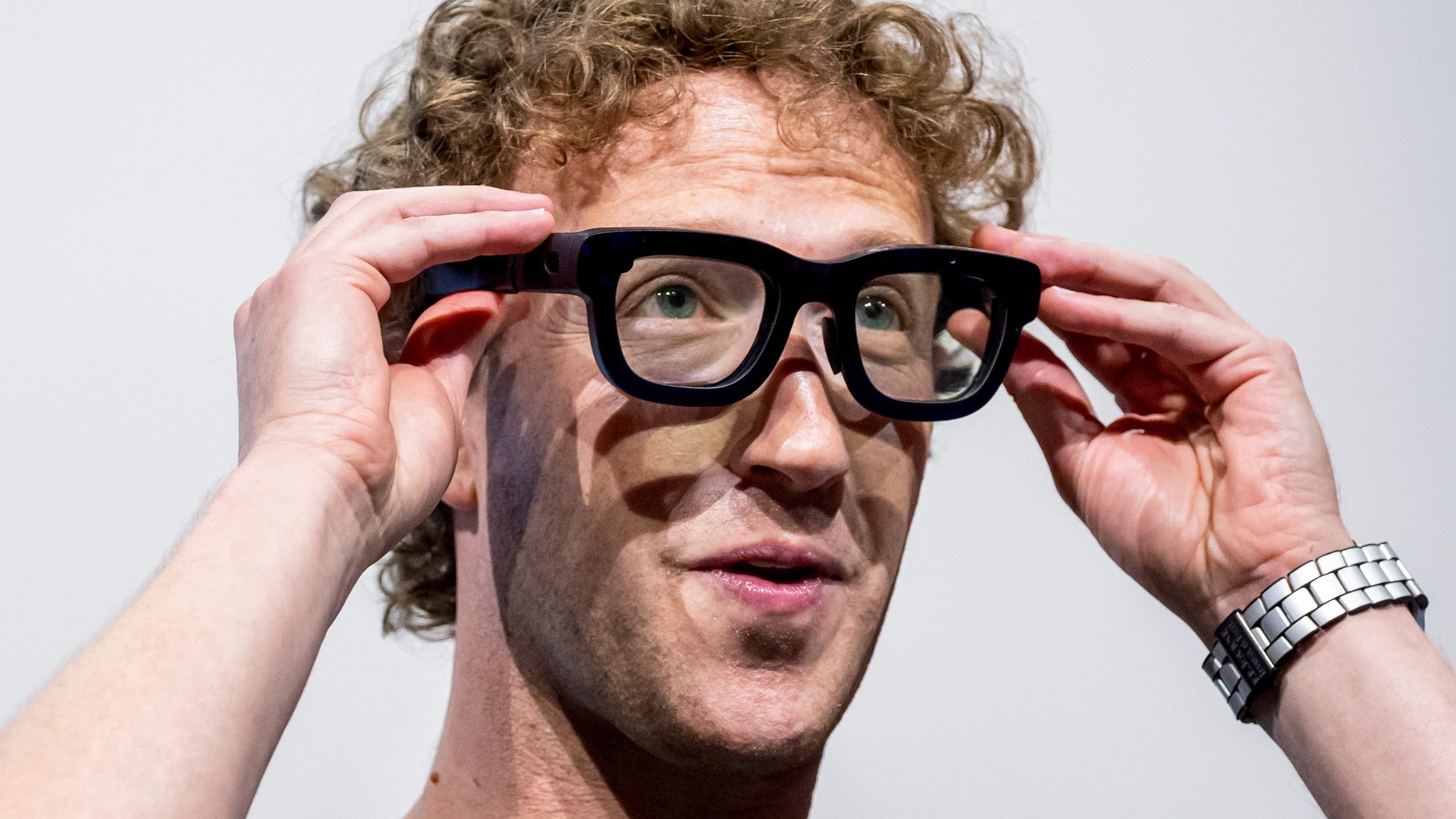
Here are the 10 takeaways that matter, and the thread under all of them:
The future belongs to whoever puts powerful AI in the hands of the most individuals.
That future rewards the individuals who actually know how to drive the AI.
together with Outskill:
Most people use 5% of Claude. Master the rest in one weekend.
Join the world’s first live Claude-Athon, a 2-Day Claude AI Mastery Workshop that condenses 800+ hours of research into 16 hours, completely free:

▫️ Hands-on with Skills, Connectors, Cowork, and MCP
▫️ Build, scale, and deploy with 10+ AI tools, LLMs, and workflows
▫️ Walk out shipping AI workflows you keep
Live Saturday and Sunday, 10AM to 7PM EST
1. Meta's New Glasses Are the First Line Designed From the Ground Up
The prototype phase is over.
“This is the first line of glasses that we’ve designed with our partner, Essilor Luxottica, from the ground up. It brings all of the functionality, including the most advanced AI models that we’ve built right into the glasses.”
Previous Ray-Ban and Oakley collaborations layered features onto existing frames. This one treats AI as a design constraint from day one, the way the iPhone treated touch: I track every frontier release in the AI tools and models library.
▫️ Essilor Luxottica hands Meta fashion distribution and optics credibility a pure tech company spends a decade chasing
▫️ Every future release ships AI-native
Why it matters: Every consumer hardware category hits the moment where the technology stops being the add-on and becomes the reason the product exists, the shift top VCs price first. This announcement is Meta making that move on wearable AI.
2. Glasses Replace Phones as the Primary Device in 5 Years
The sharpest prediction in the interview, and he inverted the question.
“What is the reason why five years from now, any of the glasses that people wear are not going to be able to have this kind of functionality to help people out throughout their day? It just doesn’t quite make sense.”
Almost 2 billion people already wear optical glasses, one of the largest installed bases any platform bet has started from. Zuckerberg skips “will smart glasses exist” and asks why any glasses would stay dumb. He already lives it, taking business calls on a jet ski.
The platform logic follows every prior shift: computers survived phones, phones survive glasses, and the fight is over which device you reach for first.
Why it matters: If your product assumes a phone-first interaction model, you have a 5-year window to design for ambient, always-on, audio-first experiences. The interface is moving faster than most product roadmaps assume.
3. Every Smart Glasses Attempt Before This One Failed for the Same Reason
The technology was rarely the issue.
“The technology is secondary. The fashion and the wearing it is actually primary. In order to unlock that, it needs to be that the glasses are something that you’re proud to wear, and they need to be comfortable, so that way you’ll wear them for long periods of time.”
Everyone before solved the engineering first. Meta flipped it: what makes someone proud to wear glasses for 12 hours? The wearability is the product. Even the AI behavior follows: sparing over chatty, and that restraint is a prompting problem as much as a hardware one.
Why it matters: Any product that lives on a person’s body earns its place through comfort and aesthetics first. The tech is the unlock. The design is the door.
4. Zuckerberg's Entire Company Runs on One Bet the Rest of the Industry Rejected
One thesis drives every Meta AI decision.
“I don’t want to live in a future where there’s one big AI. I think that’s a bad future. No matter how good the AI is, I think that’s not good.”
Most labs converge on one powerful system serving everyone. Meta runs the opposite way: personal superintelligence, every individual with an AI holding the context of their own life, accountable to them. His reasoning is old: absolute power ends badly, and distributed intelligence creates the accountability a centralized system lacks.
Why it matters: For founders, this frames the product opportunity. Zuckerberg argues that building tools which empower individuals is the only path to a good outcome, which makes the individual-empowerment layer the place to build.
5. AI Could Cure All Disease Faster Than Anyone Thinks. Bioweapons Are the Open Risk.
The upside and the downside arrive in the same breath.
“When we started that, we thought that that was really ambitious, cure and prevent all diseases this century. Now it’s probably too conservative. I would guess it’ll be much sooner than the end of the century when you get there.”
Biohub launched with a goal that felt bold, and Zuckerberg now calls the timeline too slow. Models that simulate biology compress decades into years, and the same capability lowers the barrier to misuse. He names it his top concern for the next two years, alongside cybersecurity.
Why it matters: Investors watching biotech should take the AI simulation angle seriously. The models exist. The race is over who builds the application layer, and whether safety infrastructure keeps pace.
6. Meta Rebooted Its Entire AI Lab Because Llama 4 Was Off Trajectory
The most candid moment of the two hours.
“The Llama 4 model was not on the trajectory we needed to be. So we did this pretty big thing to reboot the lab and kind of build it up.”
Meta Superintelligence Labs is under a year old. Zuckerberg says the current progress would have thrilled him a year ago, and it leaves him hungry now. The admission matters more than the confidence: a founder who states the miss plainly signals accountability over panic.
Why it matters: The pre-reboot Llama trajectory is the wrong baseline for judging Meta against OpenAI and Anthropic. Watch what the new lab ships in the next 12 months. For how the frontier race stands today, start with the Fable 5 and Mythos breakdown.
7. The Always-On AI Is Already Here
A product vision hiding inside a cooking story.
“You can go from half an hour of the always-on AI to an hour to two hours to eventually that’s like just all day. That’s a very different mode of using AI.”
Zuckerberg cooks with his daughter while the AI watches, corrects him before mistakes, and guides the process unprompted. That is an ambient assistant with room-level context, a category apart from a chatbot. The glasses are the only hardware that sees what you see.
Why it matters: The category emerging here is a new operating system for your life, built on memory and context. The companies that build the best ambient context layers own a market that lacks a name today. I built my own version of that layer, and the full stack is in the second-brain guide.
8. AI Job Loss Is a Race Between Two Rates
Zuckerberg skips the automation panic for the harder version.
“If you focus on empowering people and making people more productive, and that happens at a faster rate than companies get better at automating things, then in theory there should be more jobs in the future, not less.”
The standard take says automation shrinks jobs. His version is conditional: the outcome depends on whether individual productivity compounds faster than corporate automation. Personal superintelligence is his structural answer to displacement, because a world where every individual holds powerful AI produces a different macro outcome, the pricing power shifting to individuals instead of only large companies.
Why it matters: If you build productivity tools for individuals, you are part of the rebalancing mechanism, a framing worth keeping next to the layoff-trap data.
9. The Prototype Is Magical. The Engineering Target Is 50 Grams.
Wonder, grounded in a weight constraint.
“We’ve shown the prototype version of the kind of full wide field of view display. It’s incredible. It’s like magical. We want to get it down to about 50 grams. The real target for what we think is all-day comfort is probably closer to 50 grams.”
A decade of work on the holographic display earns one word, magical, followed by the constraint: too heavy. The 50-gram line is where humans wear glasses all day and forget them. Above it, the product fails the fashion rule. Below it, it unlocks the always-on AI.
Why it matters: For hardware investors, 50 grams is the milestone to track. When Meta ships full field-of-view at all-day weight, the phone-replacement thesis turns executable. Until then, the glasses are a very good accessory.
10. Batting Average Means Little in Creation. The Scale of Your Wins Decides Everything.
The best distillation of his founder philosophy.
“In creation, the upside is almost infinite. It’s not like you can do stuff in baseball where the maximum is a home run. You can build something that billions of people use. And it’s just not linear.”
Zuckerberg carried bets ridiculed for years, the metaverse spend, the Instagram price, and every large one looked like a mistake before it looked like a masterpiece. Baseball caps the upside at a home run; building caps it at billions of users, the same asymmetry that runs the whole AI investing game. His tell: wild bets leave him calm, and team misalignment is what stresses him.
Why it matters: The lesson is sizing over risk-taking. A portfolio of safe bets that all land loses to one transformational win, the math behind what top VCs look for.
The Glasses Playbook: What This Means for You
Two hours, one argument: everything downstream of distributing AI to individuals.
Founders: the opportunity is ambient, personalized, always-on AI that knows your context. The hardware is glasses. The software is an AI with memory of your life. Start designing for the post-phone interface now, and let Claude do the shipping while you do.
Investors: two bets to watch, both for the investor lists. Hardware that reaches all-day comfort weight on AR displays, and personal AI that compounds from the context of your actual life. The glasses create the data layer. The AI consumes it.
Operators: the personal-versus-centralized question stays open, and Zuckerberg built his whole company around one side of it. Take a position, because it defines a decade of product decisions.
The 5 principles to steal
Native beats bolted on. Design the hardware around the AI from day one.
Fashion unlocks adoption, not specs. Comfort and pride of wearing come before capability.
Distribute power, do not centralize it. Personal AI with individual accountability beats one system serving everyone.
Size your bets by upside, not by hit rate. Creation has no home-run ceiling. Baseball does.
Admit the miss, then rebuild. A trajectory correction stated plainly beats a launch with zero flaws.
The window is five years. Every pair of glasses in the world turns smart before it closes.
The question is whose AI is in them.
Keep reading
The AI platform shift
▫️ AI tools and models library
▫️ Anthropic passed OpenAI at $30B ARR
▫️ The SaaS defense playbook for the AI era
Context, agents, and the personal layer
▫️ The context engineering guide
▫️ The one-person startup operating system
Capital and the founder game
▫️ What top VCs look for in 2026
Full interview:
New form factors rarely kill the old one, they carve off the jobs they’re better at. Phones didn’t kill laptops, they took the glance-sized tasks and left the deep work. The real question isn’t whether glasses kill the phone, it’s which jobs move to your face first: my bet is notifications and navigation long before anything that needs a keyboard.