

The Cheap Part Is Not the Valuable Part
There is a genre of articles promising a 40,000 EUR a month agency run by one person, a Claude subscription and a folder of skills organised like a company and it has become one of the most dependable traffic engines on the internet.
The individual tactics in those pieces are mostly real, which is what makes them dangerous.
Dangerous because they are based on the assumption that low AI adoption among small businesses means low competition in the market for selling AI to small businesses.
Those are two different populations and confusing them is the most expensive mistake in this category.

A roofer in a small town in Europe has almost certainly never used Claude and he has almost certainly also been approached by a dozen people this year offering him the same missed-call automation at the same made-up price.
Building things got cheap and the playbooks read that as an opportunity when it is much closer to a warning.
What follows is the version that accounts for that, including the section on German law that deletes about half of what you have read elsewhere.
together with Vanta:
Trust is what closes deals, and this whole article is about selling what you can defend. Proof of security is the version of that clients actually ask for.
Vanta gets a one-person operation compliant fast, SOC 2, ISO 27001, HIPAA, GDPR, then keeps it compliant with continuous monitoring, so deals keep moving while you keep building:

▫️ 16,000+ companies trust it, including Ramp, Harvey, and Writer
▫️ The Vanta agent works right where you do, even inside Claude or Cursor
▫️ GDPR covered, which in Europe is the difference between a prospect and a client
Table of Contents
1. The Test That Kills Most AI Service Ideas
2. Where a Solo Operator Still Has Pricing Power
3. The Boring Foundation That Decides Everything
4. Why Cold Email Is Not Your Channel in Europe
5. Pricing on What You Can Defend
6. The Tail Nobody Warns You About
1. The Test That Kills Most AI Service Ideas
Before deciding what to sell, put every idea through a single question, which is what the client would pay for the same outcome if they bought it off a shelf instead of buying it from you.
The $97 answer
Missed-call text-back is the standard opening product in almost every AI agency playbook and it is usually priced somewhere around $2,000 up front with $400 a month attached to it.
GoHighLevel sells that capability on its starter plan at $97 a month, Podium bundles it with review management closer to $399 and the standalone tools sit between $20 and $100 depending on message volume.
Setup on any of them runs well under an hour for somebody who has done it once before.
So the actual proposition to that roofer is that he should pay several thousand euros for a workflow he can rent for roughly the price of a phone contract, from a company with a support desk and a few hundred engineers behind it, rather than from you.
That business is not protected by a moat, it is protected by the client not having searched yet and that particular protection has an expiry date on it.

Easy to build is the warning, not the pitch
The reason those playbooks feel electric is that Claude genuinely does collapse a week of work into an afternoon and the reason they stop working is the same sentence read from the other side.
If a capability takes you one weekend then it takes everybody else one weekend too and a market where supply can be added that quickly does not hold a price for long.
Low customer awareness also cuts both ways, since a buyer who has never used AI is a buyer with no incumbent competitor and also no budget line, no vocabulary for the problem and a sales cycle measured in seasons.
The playbooks count the first half of that carefully and quietly drop the second.
Which leaves a real question rather than a rhetorical one, because the value did not evaporate when production got cheap. It moved.

2. Where a Solo Operator Still Has Pricing Power
When one input to a business becomes abundant, the returns migrate toward whatever is still scarce and what is still scarce here is knowing precisely what to build and being close enough to a business to find out.
Sell the seam
Almost every company under 50 people runs somewhere between 5 and 9 systems that do not speak to each other, which usually means an accounting tool, a spreadsheet the office manager guards with her life, a shared inbox, a scheduling product and a WhatsApp number nobody will admit is load-bearing.
The work living in the gaps between those systems is work no software vendor will ever build, because that specific combination exists in a few hundred companies rather than a few hundred thousand.
It is far too small a market for anybody with investors and almost exactly the right size for one person with a Claude subscription and a signed contract.
You are not selling AI in that arrangement, you are selling the fact that the quote no longer has to be typed twice.
The corner where domain knowledge still costs money
The second place with durable pricing power is document work carrying real consequences, which covers tender responses, claims triage, compliance pre-checks and technical documentation that has to be correct rather than merely plausible.
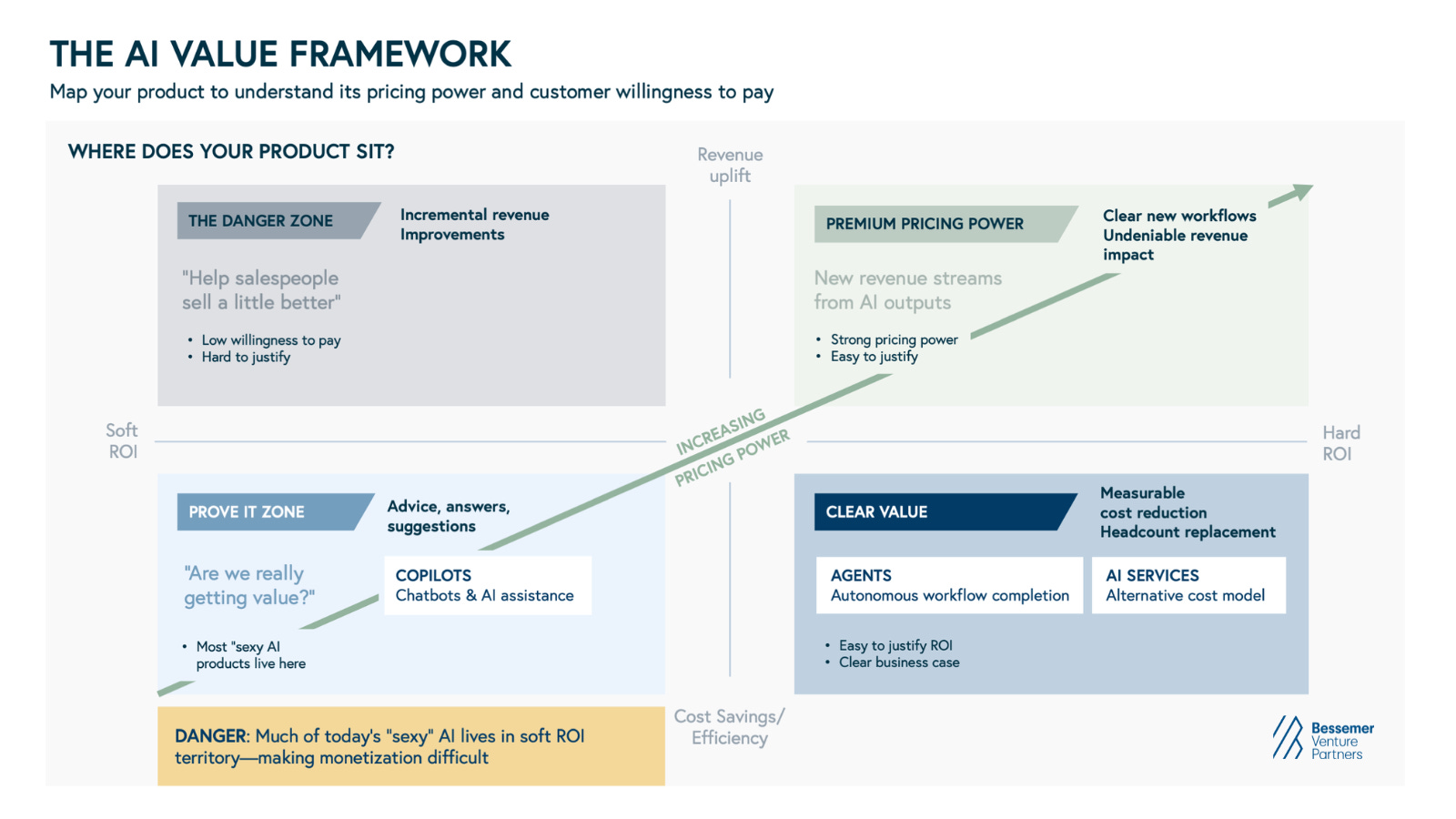
Generic vendors have largely stayed away from these because specifying them properly requires knowing the domain and knowing the domain happens to be the one part that cannot be prompted into existence.
If you spent 6 years in logistics or 4 in insurance, that history is worth considerably more than any library of skills, since it tells you where the pain actually sits rather than where a blog post claims it sits.
None of which matters if the first serious client asks a question you cannot answer and in Europe they reliably ask the same one first.

from our partners:
Pricing power comes from what you can defend, and a compliance badge is a defence a client can see.

Vanta runs SOC 2, ISO 27001, and GDPR on autopilot, with its agent living inside Claude, and $1,000 off for readers.
The boring foundation, handled.
3. The Boring Foundation That Decides Everything
This is the section every playbook skips and it is also the one deciding whether a difficult month turns into a difficult year.
You are a data processor before you are a vendor
The moment your workflow touches a client’s customer emails, names, or files, Article 28 of the GDPR makes you a processor, which means the Auftragsverarbeitungsvertrag needs signing before the first run rather than after the first incident.
You also need a record of processing activities and a straight answer about sub-processors, since the major model providers publish data processing agreements and support zero-retention arrangements for API traffic and you are expected to know which one you are relying on.

Most playbooks treat all of this as friction, which has the situation exactly backwards, because a German company evaluating an AI workflow raises the data protection question before it ever raises a feature question.
Answering it in one clear paragraph while your competition is an American agency piping everything through an API with no agreement in place is not compliance overhead. It is the reason you win the deal.
The paperwork that caps your downside
Have a lawyer adapt one contract for you covering scope, acceptance criteria, payment terms, IP assignment on delivery and a liability cap set at fees paid, because without that cap a workflow that quietly stops running for 6 weeks becomes your personal problem rather than a commercial disagreement.
Add professional indemnity cover, which runs in the low hundreds a year and exists for precisely that scenario, then register properly and decide deliberately whether the Kleinunternehmerregelung under § 19 UStG genuinely helps you, given that it spares you from charging VAT while also stopping you reclaiming it on every tool you buy.
Move 30 to 40% of every invoice into a separate account the day it lands, since the most common way a one-person business dies is not an absence of revenue but a tax assessment against money that has already been spent.
And read the terms on anything described as free, because Vercel restricts its Hobby plan to non-commercial personal use and defines commercial use to include any deployment produced by a paid consultant, which means the free hosting in those playbooks stops being free the moment you invoice for it.
4. Why Cold Email Is Not Your Channel in Europe
Every one of these guides leads with cold email at volume, usually paired with a line about European inboxes being empty compared to American ones and that line happens to be true for a reason nobody in the genre mentions.
What the law actually says
§ 7 Abs. 2 Nr. 3 UWG treats unsolicited advertising by email as an unreasonable nuisance regardless of whether the recipient is a consumer or a business, so the widespread belief that B2B follows softer rules is simply incorrect in Germany.
The existing-customer exception in Abs. 3 is narrow and applies to people who have already bought something from you, which by definition rules out first contact.
Consent also cannot be transferred between companies, which is why no purchased list is ever compliant no matter what the vendor’s marketing page says and the same reasoning extends to unsolicited advertising sent as a LinkedIn message or a WhatsApp.
The realistic downside is an Abmahnung from a recipient or a competitor with costs attached and it lands on you rather than on the sending tool you rented for 15 EUR a month.

The channels that are legal and convert better anyway
Partnering with incumbents is how work genuinely moves in German-speaking markets, because Steuerberater, IT-Systemhäuser, ERP resellers and local agencies all have clients asking for things they cannot deliver and no appetite whatsoever for building them.
20 honest conversations with adjacent vendors will produce more than 20,000 emails ever could and none of them will produce a letter from a lawyer.
Rather than cloning a company’s homepage and deploying it without permission, which is presumptuous and creates copyright exposure you do not need, build something genuinely useful for the vertical and give it away, then let the people who need more than a free tool come and find you.
And ask for referrals with a specific question instead of an open one, because a client can answer whether he knows another Elektrobetrieb with the same quoting problem and cannot meaningfully answer whether he knows anyone.
Once work starts arriving through those channels, the next thing that goes wrong is the number on the proposal.
5. Pricing on What You Can Defend
The standard advice is to charge some fraction of the value you create, which sounds rigorous in a pitch and falls apart on contact with how businesses actually account for things.
The ROI number nobody can audit
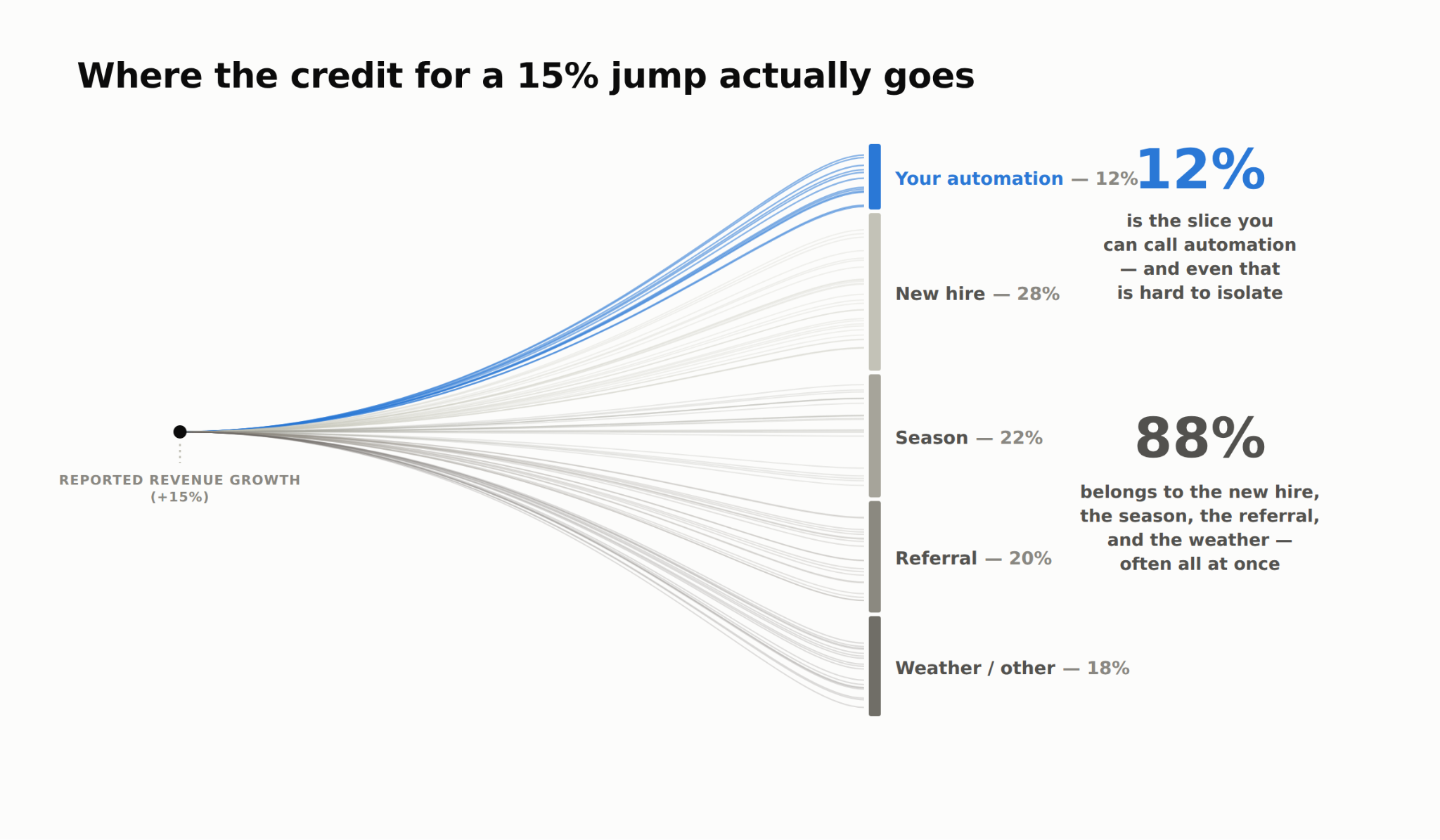
A client whose revenue rose 15% over a year will attribute it to the new hire, the season, the referral that came in during March and possibly the weather and your automation appears somewhere well down that list if it appears at all.
On the rare occasion attribution is clean and the number gets genuinely large, the conversation turns into a renegotiation rather than a renewal, because nobody enjoys paying 8,000 a month for something they have now had 18 months to understand.
Value pricing works when the value is measurable and clearly yours and in this business it is usually neither.
Replacement cost and risk transfer
Two anchors survive scrutiny and the first is what the work would cost them another way, so a process eating 12 hours a week of an office manager’s time at roughly 35 EUR fully loaded sits close to 1,800 EUR a month of labour, which is a figure they can verify without having to trust you.
The second is that they are paying for it to be your problem when it breaks and that transfer of risk is the honest justification for a retainer rather than the vague talk of support and optimisation usually filling that line item.
In practice that means a project floor somewhere around 2,500 EUR, since below it the selling, specifying and handover overhead consumes the entire margin, with most real integration work landing between 4,000 and 12,000.
Quote one number rather than a menu and never quote before watching the workflow, because pricing something you have not seen is how a 9,000 EUR project ends up delivered for 3,000.
All of which describes a healthy business right until the thing that genuinely limits it shows up and it does not show up as a shortage of clients.
Your AI bill is mostly wasted tokens

A researcher recently pointed Codex at a problem computer scientists file under intractable: finding a provably optimal tokenizer. With light human guidance, Codex ran an entire research loop, discovered a family of constraints it named “cycle constraints,” and produced a provably optimal tokenizer for an entire book in about a day. The frontier moved while most teams looked away, and it moved toward one question: how few tokens does the job actually take.
6. The Tail Nobody Warns You About
Every automation you ship is a permanent obligation and this is where the revenue models in those playbooks go most badly wrong, because they treat a monthly retainer as margin when it is a support contract.
Model versions get deprecated, OAuth tokens expire on a schedule nobody wrote down, an API changes its response shape in a minor release and a client rewrites the knowledge base without mentioning it so the answers go quietly and confidently wrong.

There is also a failure mode specific to this category, which is that any system reading untrusted input such as inbound customer email while also holding the ability to send mail or write to a database has a live attack surface, since instructions buried in that input can attempt to redirect it.
Keep destructive actions behind human confirmation, restrict what the automated path is permitted to do on its own and log enough that you can reconstruct what actually happened when somebody asks.
Then monitor proactively, because a weekly health check that emails you when something has not run is worth more to retention than any upsell script, given that clients rarely leave over price and frequently leave over discovering a failure before you did.
The real ceiling on a one-person business is not how many clients you can sell, it is how many running systems you can hold in your head at 11pm on a Tuesday and that number is smaller than it feels in month 4.
So cap the client count long before you feel busy and write a handover document for every build covering what it does, what it depends on, what breaks first and how to switch it off.
Claude collapsed the cost of production and this entire genre of advice has misread that as a shortcut when it is really a relocation.
Production is no longer where the money sits, because everybody can produce now, which leaves judgment about what is worth building and enough trust to be allowed near the systems that matter.
Neither of those got cheaper this year and neither of them can be installed from a folder.
The real advantage here isn’t replacing a team with Claude. It’s turning repeatable work into systems so one person can spend more time on judgment, customers, and the decisions that actually grow the business.
Great! Can we discuss sometime?