

One developer posted this the moment the announcement dropped:
“There goes a whole YC batch.”
The tweet pulled 2 million views in two hours.
On April 8, 2026, Anthropic launched Claude Managed Agents in public beta. If you build with AI, this is the most important release you will see this year.
Here is the problem it solves.
Building a production AI agent has always meant two separate jobs. The first job: design what the agent does. The second job: build everything that makes it run. Sandboxed execution. State management. Credential handling. Error recovery. Context management. Tool orchestration. Checkpointing.
That second job took most teams three to six months. And it had nothing to do with the agent itself.
Anthropic just eliminated it.
With Managed Agents, you define the tasks, tools, and guardrails. Anthropic handles the entire second job. The service launched at $0.08 per runtime hour, plus standard Claude model usage. An agent running 24/7 costs about $58 per month in runtime alone, before token costs. For most teams, agents run in bursts. The math is extremely attractive.
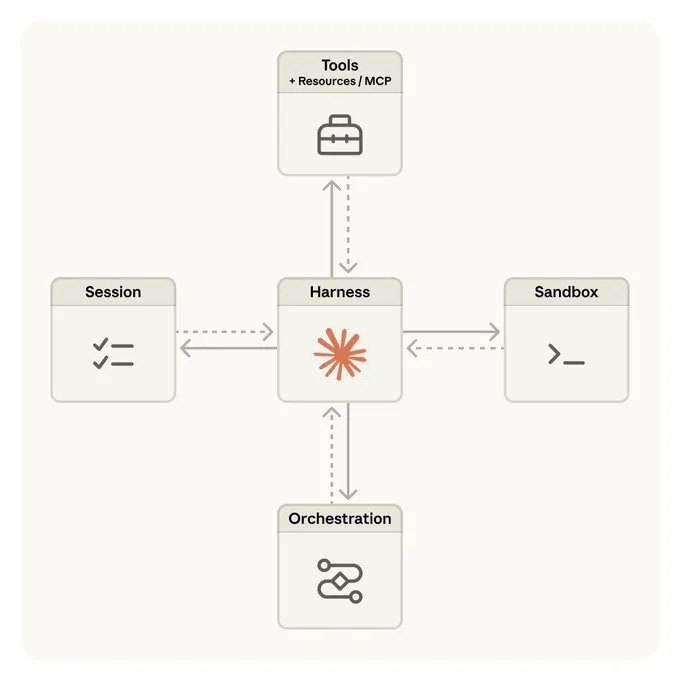
The results from early customers tell the real story:
Notion lets teams delegate coding, slides, and spreadsheets to Claude without leaving their workspace, with dozens of parallel tasks running simultaneously
Rakuten deployed specialist agents across product, sales, marketing, finance, and HR, each live in under a week
Asana built AI Teammates that pick up assigned tasks inside projects, and their CTO says they shipped advanced features “dramatically faster” than before
Sentry built an agent that goes from flagged bug to open pull request, fully autonomous
Vibecode reports that users now spin up that same infrastructure at least 10x faster than before
“Our users can now delegate open-ended, complex tasks, everything from coding to generating slides and spreadsheets, without ever leaving Notion.”
This is not a developer tool for hobbyists. This is the infrastructure layer that makes agents actually shippable at enterprise scale.
It is also part of a much bigger shift that has been building all year. Everything Anthropic has shipped in 2026 points in the same direction: the gap between prototyping and production is closing fast. Teams that figured out how to use Claude as a chief of staff or built workflows inside Cowork already understand the compounding advantage. Managed Agents is the next layer of that stack.
And the timing is not accidental. Claude Code’s architecture already showed how Anthropic thinks about agent infrastructure. Claude Skills showed how they think about specialization. Managed Agents is where both ideas converge into a deployable product.
Here is what is inside the public beta:
Secure sandboxed code execution, authentication, checkpointing, and scoped permissions
Persistent long-running sessions that survive disconnections and pick up exactly where they stopped
Built-in tool orchestration and automatic error recovery
Session tracing inside the Claude Console for full visibility into every agent action
Multi-agent coordination in research preview: agents that spin up other agents
Self-evaluation in research preview: Claude checks its own work against your success criteria
Inside the premium section — The Agent Deployment Playbook:
The full technical architecture explained simply: what sessions, harnesses, and sandboxes actually are, and why Anthropic’s brain vs. hands design decision means your infrastructure will still work when the next Claude model ships
A step-by-step guide to deploying your first production agent in under a week, including the exact API setup, the right way to write a system prompt for long-running tasks, and the three mistakes that kill most first deployments
The pricing breakdown: when Managed Agents beats building your own, when it does not, and the exact formula to calculate your cost before you commit
Deep dives on each real customer deployment: what Notion, Rakuten, Asana, and Sentry built, the specific workflows they automated, and the architectural decisions behind each one
The multi-agent coordination feature in research preview: what it does, who should request access today, and four workflow patterns it unlocks that are impossible with single-agent setups
A ready-to-use system prompt library for the six most common agent use cases: code review, research synthesis, document generation, data processing, customer support triage, and DevOps automation
The honest limitations: what public beta still means in practice, which edge cases break sessions, and how to design around them
This is the article you bookmark and come back to every time you build a new agent. Everything in one place, immediately actionable.
Cancel anytime. First subscribers get 50% off forever.
THE AGENT DEPLOYMENT PLAYBOOK
Everything you need to go from zero to production with Claude Managed Agents: