

Most Most AI products fail at the engineering layer.
Not the model layer.
The model is fine. What you build around it is not.
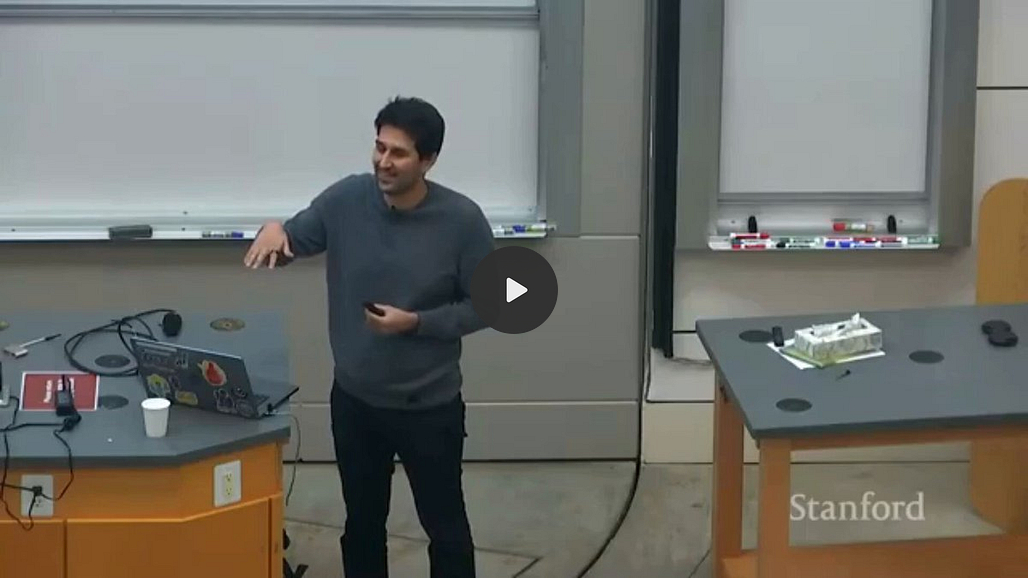
Stanford’s CS230 is the most practically dense AI engineering session I have found. Two hours. Zero filler. It covers what most teams spend six months learning through painful production incidents.
I watched every minute so you do not have to.
Here are the ten rules that matter.
1. BCG Paid Harvard to Run the Study. The Untrained AI Group Performed Worse Than No AI at All.
Prompt training is not a perk. It is the line between AI helping you and AI making you worse.
“There is a frontier within which AI is absolutely helping and one where they call out this behavior of falling asleep at the wheel, where people relied on AI on a task that was beyond the frontier.”
Harvard, UPenn, and Wharton split BCG consultants into three groups: no AI, AI with no training, AI with prompt training.
The trained group outperformed on nearly every task. The untrained AI group performed worse than the people using nothing.
They stopped thinking. The model filled the gap. Badly.
Two patterns separated the people who got it right:
Centaurs: One long prompt. Walk away. Return to finished output.
Cyborgs: Rapid back-and-forth, iterating in real time.
The untrained group is most of your workforce right now.
Prompt training is the highest-leverage investment before anything else. Before new tools. Before new models. Before new hires. And if your team is still using Claude like a search engine, the BCG study explains exactly what is happening to your output quality.
MIT Proved ChatGPT Is Designed to Make You Delusional. And Nothing Being Done About It Will Work.

A man spent 300 hours talking to ChatGPT.
2. Your Most Important Workflow Is Broken. The Fix Has Nothing to Do With the Model.
One prompt doing three jobs is a black box. Three prompts doing one job each is a system you can fix.
“Chaining improves performance, but most importantly, helps you control your workflow and debug it more seamlessly.”
When output is bad inside a single prompt, you cannot identify which step failed.
Chaining separates extraction, outlining, and drafting into three independent prompts. The outline is solid. The final output is off-brand. Fix prompt three. Only prompt three.
That is the entire value. Visibility. Not performance.
Try this: Break your most important single-prompt workflow into three sequential prompts. Run both on ten real inputs. The step you were not measuring is where you lose performance.
This is the principle behind context engineering, which has replaced prompt engineering as the real leverage point in 2026. The techniques that worked two years ago now actively hurt results on multi-step tasks. Chaining is why.

3. Workera Fine-Tuned a Model on Slack Data. It Learned to Procrastinate.
By the time your fine-tuned model is ready, the next base model ships and beats it.
“At Workera, we steer away from fine-tuning as much as possible, because by the time you’re done fine-tuning your model, the next model is out and it’s actually beating your fine-tuned version of the previous model.”
They fine-tuned a model on company Slack to make it speak like the team.
Asked to write a blog post, it said: “I shall work on that in the morning.”
Pushed further: “I’m writing right now. It’s 6:30 a.m. here.”
It overfit to how humans stall. It lost the ability to follow instructions entirely.
Fine-tuning belongs in three narrow cases:
1️⃣ Repeated high-precision legal or scientific outputs
2️⃣ Consistent domain-language failures with general models
3️⃣ Tasks where latency and cost justify the overhead
Most teams fine-tune because it signals effort. It is usually just slower. Now it is obsolete before it ships.
Everything Claude has shipped in 2026 includes capabilities that make most fine-tuning use cases irrelevant. Read that before deciding to fine-tune anything.

4. Every Knowledge Product Has a Hallucination Problem. One Architecture Solves It.
The fix is not a bigger context window. That is a latency problem with no sourcing.
“RAG integrates with external knowledge sources, databases, documents, APIs. It ensures that answers are more accurate, up to date, and grounded.”
Four steps:
1️⃣ Embed your documents and store them in a vector database
2️⃣ Embed the query the same way and pull the nearest documents
3️⃣ Inject them into the prompt
4️⃣ Add one rule: if the answer is not in these documents, say so
That rule is what makes it a product.
RAG is not an upgrade for knowledge-intensive products. It is the foundation. And if you want to understand how to actually build agents that use RAG in production, that is the guide to start with.

5. Vanilla RAG Fails Deep in Long Documents. Two Techniques Fix It. Almost Nobody Uses Either.
Retrieving the right file is not the same as finding the right paragraph inside it.
“What people have figured out is a bunch of techniques to improve RAGs. Chunking is a great technique that is very popular.”
Vanilla RAG on large documents is too coarse. You retrieve the right file and land on the wrong page.
Two fixes exist.
Chunking with hierarchical vectors: Embed at both document and chapter level. Now you cite the page and section, not just the file name.
HyDE: A user question does not look like a clinical document linguistically. Vector distance is high. Retrieval misses. Fix: generate a hallucinated answer from the query and embed that instead. A fake answer looks far more like the real document than the question ever did.
Try this: Run your RAG on five deep-document queries. Below 70% accuracy, add chunking. Still below, test HyDE.
This is the same reliability architecture covered in Stop Blaming the Model. Fix the Architecture. Most agent stacks fail silently. RAG quality is usually the first place to look.

6. Every Team Is Building “Agents.” Most Are Building the Wrong Thing.
The definition you use determines how you design, debug, and measure everything.
“Calling everything an agent doesn’t do it justice. In practice, it’s a bunch of prompts with tools, with additional resources, API calls that ultimately are put in a workflow.”
RAG returns: “Refunds are available within 30 days.”
An agentic workflow asks for the order number, queries the database, confirms eligibility, and tells the user when the money lands.
Problem solved. Not just answered.
Three autonomy levels exist:
Hard-coded steps: You define the sequence.
Hard-coded tools: The agent picks the order.
Fully autonomous: The agent decides everything.
Your autonomy level determines how much you can trust the output. Choose it before you write a single line of code.
Karpathy let an AI agent tune his code for two days and it found 20 things he missed. The architecture behind why that worked — and why most agents fail at that task — is exactly what autonomy level selection determines.
And if you want to see what agents look like when they actually run a business function end-to-end, Claude Managed Agents is where that is happening in production right now.
Anthropic just solved the hardest part of building AI agents

One developer posted this the moment the announcement dropped:
7. McKinsey Found 20 to 60 Percent Time Savings on Credit Memos. The Bottleneck Is the Org Chart.
The agents work. The organizations deploying them are the constraint.
“The hardest part is changing people. It will take 10, 20 years to get to this being actually done at scale within an organization because change is so hard.”
Credit risk memos take one to four weeks. A relationship manager pulls from more than 15 sources. A credit analyst writes for 20-plus hours.
With a multi-agent system: specialist agents work in parallel, a draft arrives, the team reviews and closes.
Time saved: 20 to 60 percent. The technology exists today.
Rewiring job descriptions, incentives, and habits across 100,000 people takes a decade.
For founders: the companies that help organizations operationalize these changes, not just sell them agents, will capture disproportionate value over the next five years.
This is the same thesis behind the AI GTM playbook: the winners are the ones building distribution and change management around the technology, not just the technology itself. And if you want to understand what VCs are actually paying for in this space, what top VCs look for in 2026 covers exactly where capital is flowing around enterprise AI adoption.
8. AI-Powered Software Has One New Failure Mode. It Is Silent Until Production Breaks.
You are no longer writing code that does exactly what you tell it. That single fact rewrites your engineering practice.
“Fuzzy engineering is truly hard. You might get hate as a company because one user did something that you authorized them to do that ended up breaking the database.”
Deterministic software is predictable. User submits form. Form writes to database. Same result every time.
AI-powered software is not. User types anything. Model interprets. Model acts.
The gap between those two sentences is where engineering debt accumulates.
Fuzzy systems have four failure modes that do not exist elsewhere:
Expanding security surfaces
Probabilistic debugging with no stack trace
Evals instead of unit tests
Errors invisible until production breaks in front of a user
Try this: Map your product flow. Mark every step D or F. More than 40 percent fuzzy means you are building something fragile. Find the deterministic equivalent for every F you can.
This connects directly to the reliability architecture the best builders use. And it is why the source code that leaked from Claude Code revealed so much about how Anthropic handles this internally — the deterministic infrastructure surrounding every fuzzy component is more sophisticated than almost anyone expected.
9. One Interview Question Tells You Everything About an AI Startup. Ask It Every Time.
You cannot improve what you cannot measure. Most teams are not measuring what actually breaks.
“If you’re interviewing with an AI startup, I would recommend you ask them: do you have LLM traces? Because if they don’t, it is pretty hard to debug an LLM system.”
Evals need four dimensions:
End-to-end: The experience is broken.
Component-based: Which step broke it.
Objective: Automated. Did the agent pull the right order ID?
Subjective: LLM judges or humans. Was the tone right?
Start with 20 examples. You will find failure modes faster than any dashboard.
Track this: Every fuzzy step needs one automated eval and one LLM judge in production before you ship. Not after. Before.
The multi-agent code review system Anthropic shipped in March 2026 is a direct application of this principle at scale: 84% of large PRs get findings, less than 1% are false positives. That performance exists because the eval layer was built first.
For founders: this is also your due diligence signal in reverse. Ask any AI startup you are evaluating whether they have LLM traces. If they do not, that answers more questions than any pitch deck.
10. The Researcher Who Replaces Transformers Will Matter More Than Every GPU Farm on Earth.
Scaling laws have ceilings. The group that finds what comes next defines the next decade.
“Whoever discovered transformers had a tremendous impact on the direction of AI. I think we’re going to see more of that in the coming years where some group of researchers that is iterating fast might discover certain things that would suddenly unlock that plateau and take us to the next step.”
One discovery. Compute cut by 10x. Every product built on every model changed overnight.
Three vectors to track:
Architecture search: The replacement has not been found. That is the most important open problem in the field.
Multimodality: dding modalities compounds gains across all of them. The endpoint is robotics. The direction is already visible in Claude Mythos Preview, which scored 100% on Cybench CTF challenges and found zero-days in every major OS and browser.
Method integration: Pre-training, supervised signals, reinforcement, unsupervised observation. Combined. Not chosen between.
The half-life of any specific technique is short. The value of understanding the principles underneath is not.
Build on what is known today. Stay close to the research. The shift that makes everything obsolete is coming. Nobody knows when.
This is why OpenAI wrote their AGI plan in 2018 and eight years later they were right about almost everything. The people tracking principles rather than techniques are the ones who see the transitions coming.
What you do tomorrow
The gap between a weak AI product and a great one is almost never the model. It is the engineering layer.
Five principles to steal:
1️⃣ Chaining beats single prompts for any multi-step task. Context engineering is the skill that makes this real.
2️⃣ RAG beats fine-tuning for knowledge-intensive applications. Build agents that actually work before you fine-tune anything.
3️⃣ Evals are not optional. Build them before you ship, not after. The reliability architecture guide shows what this looks like in practice.
4️⃣ The best architecture is not always the most autonomous one. Choose your autonomy level based on how much you can trust the output, not how impressive the demo looks.
5️⃣ Understand the principles. Specific techniques have a short half-life. The underlying engineering instincts do not. Prompting is no longer about clever wording. Neither is building AI systems.
For founders building AI products:
Decompose before you code. Map every deterministic and fuzzy step. Build deterministic infrastructure first. Wrap every fuzzy component in evals from day one. And if you want to understand what the people writing checks think about all of this, what top VCs look for in 2026 maps directly to these engineering principles.
For enterprise teams:
Start with one workflow. Measure it without mercy. The organizational change is harder than the technology. Start that process now. The AI GTM playbook covers how the fastest-moving enterprise teams are operationalizing this.
For engineers:
Build evals before you ship. Use LLM traces. Ask every AI startup you interview whether they have them. If they do not, that tells you everything about their engineering culture. And if you want to know what the $200K+ roles actually require, it is this: production systems, not polished demos.
Prompts are levers. Chains are systems. Agents are organizations.
The model is not the product. The engineering layer is.
Start there.

If this breakdown saved you two hours, share it with one founder or engineer who needs to see it. They will thank you later.
So much of this comes back to visibility.
The model may be the visible part, but the work usually breaks in the places people are not watching closely enough: the handoff between steps, the review point that arrives too late, the failure mode no one measured, or the fuzzy part of the workflow that looked safe in a demo.
That is the practical difference between using AI and building work that can actually hold it.
Lesson 7 (or whichever covers deployment underestimation) is the one that bites mid-market teams hardest. They run a successful pilot, then scale into production and hit the evaluation, monitoring, and maintenance overhead they hadn’t budgeted for. AI procurement decisions that only model the purchase price are missing 60-70% of the real cost picture. The total cost of implementation - including internal time - is the number that matters.